World

Assad’s fall is also a blow to Beijing

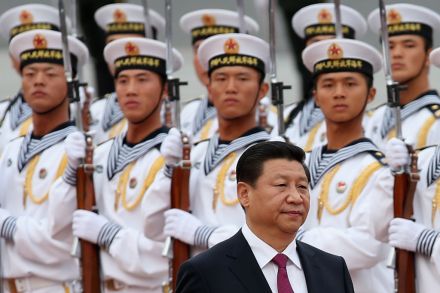
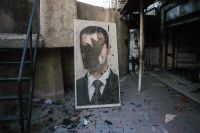
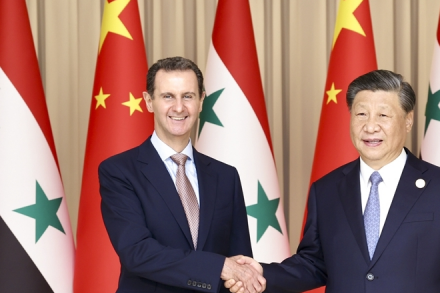
Russia and Iran kept Bashar al-Assad in power and are the biggest strategic losers from the toppling of his brutal regime. But also spare a thought for Xi Jinping, who used the dubious ‘stability’ imposed on Syria by Tehran and Moscow to embrace the butcher of Damascus in a bid to extend Beijing’s influence in the region. ‘The future and destiny of Syria should be decided by the Syrian people, and we hope that all the relevant parties will find a political solution to restore stability and order as soon as possible,’ said Mao Ning, spokesperson at the Chinese foreign ministry, on Monday, in one of those deliciously vacuous statements
Iran’s axis is dying

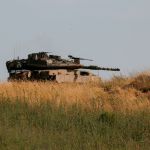
From the hilltop viewpoint at Misgav Am, Israel’s northernmost kibbutz in the Upper Galilee, the view into southern Lebanon is a panorama of uncertainty. Less than a full day after Assad was finally defeated in Syria, I stand at and look down at the rubble of the Lebanese buildings destroyed in the recent fighting, as close to the Syrian border as the IDF will allow. Beside my feet, spent bullet casings remind me that less than two weeks ago this peaceful spot was a frontline position. The shell of a bombed-out nearby community viewpoint serves as a silent witness to the RPG attacks Hezbollah regularly launched on civilian homes and

Syria's nightmare isn't over yet

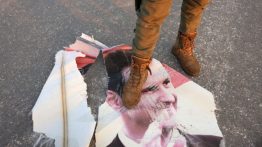
Trying to predict what comes next in Syria after the toppling of dictator Bashar al-Assad is a fool’s errand. It is hard not to be moved by the jubilant scenes in Damascus but we have been here before: Assad’s downfall evokes images and memories of far too many other recent uprisings in the region. The masses celebrating freedom signifies nothing beyond the joy of tasting momentary escape from decades of tyranny Who can forget the joyful crowds in Baghdad tearing down the statue of Saddam Hussein after the 2003 American-led invasion of Iraq? There was similar joy in Egypt in 2011 when Hosni Mubarak’s thirty-year dictatorship came to an end, and the

Xi Jinping's PLA purges

35 min listen

More than a year after Xi Jinping purged two senior generals in the People’s Liberation Army Rocket Force unit, China’s investigation into its military seems to be ongoing, with more scalps taken. In recent weeks, Miao Hua, another senior general who had been a member of the Central Military Commission, has been suspended; while reports abound that the country’s current defence minister, Dong Jun, is under investigation too. If suspended, Dong would be the third consecutive defence minister that Xi has removed. To paraphrase Oscar Wilde, to lose one defence minister may be regarded a misfortune; to lose three looks like carelessness. So what is happening at the top of

Beware Labour's desire to get cosy with Europe

There was nothing seriously unexpected in Rachel Reeves’s speech today to EU finance ministers. Most of it was non-committal flim-flam: ‘I believe that a closer economic relationship between the UK and the EU is not a zero-sum game. It’s about improving both our growth prospects.’ Making reference to ‘breaking down barriers’ and relationships ‘built on trust, mutual respect and pragmatism’ isn’t going to excite anyone. One suspects Reeves’s niceties are more for home than European consumption: a dig at the Tories, and a repetition of the pre-election party line that Labour wants a grown-up rather than argumentative relation with Brussels. Nevertheless there are lurking dangers. The government is not interested

How Assad's fall could reshape the Middle East

One hundred years after the world’s major powers conceived the landscape of the modern Middle East, the tumultuous events unfolding in Syria have the potential to enact an equally profound reorientation of the region’s political dynamics. The Cairo conference of 1921, where Winston Churchill famously quipped that he had created the new kingdom of Jordan ‘with the stroke of a pen on a Sunday afternoon’, was responsible for creating the modern geography of the Middle East. Present-day Syria emerged from the remnants of the larger domain that had existed during the Ottoman era. There are practical issues that must be addressed, such as the rehabilitation of an estimated 13 million

If Meloni is ‘far right’, why are neo-Nazis trying to kill her?

Dante’s Beach, Ravenna Italian police have arrested 12 alleged terrorists who are accused of plotting a Day of the Jackal style sniper assassination of Giorgia Meloni. Many more remain under formal investigation. According to investigators, the plotters aimed to install the sniper in a room in the Albergo Nazionale, opposite the Italian Camera dei Deputati (House of Commons) in Rome. Given that much of the global media continues to call Italy’s first female prime minister ‘far’ or ‘hard’ right, and ‘the heir to Mussolini’, you might assume that those arrested are far-left radicals. But you could not be more mistaken. They are fascists. That Italian fascists want to kill Meloni,

France has had enough of Germany's bullying

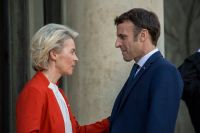
There was one person missing in Paris on Saturday evening as France celebrated the resurrection of Notre Dame cathedral. The original guest list included Ursula von der Leyen – but the president of the EU Commission was a no-show. According to whom one believes, Europe’s most powerful politician didn’t take her place in the pew alongside Emmanuel Macron, Donald Trump et al because of what a spokesman described as an ‘internal miscommunication’. That’s the diplomatic take. The other story is that a ‘furious’ Macron withdrew von der Leyen’s invitation after she signed off the EU Mercosur trade deal with South America on Friday. Struck with Argentina, Brazil, Paraguay, Uruguay and

How chaos could return to Syria once again

‘The only certainty in war is human suffering, uncertain costs, unintended consequences.’ So said Barack Obama in a speech in 2015, defending the historic mistake of his Iran deal. What an irony it is then that ‘unintended consequences’ should apply once again to another of his failures, this time in Syria. Obama’s failure to enforce his red line against Bashar Al-Assad’s use of chemical weapons in 2013 led to the country being torn and split multiple ways between the Assad regime, various ethnic and jihadist military groups and their external backers. Syria has had a lost decade as a result. The fall of the Assad regime should be celebrated. But

The trouble with Amnesty International

How perfect was it that Amnesty International’s report on Israel’s ‘genocide’ in Gaza landed on the same day that the war in Syria got even bloodier. As Islamist rebels swarmed Hama in the west of Syria, a city of a million souls, days before they seized Damascus itself, the virtuous of Amnesty had only one thing on their minds: Israel. It’s official: nothing, not even the return of carnage to Syria, can dislodge the activist set’s obsession with the Jewish State. Rarely has the Israel myopia of the campaigning classes been so starkly exposed Rarely has the Israel myopia of the campaigning classes been so starkly exposed. Five hundred thousand

America is not prepared for Syria after Assad

On Saturday afternoon, US intelligence officials leaked an assessment: the Assad regime, which has ruled Syria for over half a century, could very well collapse in a manner of days. As one official told CNN, ‘Probably by next weekend the Assad regime will have lost any semblance of power.’ It turns out that Washington was giving Assad too much credit. Less than eight hours later, a regime that had locked up hundreds of thousands of prisoners in dudgeons across the country, and used chemical weapons against its own people on multiple occasions to keep itself in power, was burning up and heading for the ash heap of history. The Syrian army gave up;

How will HTS rule Syria?

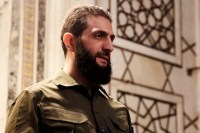
Yesterday we woke to the astonishing news that the rebels from the Syrian opposition had taken Damascus and President Assad had fled. The joy is huge and infectious, even if tempered with trepidation. In 2007, I was assured by a soldier in Damascus that the Ba’athist regime had the solidity of rock. That could be said to be the line Assad repeated throughout the civil war from 2012 onwards. Yet in a few days from 27 November to 8 December this year, opposition forces spearheaded by HTS – Hay’at Tahrir al-Sham (‘the Organisation for the Liberation of the Levant’) – swept out of their bases in rebel-held Idlib and the Turkish controlled

The Russian nuclear threat is looming once more

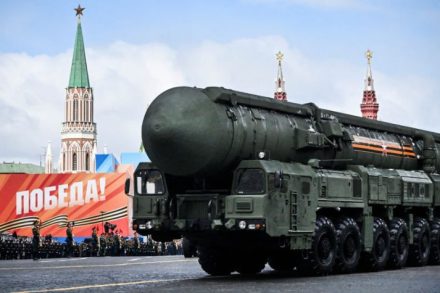
It is 00.40 pm, 26 September 1983. Lieutenant-Colonel Stanislav Petrov, the duty commander in charge of monitoring the Soviet Union’s early warning satellites designed to identify American missile attacks, is carefully checking his panels. Suddenly, the alarms roar into loud action. The word ‘Launch’ flashes onto his screen in large red letters. For the next 15 seconds, one of the satellites reports that five American Minuteman missiles have been launched and are heading towards the Soviet Union. Based in a secret bunker hidden deep beneath the woods just outside Moscow, Petrov is transfixed and stares at the screen in disbelief and shock. The automatic order to launch in retaliation is also sent to Soviet

In Donbas, Ukrainians hope Trump can end the war

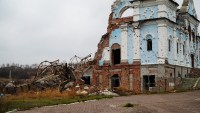
Not a single home remains intact in the village of Bohorodychne in Donbas, since it was torn apart by artillery back in 2022. There are signs warning about mines everywhere. The local school is ripped apart and burned-out. Military vehicles are camped in the village and in the fields. No shops are open. Even the local Russian Orthodox church has been destroyed in the fighting. Before the full-scale Russian invasion, approximately 700 people lived in Bohorodychne. Now, only a fraction remain. They roam the streets as Ukrainian military cars drive through the village on the way to the frontline, some 30 kilometres away. Everyone here depends on aid groups to

South Korea is still haunted by the Gwangju Uprising

The news that President Yoon had instated martial law on Tuesday hit me hard. The last time martial law was declared in South Korea, in May 1980, I was a Peace Corps volunteer living in Gwangju, a city in the south west of the country. Peaceful protests against martial law took place in the city, until the military moved in and killed hundreds of ordinary people.  What became known as the Gwangju Uprising changed Korea, and me, forever. I was one of a handful of foreigners to witness the uprising, and ended up translating for the few foreign reporters who managed to get into the city. Forty-four years later, I couldn’t

How working-class Dublin turned on Conor McGregor

When Conor McGregor stood in the dock for his civil rape trial last week, the controversial MMA fighter was receiving the kind of global media attention he had always craved. Just not for the reasons he would have wanted. In court, the 12-person jury found him liable for the rape and sexual assault of Nikita Hand, and awarded her £208,000 in damages. This was the latest nail hammered into a career which has been marred by sporting controversies, sexual misbehaviour and appallingly thuggish behaviour. The circumstances which brought McGregor before the civil court were as tawdry as people had come to expect from the Dublin brawler. One Friday night in

Will Syria’s new rulers show mercy?

The late Henry Kissinger said of the Iraq-Iran war in the 1980s that it was a shame that both sides couldn’t lose. Much the same is true of the current situation in Syria, where the long established regime of the brutal but secular Assad dynasty looks increasingly likely to fall to a sudden Islamist rebel offensive. Syria has been convulsed by a vicious and multi-sided conflict since 2012 when riots against the dictatorship of Bashar al-Assad turned into a full-scale civil war. Assad, a London trained ophthalmologist, had reluctantly become the heir apparent to his iron-fisted father Hafez al-Assad (the surname means ‘the lion’) after the death of his more

How Finland joined the West

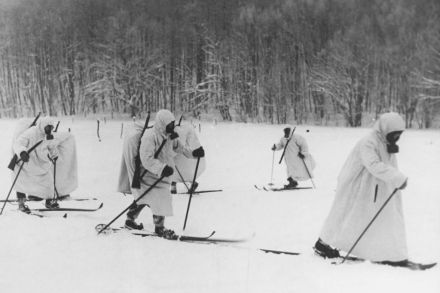
Finland’s entry into Nato in 2023 dealt a major blow to Russia in the Baltics. For years, President Putin had warned his Finnish counterparts that a decision to join the alliance would be met with an appropriate response, but the implicit threat has been slow to materialise. In February, Russia reconstituted its Leningrad Military District, a Soviet-era administrative region tasked with defending Russia’s northwestern territories, but otherwise there’s been a palpable quiet in the far north. In recent weeks, this has begun to change. On 18 November, the sole fibre optic cable linking Finland and Germany was severed, and hours after a cable connecting Sweden and Lithuania was also cut.