World

Shinzo Abe was Japan’s indispensable conservative

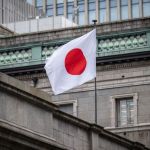
Shinzo Abe, who was assassinated today while electioneering, was his country's indispensable man. Prime minister of Japan for much of this century, from 2006 to 2007 and 2012 to 2020, Abe's stature on the world stage eclipsed that of other post-war Japanese leaders, just as his time in office surpassed them all. For a taste of the shock of his murder, look back to the surprise and incredulity which met his resignation from office in the pandemic's worst days. Plagued by a debilitating health condition which had earlier caused him to leave office in 2007, Abe concluded he did not have the stamina left to rule.

Why we’ll all miss Boris

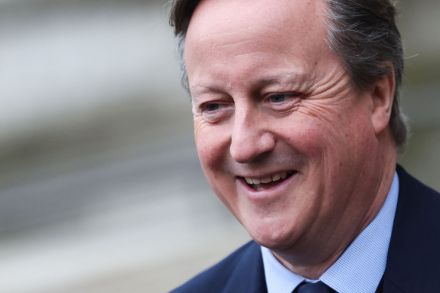
I think that Thomas Babington Macaulay had the last word about Boris Johnson’s forced resignation as prime minister of the UK: “We know no spectacle so ridiculous,” Macaulay wrote, “as the British public in one of its periodical fits of morality.” Macaulay’s line needs to be slightly adjusted, it is true, because, ridiculous though public displays of puritanical moralism are, in this case it was mostly Boris’s colleagues in Parliament, not the public at large, that suffered that unbecoming fit of morality. Indeed, throughout it all, Boris — a politician with more élan than any prime minister since Margaret Thatcher — remained popular with the public. He was especially popular, I think, with the American public. And why not?

boris johnson trade

Boris Johnson and the return of ‘Pestminster’

You might be wondering why Britain's government has rolled from crisis to crisis since the pandemic began, culminating today in the resignations of two leading ministers, and with the threat of more hanging overhead. Some would blame the character of 2020 and the pestilential years since; others the nature of Boris Johnson, the prime minister: his "colorful" personal life (a hard-working euphemism); his lack of focus; his indifference to the truth. I would look a little broader. Britain's political life is the product of the people who fill its parliament. And very many of them are deeply substandard people. The straw that apparently broke the camel's back this week was the government's former deputy chief whip, a man called Chris Pincher.

Boris gaffes, Russia laughs

Cockburn woke up this morning to a good laugh over his coffee when he saw that British prime minister Boris Johnson had attributed Putin’s invasion of Ukraine to “toxic masculinity.” Johnson, the Conservative PM of the UK, told German broadcaster ZDF, “If Putin was a woman, which he obviously isn't, but if he were, I really don't think he would've embarked on a crazy, macho war of invasion and violence in the way that he has." He proceeded to say that the war is a “perfect example of toxic masculinity,” urging more countries to have “more women in positions of power.” While Putin’s bare chest on horseback may be the source of endless memes, Cockburn believes Johnson is focusing on the wrong things here.

Defending Ukraine should be a European project

NATO gatherings at the head-of-state level are ordinarily placid, even boring affairs. But this week’s three-day NATO summit in Madrid will be quite different. For the first time in twenty-three years, the alliance is meeting as a war churns on European soil. Russian President Vladimir Putin’s invasion of Ukraine has been an electric shock to the continent’s defense establishment, at least if their rhetoric is any indication. European officials have finally come around to noticing that Europe isn’t an exceptional zone of peace and tranquility, but a region no more immune to armed conflict than any other. NATO, which was straying out of theater in a desperate attempt to stay relevant, is now back to performing the defensive mission it was meant to do.

What happens to US fighters captured in Ukraine?

Alex Drueke and Andy Huynh are two former American military members now in Russian custody, captured by the Russians in Ukraine, where they were fighting for the Ukrainian government. What is going to happen to them? The most likely thing is that both men will eventually be traded to the US in return for captured Russians. Prisoners are very valuable and rarely wasted in executions unless those carry much more value than the prisoners held by the other side. The deal may be public or secret, and the US can expect to pay a premium. Israel usually releases ten or more Palestinian prisoners in exchange for one of its captured troops.

Did Hunter Biden influence Obama-era China policy?

“Fighting corruption is not just good governance,” Joe Biden once said. “It is self-defense. It is patriotism, and it’s essential to the preservation of our democracy and our future.” Going into the first term of his presidency, President Obama gave then-Vice President Biden one of the most important foreign policy portfolios: managing the US relationship with China. However, there is precious little to show for this prodigious assignment.

hunter biden

Mr. Freedom goes to Washington

Cockburn had a sojourn through the corridors of power on Thursday — attending a congressional reception on global human rights in the Rayburn House Office Building, hosted by basketball star Enes Kanter Freedom. Freedom has a storied past when it comes to dealing with dictatorships: the Turkish government revoked his passport in 2017 and jailed his father over his support for Fethullah Gülen, a cleric who is feverishly critical of President Erdoğan. He caused a controversy at the start of this season after donning shoes highlighting the persecution of Uighur Muslims and Tibetans in China while playing for the Boston Celtics. The NBA stopped broadcasting his team’s games, and midway through the season he was cut from their roster.

kanter freedom

Can the Big Mac save Russia?

Cockburn has rarely seen eye to eye with de-celebrated New York Times columnist Thomas Friedman. He's particularly irked over Friedman's habit of quoting conversations he's had with cab drivers, given that Cockburn never remembers his taxi rides the next morning. Yet today he can't help but think there's something to Friedman's pro-globalism parachute journalism after all. During the 1990s, Friedman became famous for touting what he called the Golden Arches Theory of Conflict Prevention. This held that "no two countries that both have a McDonald’s have ever fought a war against each other." The thinking behind this idea was simple: as American corporations expanded globally, as nations consolidated and opened up their markets, war became bad for business.

Russia is sidestepping American oil sanctions

When the European Union finally made the decision to ban 90 percent of Russia’s crude oil imports by the end of the year, the bureaucrats in Brussels were jubilant. The EU’s adoption of oil sanctions was thought be a big blow to Russian President Vladimir Putin, who depends on the revenue generated by his country's oil exports to fund his war in Ukraine. It doesn’t take a genius to figure out why European officials were so thrilled. The EU imported 2.2 million barrels per day of Russian crude last year, amounting to tens of billions of dollars in profits for the Kremlin every month.

Russia slogs through the Donbas

A brutal artillery battle: that’s what the latest phase of Russia’s war on Ukraine has become. Vladimir Putin failed in his original goal of seizing the entire country swiftly, beginning with the capital of Kyiv, and installing a puppet government. When Ukrainian resistance prevented that, Putin shifted to a smaller, more achievable objective: establishing complete control over two eastern provinces, Luhansk and Donetsk, which border Russia and are jointly known as the Donbas region. That’s where the war is being fought now, with an uncertain outcome. Victory will depend on who wins the artillery battle. Russia has more blunt firepower; Ukraine has more precise, longer-range weapons — or at least it will have them when more NATO supplies reach the frontlines.

artillery

Ron DeSantis’s aide is no Russian agent

The recent retroactive registration of Christina Pushaw — Florida governor Ron DeSantis's press secretary — as a foreign agent has led to an ignorant backlash. A quick glance at any article on the story leaves readers thinking this is Cold War stuff, a "foreign agent" reaching all the way into the halls of Floridian power. The comments suggest that readers have lapped this up. “Trump + DeSantis = Russian money,” says one. “Trumpian Republicans have a fond affinity for Russians,” writes another, finishing with “such fools.” Clearly, they knew this sort of thing was going on all along: "The Kremlin have done it again!" they think, shaking their fists at the memory of the Russian interference which they've convinced themselves won Trump his election back in 2016.

ron desantis

Boris Johnson saved by his hollow party

Boris Johnson has survived the attempt by some in Britain's Conservative party to remove him as prime minister. The margin not quite close. But by being so publicly called into question, both the prime minister and his party have been weakened. Dogged by real and performative public disapproval, Johnson will have difficulty remaining in power for the rest of the parliamentary term, and more performing to do in the next election to remain in office after it. In the fabled axioms of British politics, two things are meant to be clear. One is that the Conservative party is the natural party of government. The country is slightly right-of-center, the logic goes, and it is a rare Labour challenge which can defeat this innate advantage.

2022 Biden contradicts 2001 Biden over action in Taiwan

Cockburn is not one to point fingers (as they are often preoccupied with his cigar), but he finds himself making an exception for President Biden over his apparent U-turn on the issue of the United States using military force to help defend Taiwan against China. Tyler Cowen, an economics professor at George Mason University, just unearthed a 2001 Washington Post op-ed then-senator Joe Biden wrote dissenting from President George W. Bush’s stance that the “United States had an obligation to defend Taiwan if it was attacked by China.” Biden wrote that “words matter,” and that Bush’s extreme language had "damaged US credibility with our allies and sown confusion throughout the Pacific Rim.” Speaking of confusion...

fauci

The Harvard connection

On the morning of Sunday February 2, 2020, Anthony Fauci, then in the middle of putting together America’s pandemic response, received an unusual email with a highly unusual request. The email, revealed as part of a tranche of FOIA documents requested by the Intercept, was from George Daley, the dean of Harvard Medical School. “Alan Garber, Harvard’s provost, and I met yesterday with a team led by Jack Xia, the CEO of China’s Evergrande Company, and Dr. Jack Liu, Evergrande’s chief health officer,” Daley wrote. Addressing the director of the National Institute of Allergy and Infectious Diseases as “Tony,” he asked for “whatever information you are willing to share on your current efforts to coordinate a response.

unexceptionalism

The age of American unexceptionalism

Our administration would have us believe that Joe Biden is the leader of the free world. But he isn’t — and our relative inaction on Ukraine should firmly put to rest the idea of “American exceptionalism.” While Ukrainians were heartened by British prime minister Boris Johnson’s April trip to Kyiv, our commander-in-chief has adopted a different strategy for this active war zone: send in the women. Security concerns are ostensibly to blame for Biden being MIA, but sending in three of the country’s most important ladies — Speaker of the House Nancy Pelosi to Kyiv, First Lady Jill Biden and Vice President Kamala Harris to neighboring countries in Eastern Europe — seems an odd way to demonstrate that the administration is worried about security.

America the busybody neighbor

Imagine a neighbor who is constantly in everyone’s business. Perhaps you have such a person, or persons, in your own community. The neighbor complains about the paint colors of shutters, the height of lawn grass, and the number of cars parked on the street. You better hope he doesn’t find out about your backyard chicken coop if it's prohibited in your county. It’s bad enough to have neighbors like this, constantly on the alert, monitoring everyone’s behavior, and complaining to everyone in earshot. But imagine if an entire country was like this. Actually, you don’t have to imagine. For that is America — at least the foreign policy establishment and the powerful elite institutions like corporate media and the academy that influence it.

neighbor

Why are Putin’s propagandists so bad at their jobs?

During the Cold War, the Soviets would place defectors from the West under house arrest as soon as they arrived in Russia. The assumption was that, as soon as they realized what a dump the USSR was, they would try to sneak back home. And they were probably right. Still, it’s a credit to the Soviet propaganda machine that they showed up in the first place. Back then, Russia did a great job of marketing itself. They paid top dollar to seduce high-ranking scientists and intelligence officials, while young radicals lined up to do the Kremlin’s bidding. Their disinformation was second to none. And today? Well, put it this way. Last week, Russian foreign minister Sergei Lavrov said that Ukraine’s Jewish president, Volodymyr Zelenskyy, is a Nazi.

Pussy Riot’s daring escape from Russia

It is a story of ingenuity, cunning and farce that would have done credit to Mr. Toad, escaping his prison bondage by dressing as a washerwoman. Lucy Shtein, one of the members of the Russian protest art collective Pussy Riot, recently revealed how she managed to flee the country while dressed in the bright green attire of a food delivery company. Along with her constant familiar Mr. Rat — a pet rodent who, as is often the way of these things, has become a social media breakout star — Shtein managed to leave her flat in central Moscow, where she had been under house arrest for more than a year.

Hong Kong is now a police state

No one now denies that Hong Kong is a fiefdom of Beijing. Its democratic leaders have been packed off to prison on spurious grounds or have left the territory, and its street protests have long been beaten to pieces with batons. The 2020 national security law has made mockery of Hong Kong's last shreds of freedom of expression, rendering all criticism of the Chinese Communist Party akin to terrorism; and its uncensored homegrown newspapers are now closed by the state — their proprietors inexorably marched off to jail. Any pretense of adherence to the treaties signed by Britain and China around the time of the handover in 1997 — treaties that guaranteed Hong Kong autonomy — has long fallen away. Hong Kong is a subject province of the People's Republic now, and nothing more.