World

Why the French are right to riot

Being twenty-something in the twenties is realizing that however much the world has progressed, it is overwhelmingly likely that in my life I will get less than what my parents got. I will work for a longer portion of my life and I will work more hours per week for less money. On the subject of houses, I will never be able to buy one. This isn’t me wallowing in self-pity; it's just the reality. House prices in Britain have more than doubled (53 percent) in the last decade, and the average deposit needed for first-time buyers in London currently stands at $140,000. If you can scrape that together, you’ll have to be quick before the Russians or Qataris buy up the whole development anyway.

The French protests are as French as they possibly could be

Sacre bleu: the French are at it again. This time they’re taking to the streets over pensions after President Emmanuel Macron announced plans to raise France's retirement age from sixty-two to sixty-four. If there’s one thing Cockburn respects the French for, it’s starting a damn good riot.  And these protests are wonderfully, aesthetically French. Let Cockburn set the scene. Thousands have gathered at places such as Place d'Italie, while setting trash cans on fire and burning an effigy of Macron while chanting things like "Macron, resign!” and “The streets are ours!” All this is happening amid the putrid stench of decomposing food after sanitation workers went on strike at the start of the year.  https://twitter.

french protests

Xi Jinping heads to Moscow

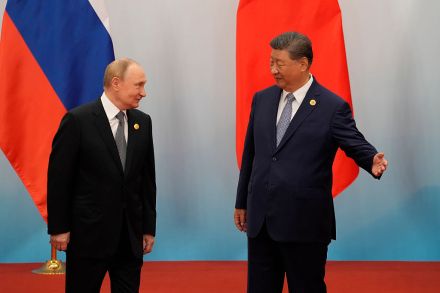
Chinese president Xi Jinping is headed to Moscow next week to meet with Russia’s Vladimir Putin. Xi last visited Russia in 2019, though the two leaders have met in person multiple times since then, including in Beijing just weeks before the invasion and in Samarkand, Uzbekistan, last September. Virtual meetings are a fairly regular affair for the two. This summit, however, is qualitatively different from the rest: it will take place in the heart of Russia while Moscow is waging war on Ukraine. To give Putin such a significant endorsement on the world stage underscores just how close the two powers are, even if Russia is, by almost any metric, the underdog in the partnership.

China’s big win in the Middle East

China had a diplomatic triumph last week that was a disaster for the US. In a vacuum, Saudi Arabia and Iran re-establishing relations would be a good thing, reducing the risk of conflict between two Middle East powers that have been engaged in proxy wars for years. But nothing happens in a vacuum, and this deal was brokered by China. Before Friday, Iran was in an accelerating downward economic spiral, with its currency at a record low. The country was increasingly viewed as the pariah that it is, alienated from much of the world as it pushed ahead with its nuclear program, supplied Russia with arms, and brutally suppressed its own citizens. Normalization does not fundamentally change that, but it does give Tehran breathing room at a time when the pressure should be increasing.

There’s no excuse for Russia’s downing of a US drone

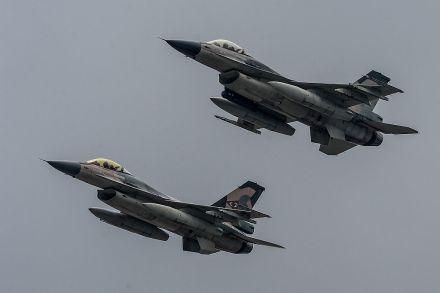
A US MQ-9 Reaper drone’s propeller was hit by a Russian Su-27 fighter jet over the Black Sea on Tuesday, causing the drone to lose control and crash. Before the fighter made contact with the drone, it and its wingman released fuel in what was likely an attempt to impair the American aircraft. The drone was in international airspace — which Russia seems to acknowledge — leaving no justification under international law for Moscow’s aggressive actions. Whether or not the physical contact was premeditated remains unknown. The Kremlin claims the drone’s “sharp maneuvers” caused it to crash and that its jet did not hit it.

vladimir putin army

The Ukrainian refugees who are returning home

Prague is still draped in blue and yellow flags, but with no end to the Ukraine war in sight, there’s growing uncertainty in Eastern European countries like the Czech Republic. As governments gear up to support Ukraine for the long haul, attitudes are also shifting among the millions of refugees who have found shelter in the EU since the war began.  Last year, the Ukrainian refugee crisis became part of everyday life in the Czech Republic, the EU country hosting the highest number of Ukrainian refugees per capita. At first, it seemed refugees were fleeing a country that would soon fall under the sway of the Kremlin. Later, the mood changed as Ukrainian gains on the battlefield raised hopes that the war could be won sooner than anyone had expected.

Why everyone in Britain is talking about the Lockdown Files

If you happen to be having a bad day, spare a thought for someone called Matt Hancock, possibly the most hapless person on the planet.  A former British health minister, Mr. Hancock has become a national laughing stock across the Atlantic. First, he got fired from his job presiding over the UK’s National Health Service for breaking his own Covid lockdown rules. Unlike Gavin Newsom or House Speaker Nancy Pelosi who did something similar, Hancock managed to get caught out in spectacular fashion. After helping issue edicts making it illegal for anyone in Britain to socialize with someone outside their family, Hancock was filmed canoodling his mistress like a high-school senior at prom night.  A real-life version of Britain’s Mr.

lockdown files matt hancock
amlo

AMLO hits a new low

The public-facing approach Andrés Manuel López Obrador deploys when dealing with political pressure from the US is typically belligerent, manic and laughably incoherent.  The Mexican president provided all three this week in reaction to the growth of bipartisan support in Washington for taking significant action against the drug cartels that rule much of Mexico by designating them as the foreign terror organizations they are — or even to the point of realistically considering an Authorization of Use of Military Force against the narcoterrorists.

GOP seeks answers from NBA over Chinese soft power display

House and Senate Republicans, along with a basketball star, are demanding answers from the NBA about its financial relationship with the Chinese Communist Party following an “in-your-face” display of CCP soft power in the nation’s capital. Following reporting from The Spectator, eight congressmen and four senators wrote to NBA commissioner Adam Silver to express “grave concerns about Chinese Communist Party propaganda being broadcasted and promoted at National Basketball Association games.

China's National People's Congress - Press Conference

Why using the military against Mexico’s cartels is catching on

"Slowly at first, then all at once" is the most famous line Ernest Hemingway never wrote, and credit its fame to its accuracy. It might feel like naming the Mexican cartels foreign terror organizations, and passing a bipartisan Authorization of the Use of Military Force against them, is an idea taking hold in Washington at breakneck speed. But it's been an item of discussion for years. What's causing it to finally break into the mainstream is the Biden administration's lackadaisical approach to the fentanyl crisis along with the increasingly untrustworthy behavior of Mexican president Andrés Manuel López Obrador. The White House, for its part, rejects the idea.

cartels

Why South Africa is cozying up to Russia and China

Vladimir Putin’s invasion of Ukraine opened the most dramatic divide between East and West since the Cold War. Most of these divisions were clear beforehand — Hungary and Turkey were longtime thorns in the side of NATO, for example. Yet South Africa’s warming ties with Russia and China seemed to come out of nowhere. South Africa's initial reaction to the invasion was the same as much of the Western world, demanding that Russia leave Ukraine. That did not last, however. South African President Cyril Ramaphosa said on March 17 that “The war could have been avoided if NATO had heeded the warnings from amongst its own leaders and officials over the years that its eastward expansion would lead to greater, not less, instability in the region.

Mexico has become a failed narco-state

Over the past week, a security policy conversation that's been taking place behind the scenes has emerged into the open. It involves those engaged on issues related to Mexico, trafficking across the southern border, and the cartel-fueled and China-backed flow of deadly fentanyl into the United States. It's that the time has come to escalate where the Mexican government of President Andres Manuel Lopez Obrador (AMLO) will not, including through the use of military force.

Prince Harry is surrounded by victims

In a shocking twist after the last three years of Prince Harry’s perpetual victimhood tour, last night in a live therapy session the prince finally admitted what we’ve known all along: that he isn’t one. Back on the stage for a live streamed Q&A with toxic trauma expert Dr. Gabor Maté, Harry claimed, “I definitely don't see myself as a victim.” You had to pay thirty bucks a head for the pleasure, but boy it was worth it to hear that. Victim, no. Narcissist, maybe. Later in the interview Harry said that sharing his experiences of his terrible life in his bombshell memoir Spare “feels like an act of service.” I’m sure his late grandmother would have different views on what a lifetime of service actually entails.

prince harry victim

TikTok may be the real test of the China Select Committee

The primetime launch event for the House China Select Committee shows the bipartisan consensus that has formed in Washington on the threat represented by China. It also illustrates the priorities for members of Congress, and their divisions over the appropriate response to Chinese influence as a military, economic and cultural adversary. Witnesses, including former Trump deputy national security advisor Matthew Pottinger and retired Lieutenant General H.R. McMaster, encouraged members to take Xi's words at face value — and emphasized that for too long Washington has looked the other way while China ate America's lunch.

china select committee

Constance Marten: a very British scandal

A British aristocrat and a Florida rapist are hardly a likely pairing; which is why the missing person case of Constance Marten and Mark Gordon enthralled the public this week. In early January, Marten and Gordon went missing with their newborn baby, who was born in the back of their car just two days prior. They set the car on fire with all their belongings inside on the hard shoulder of the M61 motorway in northwest England and ran. First they traveled to Liverpool, then to Harwich in Essex, to Colchester and on to East Ham station in east London. The police were constantly about two days behind them, before the trail went cold completely. Today, police confirmed the couple has been found and arrested — but the search for the baby continues.

constance marten

How Afghanistan erred by thinking Biden would never leave

By now, the American troop withdrawal from Afghanistan is etched into history as a failure — one that punctured the Biden administration’s self-professed persona as a collective of calm and cool national security veterans. The Taliban’s rapid capture of the entire country, coinciding with the meltdown of the US-funded Afghan security forces and the awful optics of desperate Afghans trying to get on a flight out of Kabul, will be examined by historians for decades. The history-writing is already well underway. On February 17, the GOP-held House of Representatives sent letters to several government departments demanding any and all records related to the withdrawal.

Drinking with soldiers in Ukraine

Getting into Ukraine can be tricky, especially if you don’t speak Ukrainian or have a national television network paying your way. I recommend the latter: it seems slightly easier and they have hair and wardrobe budgets. I cross into Chop on a short train carrying a mix of old couples and young kids. When I get off I’m directed to a booth manned by soldiers, who ask my business. Journalist, I say. The guard asks for press credentials. The best I can do is a copy of the magazine, but reading The Spectator is apparently something he’s unwilling to do and I’m waved through immediately. Russian spies, take note. I have two hours to kill before my train to Lviv, so I do what anyone would do — wander the blacked-out streets in search of a drink.

ukraine
germany

Germany’s folly: Berlin has miscalculated on Russia and China

The notion that closer trade connections with the West will necessarily set less enlightened nations on a course toward prosperity and liberty is nonsense, but convenient nonsense. Germans have a phrase for it — Wandel durch Handel, change through trade — often given as a justification for their business dealings with Russia and China. Unfortunately, the change they triggered was in Germany. In one case it has been for the worse; in the other it appears to be headed that way. To start with Russia, it’s true that Germany’s ultimately disastrous dependency on natural gas from the east has its origins in the Ostpolitik years: by 1989 the Soviets were supplying West Germany with around a third of its gas.

Washington’s yes-men in Japan

It was nighttime in Davos, 8:31 on January 18 to be exact. Japanese journalist Ganaha Masako had been standing out in the cold for three hours near the entrance to a building which, she had heard, was being used as a venue for a World Economic Forum event that evening. Ganaha had picked up on some additional chatter. Klaus Schwab, the head of the WEF, was rumored to be inside. It was a long shot, but Ganaha wanted to ask Schwab some questions about globalism. And then, suddenly, Schwab appeared. Fleshy cheeks jiggling slightly as he shuffled along the snow-dusted sidewalk, he stepped cautiously out of the WEF event forum with a few handlers. Ganaha pointed her camera at Schwab and asked him for an interview. He ignored her and kept shuffling along.

One year of war in Ukraine: six experts predict what will happen next

As the war in Ukraine enters its second year, today seems as a good time as any to reflect on its first, and see what the future might hold. Six foreign policy experts from across the spectrum of opinion offered their thoughts to The Spectator. As the war in Ukraine enters its second year, how do you foresee the conflict ending? Ted Carpenter: There are several possible outcomes, but the most likely is a ceasefire without a formal peace accord. That move would end the bloodshed, but it would leave the underlying disputes unresolved. Such an outcome would be similar to the armistice that ended the Korean War. It also would create the world’s largest and most dangerous “frozen conflict.

ukraine war nato