Latin America

Kneecap’s breathtaking Cuban hypocrisy

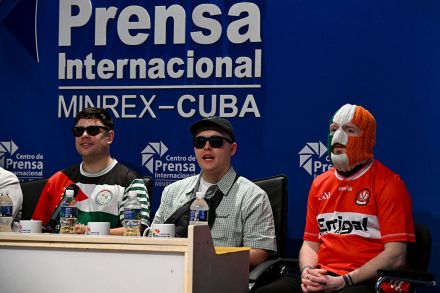
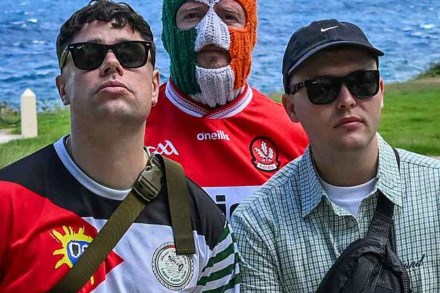
While most Cold War cultural battlegrounds have long been paved over or turned into a theme park, Cuba has retained a place in the hearts and minds of the West’s luxury leftists. Beautiful weather, sandy beaches, famous cigars and, of course, a long-standing enmity with the US have all ensured the country remains perhaps the last stubborn redoubt of revolutionary, western hipsterism. So it made perfect sense that leading the charge in last weekend’s much trumpeted “aid flotilla” to the island nation was the Irish language-speaking novelty rap act, Kneecap.  Much like their contemporaries, Bob Vylan, they take delight in issuing inflammatory statements and then, when they receive the sought
kneecap

Podcast wars, Cuba and Corbyn – with Steven Crowder

33 min listen

Steven Crowder, host of Louder with Crowder, joins Freddy to discuss the warring factions in the podcast world, worsened since Charlie Kirk’s assassination; the global left-wing alliance promoting communism in Cuba, whether Trump was wrong to attack Iran and why the Mark Carney kowtowed to China.

El Mencho’s last stand

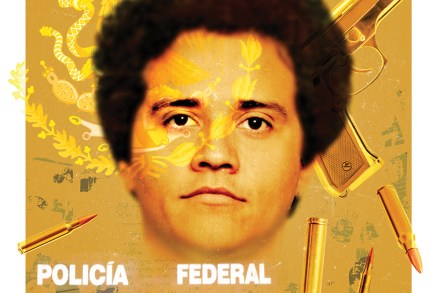
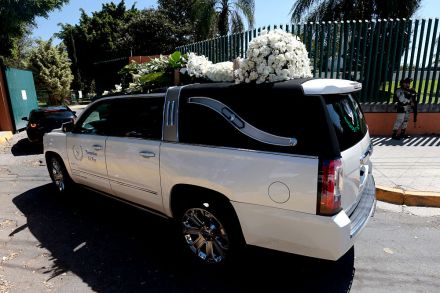
Jalisco, Mexico No one seems to know exactly how El Mencho was killed. We are told the feared leader of the Jalisco New Generation Cartel was captured by the Mexican army during a firefight in late February, and subsequently died of his wounds. Beyond that, there is very little information. Why are the Mexican and US governments being so secretive about his death? El Mencho – real name Nemesio Oseguera Cervantes – was 59 when he died. He was Mexico’s most-wanted man; US authorities had offered a $15 million reward for information leading to his arrest. I decided I had to go to Jalisco, where El Mencho made his last

el mencho

El Mencho is dead. What’s next for Mexico?

For as long as there has been a Mexico, there have been cartels. Geography is not always destiny, but in Mexico’s case it has been stubbornly close. For centuries, states have tried to impose order on Mexico’s northern frontier. None have succeeded. Power in Mesoamerica always radiated outward from the Valley of Mexico. The Aztecs built their empire there. The Spanish consolidated their rule there. The modern Mexican state governs from there. To the north lies a harsher landscape – arid, mountainous, thinly populated and historically resistant to centralized control. Deserts and mountains provide space. Space creates autonomy. Autonomy, in weakly governed regions, creates opportunity for dissent, for rebellion, for

el mencho

El Mencho’s death plunges Mexico into chaos

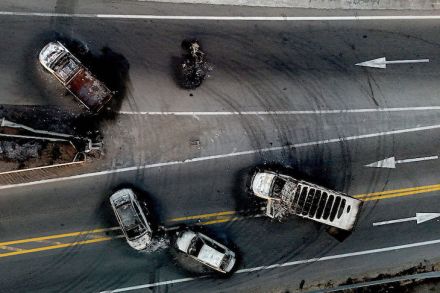
Mayhem has erupted across Mexico after security forces eliminated Nemesio Oseguera Cervantes, the drug lord widely known as El Mencho, in a gun battle in the town of Tapalpa. El Mencho was the head of one of Mexico’s most violent and sadistic organizations, the Jalisco New Generation Cartel (CJNG). Henchmen forced passengers out of their cars before setting the vehicles alight, leaving them as burning roadblocks Their reaction was about as solemn and dignified as you’d expect. Henchmen forced passengers out of their cars before setting the vehicles alight, leaving them as burning roadblocks. Scorched sedans and toasted trucks lined the highway to the World Cup stadium in Guadalajara, Mexico’s

el mencho

Is Trump dismantling Venezuela’s socialist state?

24 min listen

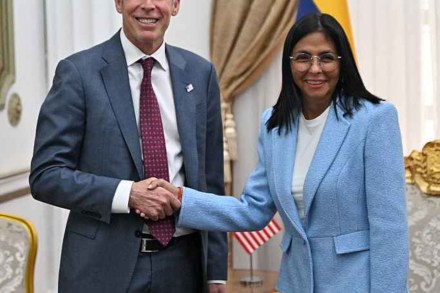
Daniel Di Martino, a fellow at the Manhattan Institute, joins Freddy to discuss the ongoing situation in Venezuela. Over a month on from the “bold and spectacular raid” and capture of Maduro, Daniel explains the reasons why he has hope in the government of Delcy Rodríguez and the changes that have occurred since – from the increase in the oil price to the release of political prisoners. With only three years left of the Trump presidency, how can he be sure that the interim president isn’t just playing for time? We hope our listeners will forgive the abrupt ending to this Americano episode, as The Spectator’s street was briefly evacuated

Cartel drones vs Texas lasers

Yesterday, El Paso, Texas, was placed under severe restrictions from the Federal Aviation Administration. For unspecified reasons of national security, no aircraft would be allowed in or out for ten days. Washington sources soon confirmed what many suspected: the cause was hostile drone activity from Mexico. Then there was an about turn. Within a few hours, the flight ban was lifted. What actually happened? We know that the Department of War has been working on an anti-drone system for some time, using lasers to shoot down craft. One of these laser systems was actually deployed near El Paso and officials claim a drone was indeed shot down. The FAA, concerned

Was the raid on Venezuela real?

From the very start, there was something weird about Operation Absolute Resolve. The official story went something like this: after a whirlwind air attack, which included the use of suicide drones for the first time, special operators from the US Army’s renowned but shadowy SFOD-D unit (“Delta Force”) were helicoptered into the Fuerte Tiuna military complex in the south of Caracas, the capital of Venezuela. They defeated the local garrison, used “massive blowtorches” to breach heavy metal doors in a fortress-like residential site within the base, captured the President of Venezuela, Nicolás Maduro, and his wife, then spirited them back to the helicopters and flew them out to face charges

venezuela

‘Regime influence’: Trump’s foreign-policy third way

At 2 a.m. on Saturday, President Trump gave a New Year’s kinetic expression to his recently published National Security Strategy and what it means in the American hemisphere. If we take President Trump at his blustering word – which those in the administration’s Maduro-adjacent crosshairs should – this is just the first, big, shock-and-awe move by the United States in a resetting of the rules-based order that has governed our hemisphere. This time on America First terms. In Europe, those who take Trump seriously and see the long-term upside in his policies, call him “Daddy.” Last weekend Trump showed the “Papi” side of this national security strategy in our hemisphere. The Venezuelan people woke up

donald trump nation influence

The hypocrisy of the Maduro fan club

Finally, the left has found a “kidnap victim” it cares about. Having spent more than two years making excuses for Hamas’s savage seizing of 251 Israelis, having violently torn down posters of those stolen Jews, now the activist class has suddenly decided that abduction is bad after all. Why? Because a dictator they admire, Nicolás Maduro, has been abducted by the United States. What do we even say about people who get more agitated by the seizing of a 63-year-old corrupt ruler than they do by the abduction of a nine-month-old Jew? That was Kfir Bibas, kidnapped along with his mother and his four-year-old brother during Hamas’s carnival of fascist

maduro

Nicolás Maduro’s How to Win Friends and Influence People

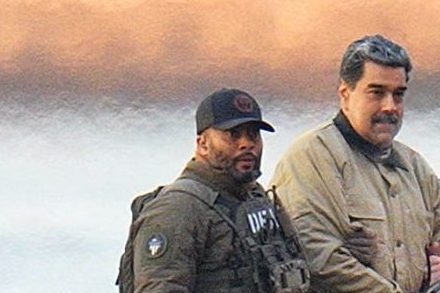
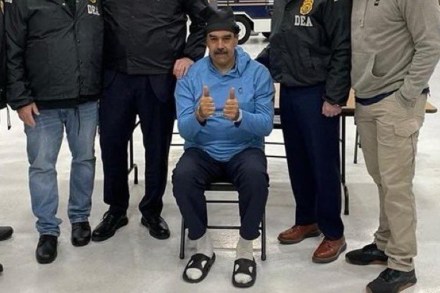
Cockburn stumbled into The Spectator’s New York office this morning afflicted with that annual January woe: the post-holiday blues. He was having a serious pout at his desk before he was chastened out of this gloom by his northern colleagues’ new neighbor: Nicolás Maduro. No one had a worse Christmas season than the deposed Venezuelan presidente. First, he and his wife were woken in the middle of the night by American soldiers knocking on their door; then they were forced to move into the worst borough in New York: Brooklyn. But despite all this, Nick is holding onto a positive mental attitude. Just look at this post-capture image: Here we

maduro

Was Maduro’s capture the greatest special forces raid in history?

On this occasion no one can accuse Donald Trump of hyperbole. The President praised the Delta Force team that seized Venezuelan leader Nicolás Maduro as “incredible.” The operation to capture Maduro – codenamed “Absolute Resolve” – was months in the planning, and Trump watched it unfold in real time. “They broke into places that were not really able to be broken into,” he said. “I’ve never seen anything like it.” According to the New York Times, the operation began last August when CIA officers infiltrated Venezuela and began gathering intelligence about the habits and movements of Maduro. They were assisted by stealth drones high in the sky overhead and the

The long history of kidnapping Latin American chieftains

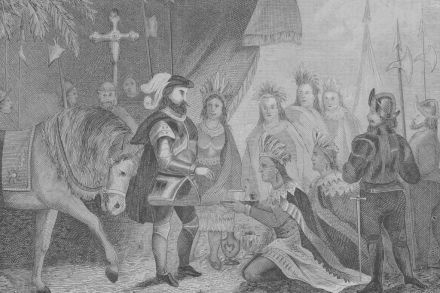
One of the few benefits of being an anthropologist is the uncanny exhilaration one feels watching novel current events as re-runs from previous episodes in the history of mankind. Donald Trump’s capture of Nicolás Maduro, President of Venezuela, is no exception. Kidnapping Latin American emperors is a continental tradition. It’s simply the most practical method for breaking the chain of command in the region. It triggers succession chaos, enables the extraction of resources and keeps the rest of the hierarchy more or less intact. In earlier centuries, it was Spain and Portugal. Today, it’s the United States. In the colonial era, the objective was to secure enough gold to beat

latin american

What is the Donroe Doctrine’s plan for Venezuela?

The US launched a military operation in Venezuela, targeting the regime in Caracas and detaining President Nicolás Maduro, who has been transferred to New York where he faces charges of narcoterrorism. Donald Trump has described the move as a decisive defense of American interests, but critics point point to the double standards when it come to Trump’s “America First” doctrine. Jacob Heilbrunn, editor of the National Interest, joins Freddy Gray to discuss the strategic importance of Venezuela’s oil reserves, the role of socialism in the country’s collapse, and how Trump may seek to manage the risk of regional backlash and a counterinsurgency.

donroe doctrine

Can the ‘Donroe doctrine’ really change Venezuela?

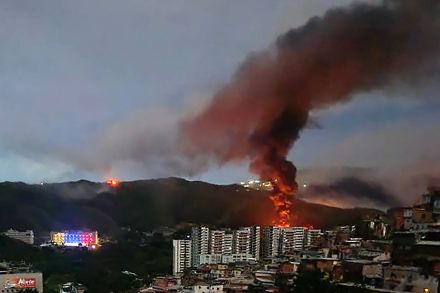
During the early hours of Saturday January 3, an official statement from the White House, signed by President Trump, confirmed that the US had captured both President Nicolás Maduro and his wife, Cilia Flores, and taken them out of Venezuela. At 2 a.m. sharp, thunderous sounds echoed through the capital city, part of what Trump called today “an assault not seen since World War Two… one of the most stunning displays of military might and competence in American history.” It was certainly an attack unlike anything ever seen in Venezuela. Within two hours, all of Caracas looked like a massive fireball, communications were down and areas were without power. The