Europe

Making gay rights great again

Dark days these are, but still the good Lord provides hope—not that we wretches deserve it! On Tuesday, Josh Lederman of NBC News reported: ‘The Trump administration is launching a global campaign to end the criminalization of homosexuality in dozens of nations where it’s still illegal to be gay…a bid aimed in part at denouncing Iran over its human rights record. ‘US Ambassador to Germany Richard Grenell, the highest-profile openly gay person in the Trump administration, is leading the effort, which kicks off Tuesday evening in Berlin.

richard grenell gay rights

Bibi blows up Israel’s Central European alliance

Nationalism is a supremely powerful force in politics, but it’s perennially difficult to forge lasting alliances between competing nationalisms – as this week’s news demonstrates yet again. No country has benefited more from the growing split between Brussels and the European Union’s formerly Communist member states than Israel. In Warsaw, Budapest, Prague, and Bratislava, Prime Minister Benjamin Netanyahu found receptive European audiences, which Israel needed as the EU has soured on Israel’s occupation policies towards the Palestinians and increasingly aggressive rhetoric towards Iran. Netanyahu invested in these new relationships, which were based in more than mere convenience.

bibi warsaw

Merkel’s immigrant boom wreaks havoc in Germany’s prisons

Angela Merkel’s decision to allow more than one million migrants into Germany has caused a crisis in Germany’s prison system. About half the prisoners in Berlin and Hamburg are now foreign-born, according to the latest figures in the German press, and in prisons across the country, German is becoming a foreign language. This surge in outsiders on the inside coincides neatly with the 2015 decision to allow in migrants from the Middle East, Africa and Asia. All regions of Germany report a ‘very strong increase’ in the number of foreign and stateless prisoners, according to data from the past three to five years. Prisons throughout Germany are overcrowded and struggling to handle the influx in population.

germany prisons

The wrong Turning Point

As high-minded as people who write about politics imagine themselves to be, we all love a good slapfight. The word ‘debate’ might have lofty intellectual connotations but the most prominent war of words in recent history culminated with William F. Buckley calling Gore Vidal a ‘queer’. It would be fun, then, to write something very mean about the newly launched Turning Point UK, but I don’t have the heart. Everyone involved seems frighteningly young, and constructive criticism might achieve more than mockery.

turning point uk

Christopher Wylie is a hypocrite

Christopher Wylie burst on to the international scene last year in a series of explosive articles in The Observer and The New York Times. Here was a charismatic, gay, vegan whistleblower for the digital age. Pushed by journalists, academics and tastemakers as the central node in a networked international conspiracy, the Wylie story supposedly showed that democracy could be ‘hacked’ by a coterie of dark money billionaires, Breitbart editors, Russian agents and tech weirdos. It also neatly explained away the problem that so many people voted for Brexit and Trump.

christopher wylie

The beginning is nigh

People do inexplicable things in January, like laying off drink for a month, taking out gym memberships they will never use, and making predictions about the year to come. As I shall not be ‘going dry’ this month or any other, and as I do not intend to alter a ‘fitness regime’ of afternoon naps in a sauna, the only remaining way to make a public fool of myself is to predict what will happen in 2019: 1. Look to the skies. I don’t know what a Super Blood Wolf Moon Eclipse is, but it’s coming to the US on the night of January 20. And the year will end with a transit of Mercury, and an annular eclipse over the Arabian Peninsula. I don’t know what that means, either, other than that the atmospherics aren't good. 2. The atmospherics are no better in the markets.

new years predictions

The Prague delusion

In 1901, Sigmund Freud published a book called The Psychopathology of Everyday Life. It offers entertaining observations about slips of the tongue and pen, ‘bungled actions’ — e.g., you mistakenly reach for your keys when approaching the door of a friend’s house — various forms of forgetfulness, and what Freud congregates under the categories of ‘determinism and superstition.’ As long as you do not take it too seriously, it is an amusing agglomeration of eccentricity and (mostly) mild insanity. It also cries out for updating. Freud died too soon to encounter a stupendous form of everyday psychopathology, one that is everywhere patent in the upper reaches of American society today.

prague

Should George Soros be Person of the Year?

The Financial Times has picked George Soros as its Person of the Year for 2018. Soros is my person of the year too, but the year is 1996. He represents a style of economics and politics that looked set to conquer the world in the Nineties, but which is now repudiated whenever people get the chance to vote, and wherever people don’t get the chance to vote at all. ‘The Financial Times’s choice of Person of the Year is usually a reflection of their achievements,’ the FT explained. ‘In the case of Mr Soros this year, his selection is also about the values he represents.’ Soros’s values are not all bad, but their repudiation at the ballot box is not all good.

george soros

The confusion of the Confucians

The French fight it out in the streets, the British leave it to their politicians to stab each other in the back, and Americans turn to the market. This is normal service in abnormal times. The turbulence affecting Western societies isn’t going to stop soon, and the ship cannot be steadied by the hand of government on the tiller, whether by small changes to the tax code or big subsidized boondoggles. In fact, the voters suspect that government — not government in principle, but government as practiced — is the problem. And they’re right. I’ve been in Washington, DC for a couple of days, so excuse the world-historical reflections. Two big changes are afoot in the world now, digitization and the shifting of global GDP away from the Euro-Atlantic region to Asia.

Kissinger

Steve Bannon goes to war with the Pope

Former White House chief strategist Steve Bannon says Pope Francis is ‘beneath contempt’. Bannon is, of course, far from being the only Catholic to criticize the Pope, who is accused of watering down Catholic teaching. The pontiff’s stance on the migrant crisis – he has said migrants’ dignity should be a priority over national security – has also angered many Catholics, as has Francis’s recent suggestion that populism sows the hate that leads to Hitler. For Bannon, who despite having been married three times says that his Catholicism is central to his life, these things show that the Pope is on the side of the elite and not the little guy. His solution?

steve bannon

The Special Relationship between the Bushes and the Queen

It’s good of Prince Charles to represent the British royal family at the funeral of President George H.W. Bush in Washington, D.C. today. No doubt, however, Queen Elizabeth II will wish she could be there. The Queen doesn’t do many foreign trips these days — she’s 92 — and Charles is acting as ‘shadow king’. But she and Bush 41 were close. Their friendship evokes memories of a time when the relationship between Britain and America was truly special — not just a lot of hot air about wars. As the Queen’s latest biographer Robert Hardman notes, Elizabeth II and Bush 41 relished each other’s company. They seem to have bonded over the infamous ‘royal talking hat’ moment outside the White House in May, 1991.

george bush queen elizabeth

Putin turns up the heat on Ukraine – again

Although seldom noticed by anyone west of Warsaw, there has been a war going on in Europe for almost five years now. It began in early 2014 with a Russian secret operation in mid-February that annexed Crimea and soon spread to overt Kremlin military intervention in eastern Ukraine as well. Serious fighting followed, and that conflict remains unfrozen and deadly. While there has been no sustained combat in eastern Ukraine in years, neither is that front quiet. Kiev has never accepted the Russian theft of Crimea and the ‘people’s republics’ in Donetsk and Luhansk, Kremlin-run pseudo-states that serve as bases for Russian military units on Ukrainian soil. Those units regularly shell Ukrainian positions, because they can.

petro poroshenko ukraine

Emmanuel Macron is toxic and Paris is burning

The roundabout on the departmental highway, at the exit for the Super U supermarket and gas station, the closest place to buy fresh milk, has been occupied by the Gilets Jaunes, demanding cheaper diesel. They wear the emblematic yellow safety jackets of their movement, although some are orange. Passing motorists sound their horns and display their own yellow gilets on the dashboard, to show solidarity. There is no barricade, traffic flows rather freely. It is all rather jolly. One man is cooking sausages on a barbecue. I slow down, as seems to be protocol, wind down my window to smile, shake a few hands, say a few bonjours. Hearing my accent, I got a chorus of ‘haffanicedays.’ I smile some more. A lady sends me on my way with a madeleine.

paris burning gilets jaunes

One hundred years after ‘A Nation Fit for Heroes’

The centennial of the armistice ending World War One has received much attention, and deservedly so, and yet there’s another centennial, closely related, that also deserves to be remembered. On November 23, 1918, Prime Minister David Lloyd George, campaigning in Wolverhampton, declared, ‘What is our task? To make Britain a fit country for heroes to live in.’ Lloyd George thus put forth a vision of post-war solidarity, in keeping with the sacrifices made in wartime. National solidarity was made inevitable by mass-mobilization. That is, since the success of the levée en masse in revolutionary France, nations had come to understand that they needed the whole of their population motivated enough — and robust enough — to support the fight.

David Lloyd George

Leading Brexiteers in DC to talk US-UK free trade agreement

David Davis, the former Brexit minister, and Owen Paterson, another pro-Brexit ex-minister, confirmed Friday morning that they’re meeting with Trump administration officials to discuss a US-UK free trade agreement. Theresa May, the stricken British prime minister, refuses to discuss a US-UK FTA until after Britain has withdrawn from the EU in March 2019, and after Britain and the EU have made a new trade deal. This week, May forced a draft of her withdrawal bill through her cabinet, but sparked resignations from her cabinet and open revolt from pro-Brexit Conservatives. ‘We’re clearly here to advocate for a US-UK free trade agreement,’ said Shanker Singham of the Institute for Economic Affairs, who serves as an outside adviser to Boris Johnson.

david davis owen paterson washington

I would drink Trump wine if it were available in France

Donald Trump’s tweet today, au dessous will annoy many people, including me, who are forced to admit he is right. France and the rest of the EU do make it hard to sell American wines in France, and it’s easy for the French to sell wine to the Americans. I’ve a mate here who sells two million bottles a year in the USA and he drives a smart car and lives in a very big house. https://twitter.com/realDonaldTrump/status/1062331024426913792 Mr Trump is famously a teetotaler, yet he can in this instance be said to speak with some authority since he is the proud owner of the Trump Winery, near Charlottesville, Virginia.

trump wine

Trump had an opportunity to redefine American foreign policy. He blew it

Donald J. Trump is home from his whirlwind weekend trip to commemorate the 100th anniversary of the First World War’s end. Even by The Donald’s formidable china-breaking standards, this was a doozy which will be discussed with opprobrium by the Transatlantic smart set for some time. President Trump seemed to go out of his way to upset his French counterpart and host Emmanuel Macron, who’s hit a political rough patch and needed some brotherly love. That bromance is dead and buried, however, and Trump fired off a mocking tweet at Macron as he boarded Air Force One for Paris that denounced the French president’s backing of a European army as ‘very insulting.

donald trump compiègne
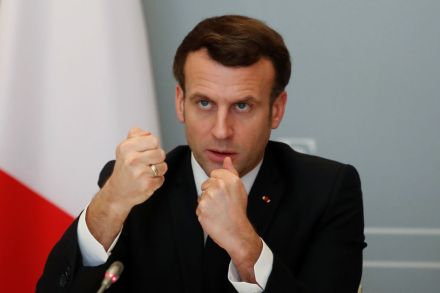
macron trump

The clash between Macron and Trump

So Donald Trump has come and gone, and he left behind a bemused French press. Frankly, they don’t know what to make of the American president other than he demonstrated yet again ‘his bravado and unpredictability’. The media class in France has always been close to the political establishment (hence the history of romantic liaisons between the two) and journalists have a reciprocal respect for the political class that borders on deference. That is why President François Mitterrand was able to keep both his love-child and his cancer secret until the final weeks of his 14-year presidency. Trump does neither deference nor respect, and from the moment he touched down in France on Friday evening he appeared intent on antagonizing his host.

Is Donald Trump more popular than Emmanuel Macron in France?

Are you enjoying the latest episode of the Trump-Macron show? It’s the most intriguing bromance in modern politics: two leaders from different and opposing political worlds who nonetheless fell for each other. It was self-love-à-deux from the moment they met. And they consummated their love by bombing Syria last year. They even bicker and make up like a passionate couple. Today they are in Paris to mark Armistice Day, and Trump may be pleased to have left behind the Washington brouhaha following the midterms and his firing of Jeff Sessions. Yet the broader and more remarkable point is the extent to which Trump and Macron’s fortunes have reversed.

trump arrive macron
british muslims

What happened when I wrote about Islam in Britain

‘I was segregated from non-Muslims from the beginning, not just physically, but also in terms of the core beliefs I had instilled in me,’ Sohail Ahmed tells me. He’s a soft-spoken 26-year-old student from East London who grew up in a fundamentalist Muslim community. In 2014, Sohail’s parents sent him to an Islamic exorcist in Newham because they believed his homosexuality was caused by a jinn, or spirit. The exorcisms didn’t work and his parents eventually kicked him out of the home. Sohail had previously contemplated a suicide attack in Canary Wharf to redeem himself. I met Sohail while researching an article about Islam in Britain. This was eventually published in the Wall Street Journal on August 29. It was called ‘A Visit to Islamic England.