Food & Drink

Let Cockburn debase himself at your Christmas party

It is, as Andy Williams memorably put it, the most wonderful time of the year. Christmas party season has hit the Swamp — and naturally Cockburn is in his element. He has dusted off his dowdiest Clark Griswold cardigan and Santa hat. He has stocked up on milk thistle and Brita filters to abate the inevitable daily hangovers. His social calendar is quickly filling up with invites from think tanks, embassies and slightly grubbier magazines than this one — but it could be fuller still. Email your party invitations to cockburn@thespectator.

christmas party

The finest festive fizz

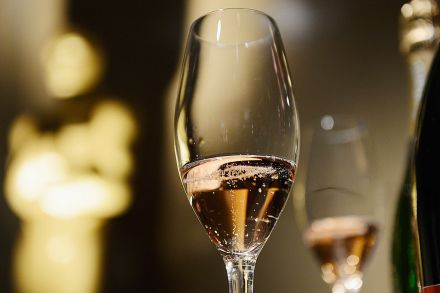
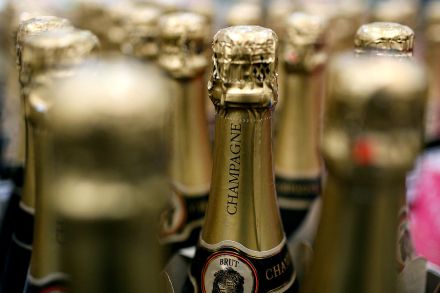
A dinner party without good conversation is like flat Champagne: pretty pointless. It’s like that not-so-funny joke about the inscription on an atheist’s tombstone: “All dressed up and nowhere to go.” Of course at a miserable dinner party you and your glad-rags have reached a destination of sorts, but (as for the late atheists) it’s not the one you were expecting. How to avoid such an infernal disappointment? Jean-Paul Sartre famously felt that hell was other people; all I can say is, that’s no attitude to bring to the table.

champagne
chambertin

Silky, sumptuous wines for Christmas dinner

I have had occasion to mention George Saintsbury’s classic, if quirky, Notes on a Wine-Cellar (1920) in this column before. Back then, it was to sample and swish about the mouth Saintsbury’s fondness — which I took to be a broader public fondness — for fortified wines like port, sherry, and Madeira. I suspect that most of my readers, except when listening to Flanders and Swann, rarely give Madeira a second thought. And although afternoons were made for sherry, they were made for other things too. As for vintage port, we are wheeling into the season — Thanksgiving through New Year’s — when it comes into its own and gladdens the hearts of many. I am certainly counting on it to gladden the hearts of the serious thinkers chez Kimball at Thanksgiving and Christmas this year.

Drinking with James Bond

James Bond’s most impressive talent is not his prowess as a spy or his skills of seduction. It’s his ability to always get exactly what he wants at the bar. In the 1954 novel Live and Let Die he orders a round of Old Fashioneds while on a train to meet Felix Leiter, his CIA opposite number. Not only does the buffet car make them for Bond, they even have his preferred brand of bourbon, Old Grand-Dad. You try pulling that sort of thing on the Acela from Penn Station to DC. ‘Sorry Solitaire, they wouldn’t do us a cocktail, but I’ve got a cup of Lipton’s and a bag of pretzels.’ We’d all like to drink like Bond but, lacking his miraculous powers, we need to be in the right sort of bar to do it.

bond
wines

Two modest but delightful wines

According to Tennyson, ‘in the spring, a young man’s fancy lightly turns to thoughts of love’. Be that as it trochee, in the autumn a man of any legal age abandons rosé and moves on to Cabernet. If he is broadminded, he also makes a spot in his heart for Chablis, which I’ll come to in a moment. First, some anthropological, or perhaps I mean ethological, news. A friend recently passed along a slender but improving book called Wine: the Source of Civilization. Written by John J. Mahoney, a ‘certified wine educator’, it is full of edifying revelations. Right at the beginning, we have this bulletin: ‘Man did not settle from nomadic travels to build cities and civilization, and then develop wine.

The Washingtonian’s dreary, woke ‘best of’ list

Cockburn was waiting to get his beard trimmed at the barber recently and found himself flicking through the latest issue of the Washingtonian, an outlet where fangirling over the Biden administration passes as journalism and a love of America’s dreary capital substitutes for a personality. The issue in question featured Washingtonian’s annual best of list. This is supposed to be a list of bars, restaurants, people and other stuff that makes DC such a great place to live. But this year’s offering had Cockburn browsing Zillow for homes in Ketchum, Idaho, faster than you can say 'Fauci Pouchy'. It’s been years since Cockburn relied on the Washingtonian for advice on having a good time in the imperial city, but the 2021 offering is especially unappetizing.

washingtonian

One of Washington’s best bars returns

Cockburn has rarely met a pub he didn't like, though plenty of pubs haven't taken a liking to Cockburn. Fortunately, occasional dissolute behavior was never a problem at Post Pub, the old neighborhood watering hole on L Street in Washington. So you can imagine Cockburn's dismay when he learned last spring that Post Pub would be closing after 43 years. The cause wasn't so much the pandemic as it was a tragic outbreak of public health. The Washington Post reports that 'back in the era of hard-drinking lunches, bartenders at the Post Pub used to stir up three-gallon batches of gin and vodka martinis and a two-gallon batch of Manhattans to prepare for the daily crush. And that was just for Mondays.’ What happened?

post pub

Condiments and conservatives

Years ago, an entrepreneurial friend had the idea of marketing ketchup with a catch, a jaunty political declaration. I say ‘many years ago’, and to give you a sense of just how ancient this ancient history is, contemplate that the ketchup was called ‘W’ and the ‘W’ stood for the personage that the followers of William Jefferson Clinton mean to disparage when they removed that letter from the computer keyboards in White House and other government offices just before the W in question — George W. Bush — took office.

people

Thoughts on dearly departed vintages

Some people, out at a nice restaurant, are shy about sending a bottle of wine back when there is something wrong with it. They shouldn’t be. Wine, as the vintners like to tell you when everything is going as it should, is a living thing. Like all living things, it is subject to a variety of unfortunate vicissitudes. We’ve probably all encountered ‘corked’ wine at one point or another — that taint caused by a smidgen of 2,4,6-trichloroanisole (TCA) or 2,4,6-tribromoanisole (TBA), which can be transferred from or through a cork. But wine is susceptible to other liabilities as well. One is the same liability that, sooner or later, affects us all: age.

wines

A taste of heresy

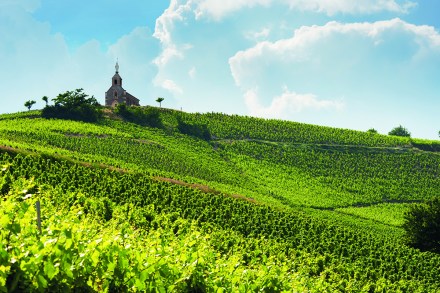
The weight of history — a seemingly infinite vista of incident — hangs heavy in the Languedoc in the South of France. The region (also called Occitania) is the place where people said ‘oc’ rather than ‘oui’ for ‘yes’ — langue d’oc instead of langue d’oïl. Gauls, Romans, Visigoths, Franks, Moors, Cathars: one by one they came, they pillaged or prayed, slaughtered or were slaughtered. A plaque in the Carcassonne cathedral reminds us that only yesterday St Dominic (1170-1221) preached there during Lent. A lot of nasty things have happened in Languedoc over the centuries. Perhaps that is one reason the people are so cheerful now. The area is also the biggest wine-producing region in France, which also contributes to the quota of cheerfulness.

languedoc

The need for mead

I used to be terrified of homemade alcoholic drinks. Someone would bring out the elderflower champagne at a picnic, and I’d wave it away: ‘I’d love to. But I’m driving...’ Bottles of homemade cabernet would be pressed on me with irrepressible warmth at Christmas time; I’d accept them with a lying smile on my lips and an inward resolution to boil the contents for seven hours with sugar, oranges and cinnamon sticks and fob it off on guests as mulled wine. And for my narrow-minded ways I now repent. As I must, because with maturity comes the realization that, as Solzhenitsyn said, there is no us and them. The line dividing good from evil, the poised socialite from the homemade-liquor inflictor, cuts through the heart of every man.

mead

The dark side of energy drinks

I’m trying to cut down on energy drinks. I know, that’s a rather pathetic undertaking compared to going sober or quitting smoking. But it is hard. I wade through mental fog, yawning yawns that rival a buffalo’s bellow. Switch to coffee? Yes, I could. But hot drinks are not the same. I like the cold, refreshing quality — and the ring pull’s crack. Perhaps I will give up giving up and just embrace addiction. It’s a small one anyway. That is my defense, but also my confession. We can understand, if not excuse, people endangering their health for the sake of alcohol or cigarettes — but for a caffeinated soft drink? Or perhaps there are darker forces at play here.

energy

The green, green wines of Portugal

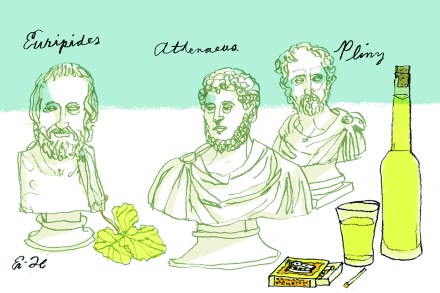
If I am going to talk about summer wines, I am going to have to introduce you to Gaius Plinius Secundus, known to us as Pliny the Elder. Pliny was a busy chap. Army commander and admiral in the Roman navy. Gourmand. Pal of the emperor Vespasian. Pliny did not have writer’s block. He published the first 10 books of his sprawling Historia Naturalis in 77 AD. Despite its title, the book is about a lot more than natural history. Really, it is a sort of proto-encyclopedia. Pliny hadn’t finished revising the rest when he went to investigate the strange things that were happening down at Mount Vesuvius in 79. He died in the conflagration. The chap we know as Pliny the Younger — the elder Pliny’s nephew and heir — was with him.

vinho verde green

In defense of decaf

We all have our daily rituals. We’re told they’re a necessity to live a healthier, happier, more productive life. Some pride themselves on an early start, a morning jog, or a half hour spent journaling in their wellness notebook. Not a morning person, I’d be nervous to jot down — and read back — my view of the world at 7 a.m., so I’ve never taken up the fad. But I reserve no judgment for those who do. Why then, is there such judgment about my routine, which every day involves fueling up on decaffeinated coffee? To be fair and objective, I’m guilty of nothing more than ‘fitting in’. Coffee ranks as one of the most popular drinks worldwide, with more than 400 billion cups consumed every year.

decaf

Pahlmeyer’s proprietary perfection

When Jayson Pahlmeyer left the practice of law in the mid-1980s in order to devote himself to winemaking, he said, ‘All I wanted to do was to create my own “California Mouton” — a rich, powerful Napa Valley Bordeaux blend, a wine that would drop wine lovers to their knees.”’ He did it in 1986, the first vintage of his Proprietary Red, a luscious Cabernet blend that won plaudits throughout the world of wine. Pahlmeyer’s Merlot and Chardonnay have been similarly decorated, and I may return to them in a future column. For now, I want to focus on the Proprietary Red.

Pahlmeyer

A tale of two tapas

In 146 BC, Scipio Aemilianus laid siege to and destroyed the city of Carthage, thus bringing the third Punic War to an end. Scipio made a gift of what remained of the Carthaginian library to the kings of Numidia, Rome’s old ally against Carthage. At the direction of the Senate, however, he held back one book, the agricultural treatise of Mago, which he sent back to Rome. It was duly translated into Latin, but all that remains are fragments, which is too bad, for Mago apparently had a lot to say about many exigent matters, including the cultivation of grapes and making of wine. It appears that it was the Phoenician precursors of the Carthaginians who, around 1500 bc, first planted grapes in the Iberian peninsula.

Tapas bar

Georgians on my mind

Long before Achilles chased Hector around Troy and Homer wrote about the οἶνοψ πόντος, the ‘wine-dark sea’, people living in what is today the republic of Georgia were making wine. Archaeologists have found evidence of wine making there dating from 8000 BC: an impressive statement to the inventiveness to which necessity gives birth. Stretching from the Black Sea to the Caucasus Mountains, Georgia is home to a wide variety of climates, types of soil and geographical physiognomies. Today it is home to some 500 varietals, few of which are familiar to westerners (even though many if not most western grapes probably have precursors in Georgia and the Black Sea ‘cradle of wine’).

georgian wine

Why Grüner is my go-to

The first person ever to tell me something true about wine was my first real boss, a generous and wise woman who toted me along to the Frankfurt Book Fair with her for several years in my early twenties. At the time I drank mostly sweet red blends that came in denominations of ‘box’ or ‘jug’. When she sensed (or perhaps shared) my fear of humiliating us both when I was asked for my wine order at a long, formal luncheon in a rather famous hotel, she leaned across the many forks of her place setting and whispered to me, ‘Get the Grüner.’ She elaborated that the American white wines I’d had were probably sweet or buttery, but German whites, like dry Rieslings and Grüner Veltliner, were mineral and fresh and lovely. They paired well with all foods.

grüner

The Judgment of Paris

What’s the most famous story about wine in the last 50 years? My candidate is the so-called ‘Judgment of Paris’ of May 1976. It was actually two judgments, one of American and French Chardonnays (the subject of the movie Bottle Shock), the other, more consequential, of American and French Cabernets (well, French Bordeaux, which are predominantly Cabernet). The competition was organized by Steven Spurrier, now one of the world’s most renowned wine connoisseurs, then a 35-year-old British bundle of energy who in 1970 had moved from London to Paris and acquired a small wine shop off the Rue Royale.

paris

No drink till Easter

It’s Lent again, and you know what that means: time for Christians to give up their favorite indulgences for 40 days in the spirit of penance and/or the hope of weight loss. I confess that in pandemic times, bagels and brownies have taken a backseat to booze as my preferred guilty pleasure. So I’m doing what I’ve got to do, for my soul if not my waistline, complexion, or sleep cycles: I’ve given up drinking for Lent. The uptick in my consumption over the past year is part of a broad and alarming trend. A study published last week in Psychiatry Research tracked respondents’ drinking over the first six months of the pandemic and found that ‘harmful alcohol use increased notably’. This surprises no one who remembers last spring’s huge spikes in at-home alcohol sales.

drink booze