Books

When Tom met Groucho

The man of distinction who longs to be acclaimed for something else is a recurring and quite endearing figure. A few years ago, I wrote a small book about the fraught relationship of Arthur Conan Doyle and Harry Houdini. The escapologist was driven by shame about his lack of formal education. He had dropped out of school at the age of 12 to support himself as a shoeshine boy before embarking on a career as an acrobat and magician. For Conan Doyle, the attainment of influence and wealth as the author of the Sherlock Holmes stories apparently never dispelled the vulnerability that dwelled inside the alcoholic’s son from a slum household in Edinburgh.

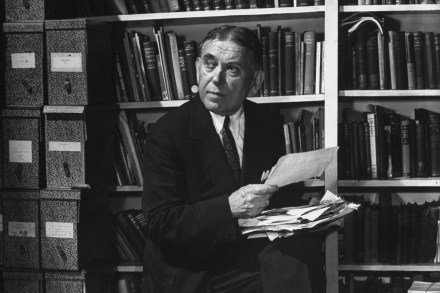
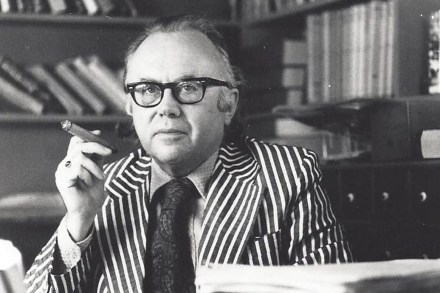
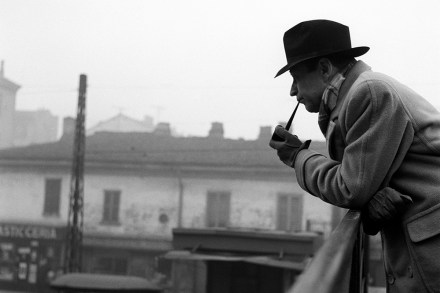
groucho marx

The uneasy legacy of Christopher Hitchens

Winston Churchill looked forward to an expansive lunch. He was in his late seventies, prime minister for a second time, and this cabinet meeting was dragging on. It was nearly one o’clock and they were down to the eleventh item on the agenda, a memorandum on town planning. Wearily, Churchill said: ‘Ah yes, I know town planning, densities, broad vistas, open spaces...give me the romance of the 18th-century alley with its dark corners, where footpads lurk.’ It is possible to have this exact feeling watching cable news today. Somehow, you’re watching CNN or MSNBC, and some bloviating no-mark like Don Lemon or Chris Hayes or Ezra Klein is grimacing through air time.

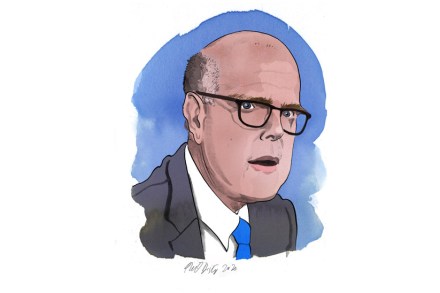
christopher hitchens

An American in Darwin’s family

In the spring of 1883 my mother, Maud Du Puy, came from America to spend the summer in Cambridge with her aunt, Mrs Jebb. She was nearly 22, and had never been abroad before; pretty, affectionate, self-willed, and sociable; but not at all a flirt. Indeed her sisters considered her rather stiff with young men. She was very fresh and innocent, something of a Puritan, and with her strong character, was clearly destined for matriarchy.The Jebbs, my great-uncle Dick, and my great-aunt Cara, lived at Springfield, at the southern end of the Backs, and their house looked across Queens’ Green to the elms behind Queens’ College.

raverat darwin

A gas-lit world

For me, a home without Period Piece is like a house without a cat — lacking an essential cheering and comfortable element. I have loved Gwen Raverat’s memoir of growing up in Cambridge in the 1890s ever since I first read it 20 years ago when recuperating from a bad bout of ’flu, at that blissful moment when you are feeling better but not quite strong enough to get up and do anything. I can still recall the delicious feeling of reading and dozing, dozing and reading, snug in the gas-lit world of Victorian Cambridge, until the January afternoon outside the bedroom window gradually turned purple and faded into dark.

period piece

Nineteen Eighty-Four is not a guidebook for the present day

Is there a literary cliché more dull than saying of some old yellowing book that it is 'as relevant today as it was when it was written'? This month marks the 70th anniversary of George Orwell’s Nineteen Eighty-Four. Journalists on both sides of the Atlantic – to whom Orwell is a holy patron saint – have clacked out lengthy tributes (and entire whole books) to St Orwell’s most famous work. What, they ask, does Nineteen Eighty-Four mean today? Well my answer, for whatever that’s worth, is: nothing. Nineteen Eighty-Four has nothing new to say to us and we have almost nothing new to say about Nineteen Eighty-Four. Realistically, we have very little left to say about George Orwell too.

nineteen eighty-four

Plato, Socrates and Glaucon’s Fate

The astronomer Nicolaus Copernicus studied Plato’s writings in the original Greek, and found in him a kindred spirit. In his main work, On the Revolutions of the Heavenly Spheres, Copernicus draws on what the philologist František Novotný describes as Plato’s ‘metaphysical heliocentric argument from the Republic’ — his characterization of the sun as the god and ruler of the visible sphere and image of the Good, the unifying source and highest principle of reality.

plato glaucon

A chance encounter with a butterfly-catching Nazi

In the winter of 1943, Eric Newby, captured in 1942 on a commando raid on Sicily, escaped from an Italian prisoner of war camp. Love and War in the Apennines, his memoir of life on the run among the peasant farmers of the Apennine Mountains, is that rarest of combinations, a military classic and a love story. Patrick French’s tribute to Newby’s memoir can be read here. In this excerpt, Newby describes an unlikely encounter in a mountain pasture. As I climbed, the trees began to thin out and at last I came to a place where there was nothing but juniper growing.

butterfly naxi apennines

Love and War in the Apennines

An escaped British prisoner-of-war is sleeping in a grassy hollow by the edge of a cliff. He wakes to find a German soldier standing over him, wearing summer battledress, a pistol at his hip. Realizing he has been caught, he says his name and adds, ‘I’m a lieutenant in the infantry, or rather I was until I was put in the bag.’In the bag – captured. It is one of the many phrases of the time that add to the resonance of Love and War in the Apennines (1971), a vivid memoir of Eric Newby’s capture, escape and recapture in Italy’s mountainous terrain during the later years of World War Two. The man standing over him will not, though, take him away.

apennines

Diversity means culture, not race 

Americans have long thought that they are no different from other people, only freer and more fortunate. We pride ourselves on living independent lives in which we work out our personal destiny. We wish that everyone had these opportunities. But that individualist style of life is far less universal than most people think, and today it has come into question both at home and abroad. To recognize and address the reality of cultural difference is the leading challenge of our time. Individualism means daring to pursue our own goals and values. That culture is unique to the Western world: Europe and its offshoots, including America. It made Europe and then the United States unusually rich and powerful, so that they came to lead the world.

culture

The world of William Maxwell

A curious thing: the New York literary world is smaller than the London literary world. It also has a strange feeling of being more old-fashioned. I was edited there by the legendary Joe Fox. I don’t think he liked me, but we would have dinner at a hotel restaurant, the last place where he could smoke in New York, and talk about great writers, including William Maxwell. Joe Fox died at his desk in Random House behind a huge pile of copies of the New York Times, cigarette on his lips. William Maxwell himself was one of this relatively small but influential group of New York literary figures. Because of his very long life and his great influence as literary editor of the New Yorker, he knew almost every writer who passed through the city.

william maxwell

Twitter is a virus of the mind

Society seems to be growing steadily crazier. And maybe it doesn’t just seem to be. Maybe it actually is growing crazier. In the 1930s, science-fiction writer Robert Heinlein dubbed the early 21st century ‘the Crazy Years’, a time when rapid technological and social change would leave people psychologically unmoored and, frankly, crazy. Today’s society seems to be living up to that prediction. But why? I recently read James C. Scott’s Against the Grain: A Deep History of the Earliest States. One of the interesting aspects of the earliest agricultural civilizations is how fragile they were. A bunch of people and their animals would crowd together in a newly formed city.

twitter jack dorsey

I shall never see the Arctic, but I have Arctic Dreams

As travelers go, I am a wimp. I like comfortable transport and a bed to sleep in. But I would dearly like to be otherwise, and the travel books that appeal to me are those which give me vicarious experience of the sort of spartan roaming that I know I could never have undertaken.Barry Lopez’s Arctic Dreams is much more than a travel book; its subtitle is Imagination and Desire in a Northern Landscape, which causes one to raise an eyebrow. Desire? What does the man mean? To be honest I am still not too sure, but by now I am sufficiently beguiled by its author not to care too much.

slightly foxed arctic

The many lives of Frank Harris

Does anyone today know who Frank Harris was? Are his novels and biographies read at all now? A hundred years ago he was acknowledged ‘by all great men of letters of his time to be . . . greater than his contemporaries because he is a master of life’, or so wrote the critic John Middleton Murry. George Meredith likened his novels to Balzac’s, and Bernard Shaw his short stories to Maupassant’s – high praise which was somewhat deflated by the discovery that one story had actually been lifted from Stendhal. But no one would have been more astonished at his disappearance as a great man of letters than Frank Harris himself. ‘Christ goes deeper than I do,’ he explained, ‘but I have had wider experience.

frank harris

My father threatened to sue me for my first novel

My first novel, A Dog’s Life, was largely autobiographical. It described my grandparents’ life, my parents’ marital exploits, and my own limping attempts to become a writer. But since I seemed unable to harness these first two subjects to the advancement of the third. Then I suddenly saw how I might carve out the first quarter of this spacious family saga and make it a self-contained novella covering 24 hours of family life. Heinemann offered me an advance on royalties of £500, which was ten times what they had given me for my biography of Lytton Strachey. Roland Gant did not wish to publish A Dog’s Life until the two Strachey volumes were out of the way.

michael holroyd novel

The hunt for the Führer

I cannot now remember when I first read Hugh Trevor-Roper’s The Last Days of Hitler (1947). My memory is confused by the fact that I knew the author in old age and was to become his biographer; Trevor-Roper himself told me about the extraordinary circumstances in which he had come to write the book. In September 1945 he had been awaiting discharge from the army so that he could resume his pre-war role as an Oxford don, when he was asked to undertake an urgent investigation into the fate of the Führer. This was then a mystery. In January, as the Allied armies invaded Germany, Hitler had retreated to an underground bunker below the Reich Chancellery in Berlin, to escape Allied bombing; his last months would be spent in these eighteen small and windowless rooms.

hunt führer

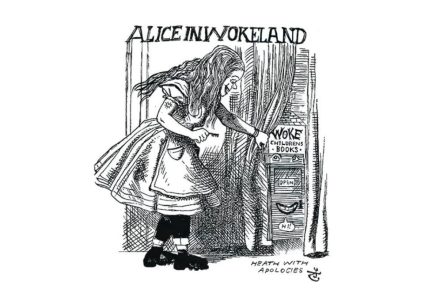
Politicized kids’ books are a new low in parenting

Though contemporary Western democracies are clearly marvels by any historical standard, they suffer from one clear, grievous flaw – children cannot vote. Last December the head of politics at Cambridge University invited ridicule when he suggested that this wound required bandages. On his podcast Professor David Runciman mused: ‘I would lower the voting age to six, not 16… it would make elections more fun. It is never going to happen in a million years but as a way of capturing just how structurally unbalanced our democracies have become, seriously, why not? Why not six-year-olds?’ Why not indeed? Why not live in a world where the most effective retail politicians are not Obamas and Trumps, but Barney the Dinosaur and Kermit the Frog?

politicized childrens books

Victor Davis Hanson: Donald Trump the paradox

John Ford’s most moving scene in his best film, The Searchers, is the unloved Ethan Edwards’s final exit from a house of shadows, swinging open the door and walking alone into sunlit oblivion, the community he has saved symbolically closing the door on him. If he is lucky, President Trump may well experience the same self-inflicted fate. By his very excesses, Trump has already lost in conventional terms of being admired or considered presidential, but in his losing he might alone be able to end some things that long ago should have been ended.

Victor Davis Hanson

Dispelling the myth of the vaccine-autism controversy

Vaccines didn't cause Rachel’s autism. Or Sam’s, or Daniel’s, or anybody else’s for that matter. The reason is simple. Vaccines don’t and can’t cause autism. Peter Hotez ought to know. A certified pediatrician, he's one of the world’s leading vaccine scientists, developing vaccines against ‘neglected tropical diseases.’ He’s also the father of Rachel, an autistic and intellectually challenged young woman. There is no vaccine controversy, just as there is no shape-of-the-earth controversy. Anybody who understands the scientific method knows that there is no link whatsoever between vaccines and autism, just as they know that they can walk as far as they’d like around the world without falling off the edge.

vaccines autism
jim acosta’s

EXCLUSIVE: A sneak preview of Jim Acosta’s new book

Exclusive! * Exclusive! * Exclusive! An advance excerpt of the forthcoming tell-all memoir from the battle lines of America under siege by the world’s bravest investigative journalist, Jim Acosta. ‘Will the president tell the truth?’ I generally like to start with questions like that because, at a time when American is occupied by the spirit of Donald Trump, it always throws his spokesmen off base. It’s asking questions like that that made me Chief White House Correspondent for CNN. It’s a big job. But it’s the job I was born for. Some people have a sense of destiny. I guess I am one. I have always been known for my courageous truth-telling. It’s one reason my colleagues in the press corps idolize me.

Classics takes the Red Pill

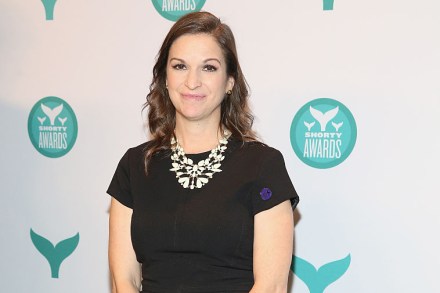
There was a time Classicists feared their subject was endangered because not enough people were taking it up. That fear has now been supplanted by anxieties over its manipulation by far-right groups and individuals with insalubrious intentions, like the white supremacist organization that employs images of the Roman gods and heroes to encourage its followers to ‘protect your heritage’. And this is just the tip of the Zuckerberg. In Not All Dead White Men, Donna Zuckerberg examines the abuse of Classics by by those who, in the political equivalent of the perceptual choice in The Matrix, have taken the ‘Red Pill’. Zuckerberg defines Red Pillers as ‘a group of men connected by common resentments against women, immigrants, people of color, and the liberal elite’.

ovid classics