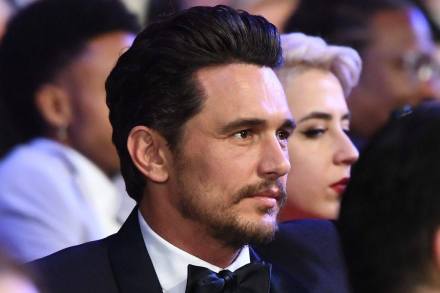
Why do prettier sex-pest men get away with it?
Because we’re living under the New Misogyny
The good, bad and ugly in arts and exhbitions
Because we’re living under the New Misogyny
By ceasing its promotion of R. Kelly and XXXTentacion’s music, Spotify aims to show its users that they are headed towards the moral promised land.

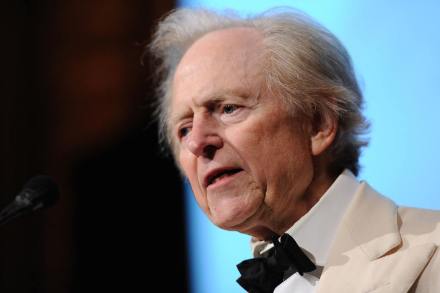
Tom Wolfe has died at the age of 87. In 1998, William Cash interviewed the great author for The Spectator: Yes, Tom Wolfe does own one of those 12-room Upper East Side apartments, as he wrote in Bonfire of the Vanities, ‘the mere thought of which ignites flames of greed and covetousness under people all … Read more
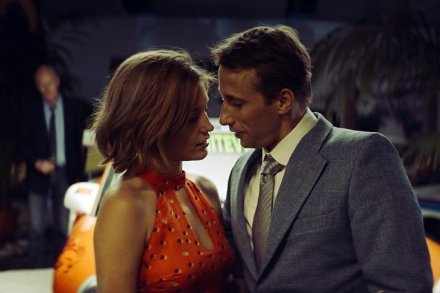
Racer and the Jailbird is a terrible name for a film. It sounds like an unsolicited tribute to that sorrily misbegotten Seventies’ genre, the action-comedy buddy movie—like Freebie and the Bean (1974) or Smokey and the Bandit (1977). But it is not. Nor, though the trailers for Racer and the Jailbird misrepresent it as such, … Read more
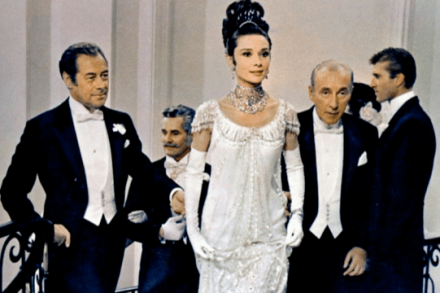
In, Bartlett Sher’s revival, Eliza Doolittle’s stalwart character is the great triumph.
Cynically timed to minimise news coverage, Katy Perry’s decision to bury the hatchet with Taylor Swift just as things are kicking off big style in the Middle East is nevertheless huge news. The parallels between the Swift/Perry crisis and the historic tensions in the Middle East have long been impossible to ignore. Both have come to define a generation, and … Read more

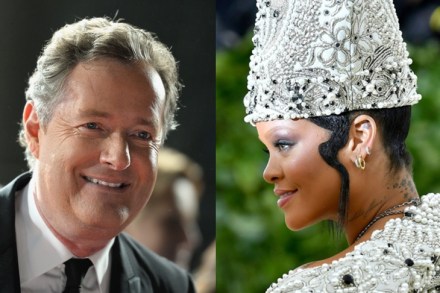
It will come as no surprise that something in the news has Piers Morgan deeply troubled. For the past two days, Morgan has been incandescent over the Met Gala and its dress code. In a column for MailOnline he claims that, as a Catholic, he has become a victim of cultural appropriation due to fancy dress outfits worn to a party by celebrities. The Gala, a fixture of the New York social season at the Metropolitan Museum of Art, is well known for the theme it sets, and this year it was ‘Heavenly Bodies’ – inspired by the Roman Catholic Church. The Gala was held to launch an exhibition of
If Trump is rotten from the core, what the hell does that say about the popular culture we’ve all let flourish in the past few decades?

If you were to revisit the house you grew up in, would you take a look at your old bedroom? The answer is yes, of course you would—unless, that is, you are Ronit, Rachel Weisz’s character in Sebastian Lelio’s Disobedience. If you are Ronit, you will instead ponder your late father the rabbi’s rich collection … Read more

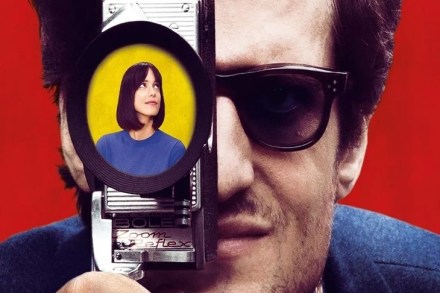
It is now fifty years since the événements of May 1968, when young Parisians lobbed onobble stones at the police, occupied the Sorbonne, and launched the Boomers’ long march through the institutions. That makes it fifty years since Jean-Luc Godard lost the plot—never a good idea if you are a film-maker. Godard has made plenty … Read more
A doozy of a correction from the New York Times. On Sunday the Gray Lady published a profile of Campbell Brown, the CNN anchor turned head of news partnerships at Facebook, by Times tech reporter Nellie Bowles. All was going well until Bowles got onto the social media site’s new video series platform: ‘Ms. Brown wants to … Read more
Is Jon Hamm’s name really Jon Hamm? Or is it a stage name, meant to telegraph his acting style? When an actor is called Slim Pickens, you know he’ll never play the Dane. Hamm is the name at the top of the bill in Beirut, and preserved pork is what he delivers, thinly sliced in the … Read more

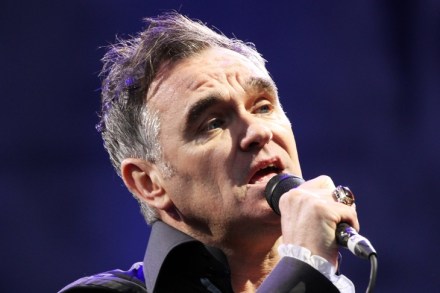
Has the British artist Steven Patrick Morrissey, often known simply by his last name Morrissey, embraced the alt-right? Or is he just living proof that not every celebrity Brit is a moral coward? This week, the former frontman for The Smiths has attracted media attention after he condemned Halal meat as “evil,” called out attempts to sabotage Britain’s exit … Read more
They called Ted Kennedy the Lion of the Senate. He spent most of his time stuffed, satiated and asleep, and the rest of it on the prowl for young flesh. He also had a hand in numerous pieces of legislation. But the only thing he will be remembered for is leaving Mary Jo Kopechne to … Read more
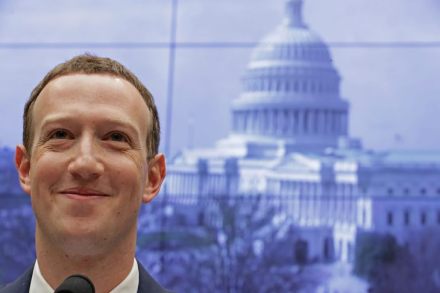
Everybody wants Facebook to be grilled. But big tech firms will only gain from legislation.
Wonderstruck is a film by Todd Haynes and you will certainly be struck by wonder, often. You will wonder at its painful slowness. You will wonder at the way it strains credulity until it snaps. You will wonder if the violins will ever give it a rest. You will wonder if it will ever end. And you will wonder at the ending, when it does finally come, as it is so stupid. So it does not short-change on the wonder front. Whatever the price of your cinema ticket, you will be getting limitless wonder in return. Haynes is usually such an immaculate, thoughtful, winning filmmaker (Carol, Far From Heaven, Velvet

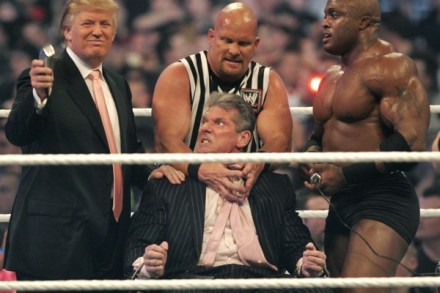
Americans breathed a sigh of disappointment last week when the promised super-heavyweight bout between Joe Biden and Donald Trump stalled after the weigh-in trash talk. “They asked me, would I like to debate this gentleman, and I said no,” Biden said as he stripped to his trunks. “I said, ‘If we were in high school, … Read more
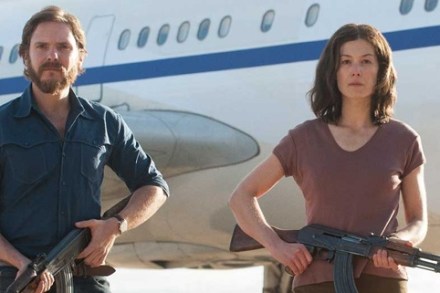
It was only Seven Days in Entebbe, but it felt like an eternity. The rescue in July 1976 by Israeli commandos of 102 Jewish and Israeli hostages from Palestinian and German terrorists at Entebbe airport in Uganda was a scriptwriter’s dream: a three-act drama of crisis, complication and resolution, in which the good guys won—good … Read more
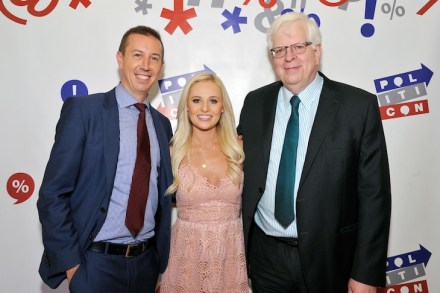
If I needed a safe space, I would nominate California. Against most odds this seedbed of censorious liberalism has thrown up the antibodies to the lurgy it created. Here within a short space of each other are a group of leftists and conservatives, religious and non-religious, all of whom are united in deploring the ‘You … Read more
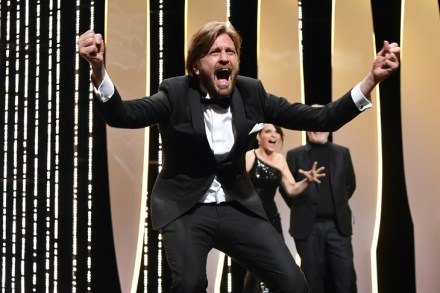
There is a culty YouTube video shot three years ago on the laptop camera of Ruben Ostlund. It shows the film director listening live as the nominations for the Academy Awards are announced from Los Angeles. The tension mounts as they approach the foreign film category. Alas, Force Majeure from Sweden isn’t nominated. Ostlund disappears off screen to sob and mewl. This year, there was a sequel to the video, but with a happier ending: the director’s latest film The Square was nominated for an Oscar. These mini-movies, like the rest of Ostlund’s oeuvre, are funny but subtly savage. He is a provocateur who trades in discomfort. You watch with