Arts Reviews

The good, bad and ugly in arts and exhbitions

Is London Calling Boris Johnson?

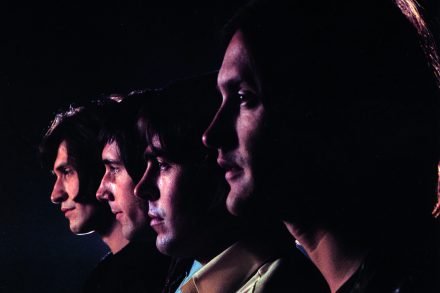
Boris Johnson recently cited the Clash as his ‘favorite band’ along with the Rolling Stones. London Calling, the Clash’s great third album, was released in the US in January 1980, 40 years ago next month. Time has judged it one of the great rock ‘n’ roll albums, but was it really made for Establishment figures like the British prime minister?For the affordable price of $7.98 the 19-tune, double LP hit the New Year market in a blaze of righteous Jamaican reggae and driving, dance-floor ska, 12-bar jazz, mento-calypso, disco, funk and much else besides. Having just returned from an American tour on which they were supported by the blues showmen Bo Diddley and Screamin’ Jay Hawkins, the Clash were fired up with the romance of America.

clash london calling punk

What the Art Basel Banana says about our world

Every December, I make my way to the orgiastic display of wealth and ostentatious show-boating that is Art Basel in Miami. I go primarily to keep my finger on the racing pulse of our culture of conspicuous consumption and hedonism, and also because of an unhealthy fascination with human irrationality at scale, the kind of irrationality which drives bubbles. The high end of the global art market has always been a curious blend of vanity, self-absorption and what to every untrained eye is quite clearly commercial sophistry. Yet it persists and continues to grow, with worldwide sales for 2018 reaching $67.4 billion, up from $63.7 billion in 2017.

art basel banana

Disney wants A Whole White World

The Disney brand has long been known as the animated version of white colonialism. This was made predominantly clear when the first feature-length Disney movie was released, entitled Snow White and the Seven Dwarfs. As if the main character’s name didn’t make it obvious enough, rumors that Walt Disney was a Nazi have been abound on the Internet ever since the rise of Starbucks and the invention of the MacBook Pro, and have plagued his legacy. Perhaps labeling him a National Socialist without physical proof at the whims of woke hipster sociology students is a bit of a stretch, but there were undeniably characteristics of Nazism in Disney’s politics, which are noticeably woven into his animated works.

aladdin
irishman

If you like Joe Biden, you’ll love The Irishman

According to Nielsen Media’s ratings service, 17 million people watched ‘at least a few minutes’ of Martin Scorsese's The Irishman on Netflix over its first weekend. Impressive. Rather less impressive, I'm guessing, is the proportion who actually made it to the end of this excruciating ordeal of an embarrassment of a movie. If it was even close to 50 percent, I'd be surprised. Some critics are saying its Scorsese's best since Goodfellas. Don't believe the hype. Though it reunites arguably the all time greatest trio of mob movie actors — Joe Pesci, Robert de Niro and Al Pacino — it's not the performances you notice, but their age. De Niro is 76, Pacino 79 and Pesci 76.

Leonardo da Virtual

This article is in The Spectator’s December 2019 US edition. Subscribe here. The first time ever I saw her face, she was smiling. I knew her face before I saw it, but I cannot remember when I first knew it, because I had always seen it. But when I first saw her in the flesh, I couldn’t really see her at all. She was behind thick glass and a waist-high wall, and a crowd of people 20-deep were pushing toward her, shouting and pointing and taking photographs. She was still smiling, but as I forced my way out of the crowd, I felt as though the smile no longer expressed the mysterious inner mood of a high-born Florentine sitting in a loggia, but the bemused contempt of a woman sitting in the stocks for the entertainment of the mob.

mona lisa leonardo

Payton’s place

This article is in The Spectator’s December 2019 US edition. Subscribe here. Four episodes in, I finally decided I really didn’t like The Politician (Netflix). Initially, I thought I might because there was lots of advertising assuring me how good and culturally important it was going to be. Also, it’s made by the same creative team responsible for Glee, that slick but likable and quite moreish series about an American high school glee club where an impeccably diverse class of gay and disabled people keeps bursting into implausibly accomplished cover versions of classic pop songs. But no. The Politician leaves you with the same unpleasant, dirty, life-just-wasted feeling I imagine you’d get from watching Japanese hentai porn.

politician

Tough gospel: the twin cities of Sesame Street and Mister Rogers’ Neighborhood

This article is in The Spectator’s November 2019 US edition. Subscribe here. For people who, like me, were born in the troubled times of the Seventies, Sesame Street and Mister Rogers’ Neighborhood were an educational crossroads. As we gazed into the cathode-ray tube for direction, each program led to a very different future. Sesame Street, now in its 50th season, remains unavoidable and familiar. Yet we’re captivated by the return of Mister Rogers’ Neighborhood, the unpolished creation of Fred Rogers that aired from 1968 to 2001. Last year, the documentary Won’t You Be My Neighbor? became a surprise hit. This week sees the opening of A Beautiful Day in the Neighborhood, a movie starring Tom Hanks as Rogers.

rogers

A motel room of one’s own

This article is in The Spectator’s November 2019 US edition. Subscribe here. To gauge a man’s character, note how he spends a month in Paris. Edward Hopper, according to the catalog of his 1933 retrospective at New York’s Museum of Modern Art, lodged with a ‘respectable French family’, studying French and ‘avoiding bohemia’. Asked if he met any painters during his visits, he responded, ‘No, I did not know anyone. Gertrude Stein was on the throne when I was there.’ Hopper knew it wasn’t his scene. Isolation was a persistent theme in Hopper’s art and life. Was he dogged by isolation or did he pursue it? ‘Did anybody really know this silent, non-communicative man?

hopper

Andrei Serban and the importance of acting out

During my study in the theater division at Columbia University’s School of the Arts, Romanian emigree acting professor Andrei Serban was legend. Beloved by acting students, lauded by faculty, he was tenured, established, and had seemingly free reign over his department. Despite that, he recently resigned over the administration’s push for trans inclusivity and faculty identity diversity. In an interview with Romanian TV show Profesioniștii (The Professionals), Serban detailed the two major reasons for his departure. As head of a hiring committee, he was told by the Dean of the School of the Arts to hire a person based on their identity factors, and not the person who he thought was best for the job.

andrei serban

Brazilian wax

This article is in The Spectator’s November 2019 US edition. Subscribe here. When Brazilian president Jair Bolsonaro spoke at the United Nations General Assembly in late September, he depicted Brazil as a victim of colonialism. ‘The United Nations has played a fundamental role in the suppression of colonialism,’ he said, ‘and we cannot allow this mentality to return to these rooms and corridors at any pretext. We cannot forget that the world needs to be fed.’ Foreign countries, Bolsonaro alleged, have ‘an interest in keeping indigenous people living like cave men’.

brazilian

Audio blitzkrieg

This article is in The Spectator’s November 2019 US edition. Subscribe here. Wokeness, first conceived of by the Armenian mystic George Gurdjieff (1872-1949) had barely reached the mainstream when Ian ‘Lemmy’ Kilmister died in 2015. Still, Lemmy had given considerable thought to staying woke. As a champion abuser of amphetamines, he’d spent more time awake and thinking than anyone since 1945. Perhaps his surprising death –– surprising, because he seemed indestructible –– was necessary in some Gurdjieffian way, to make room for the terrors that now occupy our psyches.

motörhead lemmy

The perfect crime

This article is in The Spectator’s November 2019 US edition. Subscribe here. Everyone loves a good murder. Tales of cold-blooded killing were bringing in audiences even before Truman Capote elevated the telling. Now, as if tales of real-life slaughter aren’t enough, podcasters color the horrors and hook the listeners with spooky music, awkward cliffhangers and a dubious sociological moral. The typical true-crime podcast has hosts who seem to be chugging wine from the box and narratives ruined by contrived social implications. A cynic or a detective would link this style to the appearance of listicles of the best true-crime podcasts in Good Housekeeping, Oprah Magazine, Town and Country and Women’s Health.

true crime

Is Lou Reed a rock ’n’ roll Dostoevsky?

This article is in The Spectator’s November 2019 US edition. Subscribe here. A journalist friend was once ordered to interview Lou Reed in his hotel room. The meeting was not a success. Reed retreated to the closet bearing a copy of the poems of Delmore Schwartz and refused to come out until his guest had paid cash for it, saying, ‘Delmore needs the money.’ Reminded that the author of In Dreams Begin Responsibilities had died some years before, Reed observed, ‘Well, his family needs the money.’ $5.99 changed hands and the conversation continued.

lou reed

Don’t insult Joker by comparing him to Trump

Critics weren’t sure how to categorize Joker: is it just a piece of entertainment (like other Batman films), an in-depth study of the genesis of pathological violence, or an exercise in cultural theory? From his radical leftist standpoint, Michael Moore called it 'a timely piece of social criticism and a perfect illustration of the consequences of America's current social ills', pointing out that it explores the protagonist’s origin story, examines the role of bankers, the collapse of healthcare and the divide between rich and poor. However, Joker does not only depict this America, it also raises a 'discomfiting question' in Moore’s mind: what if one day the dispossessed decide to fight back?

joker

Top Boy wins the turf war

This article is in The Spectator’s November 2019 US edition. Subscribe here. I couldn’t stand The Wire. Everyone mumbled unintelligibly, the pace — inexcusably in a series about drugs and violence — was often glacially slow, and I found some of its characterization too transparent, like, ‘Ooh, I know. We’ll make the wise old black guy have the unlikely hobby that he repairs dolls’ houses, so that viewers will appreciate the nuance and hinterland.’ Top Boy (new on Netflix), on the other hand, is pacy, plausible and deliciously ruthless. It’s like The Wire, relocated to London with a much cooler soundtrack and with all the boring bits removed.

top boy

Leonardo in Paris

ParisThe Louvre’s Leonardo da Vinci is the latest Renaissance master in a procession of epic anniversary retrospectives — after 2017’s hugely popular Michelangelo: Divine Draftsman and Designer at the Metropolitan Museum of Art in New York City, before next year’s inevitably popular marking of the cinquecentenary of the death of Raphael at the National Gallery in London. This year, with Leonardo’s posterity passing the same necroversary, the Louvre is augmenting its five Leonardo oils –– more than any other museum, thanks to the light fingers of legendary art critic Napoleon Bonaparte –– with a further six loans.

leonardo
catherine the great

Is this the only Catherine the Great review to mention the age gap?

Catherine the Great is the vanity project of star and executive producer Helen Mirren. One way you can tell it's a vanity project is that Mirren is 74 years old while the character she plays — at least at the start of the mini-series — is 33 years old. Now I don't wish to be ungallant. It's certainly true that Mirren has always scrubbed up well. She is a very handsome woman and she knows she is a handsome woman, as reflected by all those films and TV series earlier in her career — not, though, The Queen, as far as I recall — when she appears with her kit off.

Secrets of the maestro

This article is in The Spectator’s October 2019 US edition. Subscribe here. At last, some justice for the ‘teacher of Leonardo da Vinci’. Verrocchio: Sculptor and Painter of Renaissance Florence, now at the National Gallery of Art in Washington, DC, reveals that this master was more than a mere footnote to his famous apprentice. Born around 1435 into the artistic boomtown that was Florence under the Medici, Andrea del Verrocchio may, in fact, have been the original Renaissance man. The greatest artists of the Florentine Renaissance took root in his studio and grew out of his mentorship: not just Leonardo, who stayed with him for over a decade, but also Pietro Perugino, Lorenzo di Credi and, most probably, Domenico Ghirlandaio and Sandro Botticelli too.

Grandpa, who were the Rolling Stones, and why?

This article is in The Spectator’s October 2019 US edition. Subscribe here. The Rolling Stones’ delayed tour is back on the road. Not the tour they delayed after Keith Richards fell out of a coconut tree, but the one delayed because Mick Jagger had a heart attack. If you’re a boomer of advanced years and decayed taste, all this is no doubt a big deal, your last chance to see some of the last icons of the original and brief Rock Era, before you or they kick the bucket. Ladies and gentlemen, the greatest rock ’n’ roll band in the world, the Rolling Stones. Except they aren’t the Stones. They haven’t been the Stones for years.

rolling stones
podcasts

Pod almighty

This article is in The Spectator’s October 2019 US edition. Subscribe here. ‘Man the food-gatherer,’ wrote Marshall McLuhan, ‘reappears incongruously as information-gatherer.’ Once we foraged for information in the library. Now we graze among the podcasts. In the age of compulsive eating, podcasts are compulsive listening, an attempt to fill the silence. Nothing better to do? Click on a podcast, and let your attention drift. It takes no effort, it dissolves minutes into hours, and talking about the ‘great podcast’ you just listened to can sound just as smart as saying you’re reading War and Peace. After all, podcasts were originally made by nerds, for nerds.