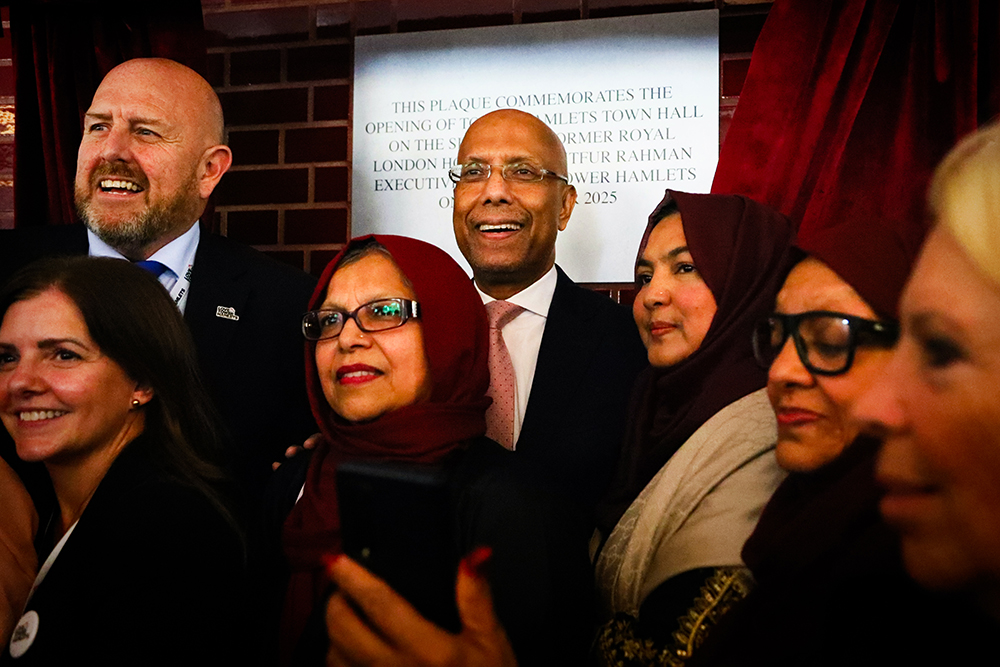


You may be disturbed by a column urging whites (among others) to vote as a bloc in the coming local elections in the London borough of Tower Hamlets. Tactical voting, but not as we’ve known it.
I realise this is delicate. But I’ve been conscious of a dilemma over where to put my cross on the ballot for mayor, which would normally be with the Conservative. And it’s with a shudder that I say that, using my postal vote, I have just voted Labour. For a single, simple reason. Non-Bengali-speakers in the borough must unite if the rascal who has established himself as a favourite son among the Bangladeshi community is to be confounded.
I come from a family whose opposition to racism has been a guiding star in our lives; and the very thought of introducing race – or, to be more accurate, religious, ethnic and cultural affiliation – into a local government election unsettles me. But I cannot see how else to confront a mayoral candidate and his party (Aspire) who bid fair to capture a single but substantial race-based and faith-based community.
That is what Lutfur Rahman has done as mayor in Tower Hamlets. How do we stop him, other than by copying his ballot-box strategy?
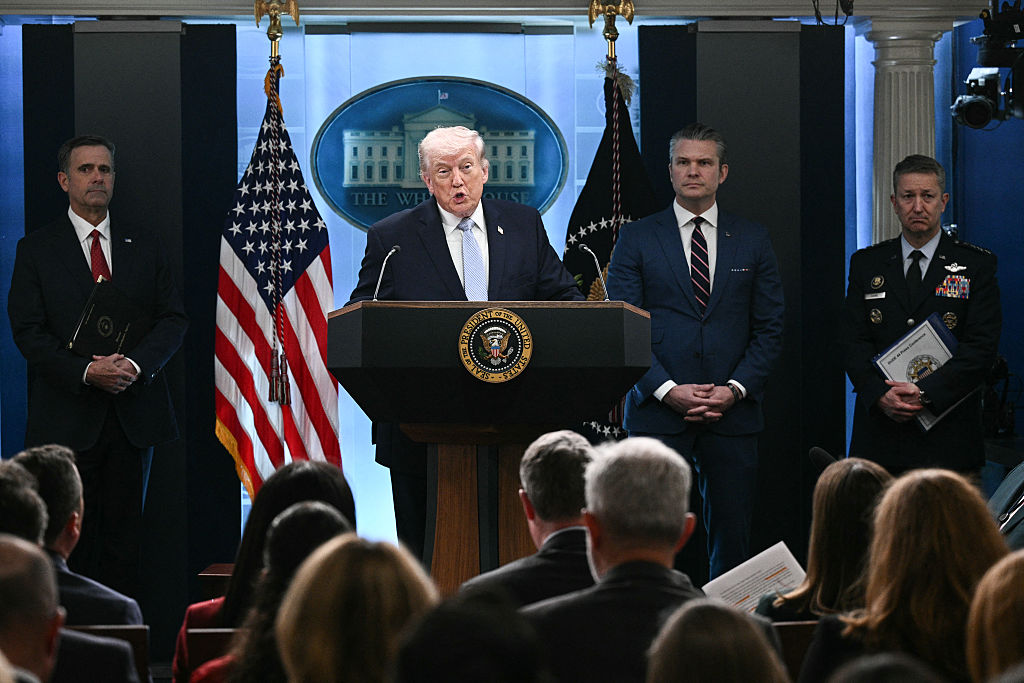
If a politician is promoted as the standout candidate of an ethnic group, if the voting results suggest strongly that he and his party are overwhelmingly the main choice of these voters, if this man has gathered the Bangladeshi community into forming his core electoral base, then it seems to me that for Mayor Rahman to be removed, voters of whatever skin colour (but overwhelmingly white) will have to ignore party differences and unite behind a single party, and a single candidate. And it will make sense to choose the party that, on past showing, looks capable of offering the strongest challenge to Rahman.
It happens that in Tower Hamlets this is Labour. And it happens that its candidate is also of the Muslim faith, but of a very different stripe. Hence my vote for Sirajul Islam. Labour’s candidate strikes me as a solid, respectable, locally focused councillor who has neither sought the limelight nor advertised partisan, faith-based allegiances, nor been removed by Labour’s National Executive Committee (in 2010) as its candidate after being accused of linkage to the Islamist fundamentalist group the Islamic Forum of Europe. (Rahman subsequently denied he was ‘in league’ with the group.)
My hope may be forlorn. Given Labour’s present unpopularity and the insurgent Green party’s appeal to younger Labour supporters, I fear Cllr Islam’s chances are not good. But he has no record of corruption; he has not (as was Rahman in 2015) been found guilty of corrupt and illegal practices, using religious intimidation through local imams and vote-rigging. Rahman’s election in 2014 was declared void, and he was barred from council office for five years and (later) struck from the roll of solicitors.
How, then, has he survived politically, returning to local politics in the 2022 election to win some 55 per cent support? How has he bounced back when the evidence, the court judgment and the five-year ban on his serving as a councillor have been widely reported in a borough that includes a substantial proportion of white working-class East Enders and of the middle-class professionals and young progressives who work in and around Canary Wharf and have gentrified swaths of riverside housing such as the area where I live? The answer is that these latter groups’ support has been split between multiple parties.
Rahman’s success, meanwhile, has depended on his appeal to one religious and ethnic grouping: the backbone of his support and the decisive (though not unanimous) core of his appeal. The cultural identification of voters shouldn’t and can’t be officially recorded, but the wards where Aspire scored best were those with very substantial Bangladeshi populations. In Bethnal Green West, Blackwall and Bromley North, Aspire won all seats. In Whitechapel and Stepney Green, the party was ahead; and one informal estimate of the origins of Aspire’s support last time suggested the party commanded the vote of about two-thirds of electors in the Bangladeshi community. Little more than a third of the borough’s electorate overall, they have shown a ballot-box cohesion that other communities have lacked.
They are the loyal basis of Rahman’s platform. He cannot survive politically without their willingness to turn a blind eye to their man’s appalling record, and without them he would long have sunk, and would sink now.
Rahman’s success has depended on his appeal to one religious and ethnic grouping
I cannot begin to summarise that record in a single column. Wikipedia’s 15 pages tiptoe (he is litigious) through a good deal of which he has been pronounced guilty: from electoral fraud to disqualification from office and an Election Court ruling that he was ‘personally guilty’ of ‘corrupt or illegal practices, or both’.
But enough about Rahman. I cite his story only as an example of how race/religion-based bloc support can deform democracy; and my question is how we combat this other than by forming a rival bloc – inviting the accusation ourselves of bringing race/religion into politics.
I’m unsure, but there’s a glimmer of hope. Not all Bangladeshis vote for Rahman: Labour has a toehold in every sector of his borough’s fractured electorate. The brave lone Conservative Peter Golds has hung on in his Isle of Dogs ward despite the homophobic and anti-Semitic taunts he endured from some of Rahman’s supporters in the latter’s first mayoralty – and may hang on again on 7 May. Perhaps new generations of Bangladeshis will prove more resistant to capture. If not, the rest of us in Tower Hamlets must sink our differences and – politically – face a minority down.