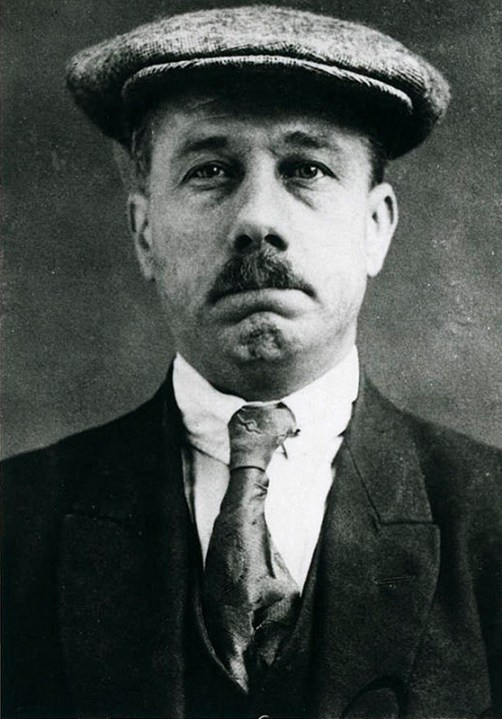
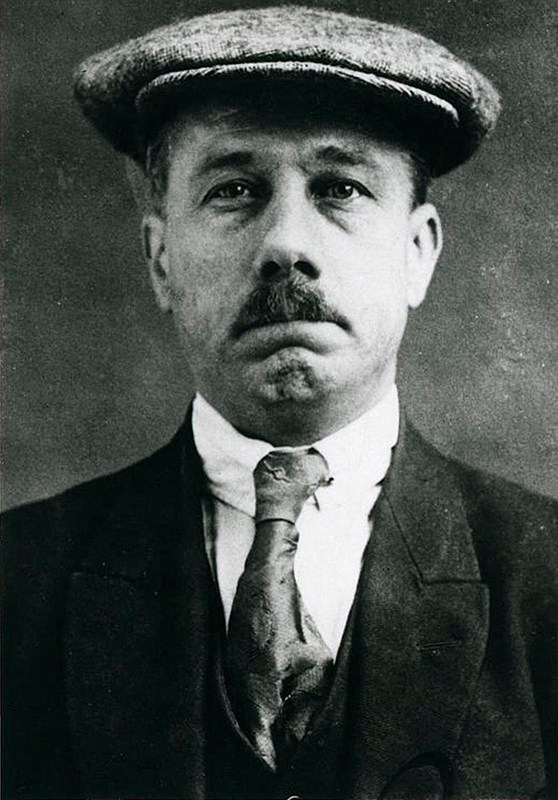
One hesitates to describe The Treasure of the Sierra Madre – perhaps now best known for its 1948 film adaptation starring Humphrey Bogart – as the great American novel, or even a great American novel. Its prose is too unwieldy, its structure too ungainly. While you, the reader, wish it spent more time with its characters – a trio of beat-up prospectors called Dobbs, Curtin and Howard – it is given to flights of economic theory about labor relations in 1920s Mexico, a setting great American novels don’t tend to trouble themselves with. Besides, its author, B. Traven, was almost certainly German and may never have spent time in the United States.
Hang on. Almost certainly? May never? This is the other thing – perhaps the main thing – that stands out about The Treasure of the Sierra Madre: its author remains one of the greatest mysteries in literature. B. Traven went to extraordinary lengths to conceal his identity and, although evidence around this figure or that has accumulated over the years, we still can’t be totally certain about his biography. Caveats and caginess remain part of the deal.
Travenspotters are the Ripperologists of the literary world: they go down every avenue they can find
What we do know is that the Traven mystery has persisted for about a century. His first – and, in many ways, most emblematic – novel, The Death Ship, was published in Germany (as Das Totenschiff) in April 1926. That wounded country had encountered Traven a year earlier, through installments of a story known as The Cotton-Pickers (Die Baumwollpflücker) in the stridently left-wing newspaper Vorwärts – and the story was completed and published in book form (as Der Wobbly) in May 1926. So The Death Ship really does count as Traven’s first complete novel.
And The Death Ship also counts as evidence for Traven’s identity. Its protagonist is an American sailor by the name of Gerald Gales, who is left homeless and stateless after misplacing his passport and other papers. His enemy is less the decrepit boat on which he has to toil – a “death ship” is so called because it is worth more to its owners as a wreck and an insurance claim – than authority in general, a faceless and merciless beast. “Whom do passports do any good?” asks Gales’s shipmate Stanislav. “No one but the bureaucrats.” Could it be that Traven himself was distrustful of The Man? Could it be that he once made a similarly arduous journey to Gales?
At this point, it ought to be said that at least part of the Traven mystery has been solved beyond most experts’ doubt. In 1966, the German researcher Rolf Recknagel published B. Traven: Beiträge zur Biographie – and pegged the author as someone called Ret Marut. This Marut was indeed suspicious of authority: he was a German anarchist who published the antiwar magazine the Brickburner (Der Ziegelbrenner) during and after World War One. And he’d certainly gone a-wandering, as they say in those parts. After his involvement in the insurrection that became the short-lived Bavarian Soviet Republic, he was slated for execution but escaped and fled to Britain – then to Mexico.
We do not know how Marut got to Mexico. While in London – where he was detained over the winter of 1923/24 as an unregistered immigrant – he tried to secure a US passport by claiming that he had been born in San Francisco (a common ruse: the city’s birth registers had burned down in 1906). When that failed, he signed on to a Norwegian craft as a coal-shoveler but then jumped ship. There are no records of which boat finally did take him across the Atlantic. Much like Gales in The Death Ship, Marut was a man without papers, a bureaucrat’s nightmare.

We do know that Marut wound up in the country of the Sierra Madre. And we can also say that he married his translator there, Rosa Elena Luján. It was she who, after Traven’s death in 1969, and apparently in line with his instructions, revealed that the late author had indeed been Marut.
Case closed? Not nearly. Travenspotters are the Ripperologists of the literary world: they go down every avenue they can find, and often find that the avenues split into more avenues, narrower but longer than before. Ret Marut may have been our man, but “Ret Marut” was itself an assumed name. Like any good anarchist, he kept numerous aliases and even more secrets. He was, indeed, well into his twenties when he started calling himself Marut – after registering himself under that name, tellingly, with an actor’s union in Essen in 1907. So who was he actually born as?
An answer came in a BBC documentary in 1978 and was expanded upon in a book in 1980, The Man Who Was B. Traven, by one of the documentary’s producers, Will Wyatt. He and his team identified Marut as Hermann Otto Albert Maximilian Feige – or just plain Otto Feige – who was born the son of a potter in the Brandenburg town of Schwiebus in 1882. There was skepticism about Wyatt’s findings at the time – not least because Marut was someone who borrowed other people’s identities – but further evidence has emerged to support the Marut-as-Feige thesis, and it is now almost as close to a consensus opinion as the Traven-as-Marut one.
Then there are all the other aliases: on Wyatt’s reckoning, the man who became Traven used at least 27 of them throughout his life. These are thought to include the name Hal Croves – which is a delicious possibility because Croves was also Traven’s literary agent. In his memoir An Open Book, the film director John Huston tells the brilliant story of how, one morning, Croves appeared unbidden “at the foot of my bed” in a Mexican hotel room, ahead of the filming of Huston’s adaptation of The Treasure of the Sierra Madre. “Then he produced a letter from B. Traven, which I read while I was still in bed,” writes Huston. “It said that he, Traven, was ill and unable to come, but that Hal Croves was his great friend and knew as much about Traven’s work as he himself did, and was authorized to answer any questions I might want to ask.”
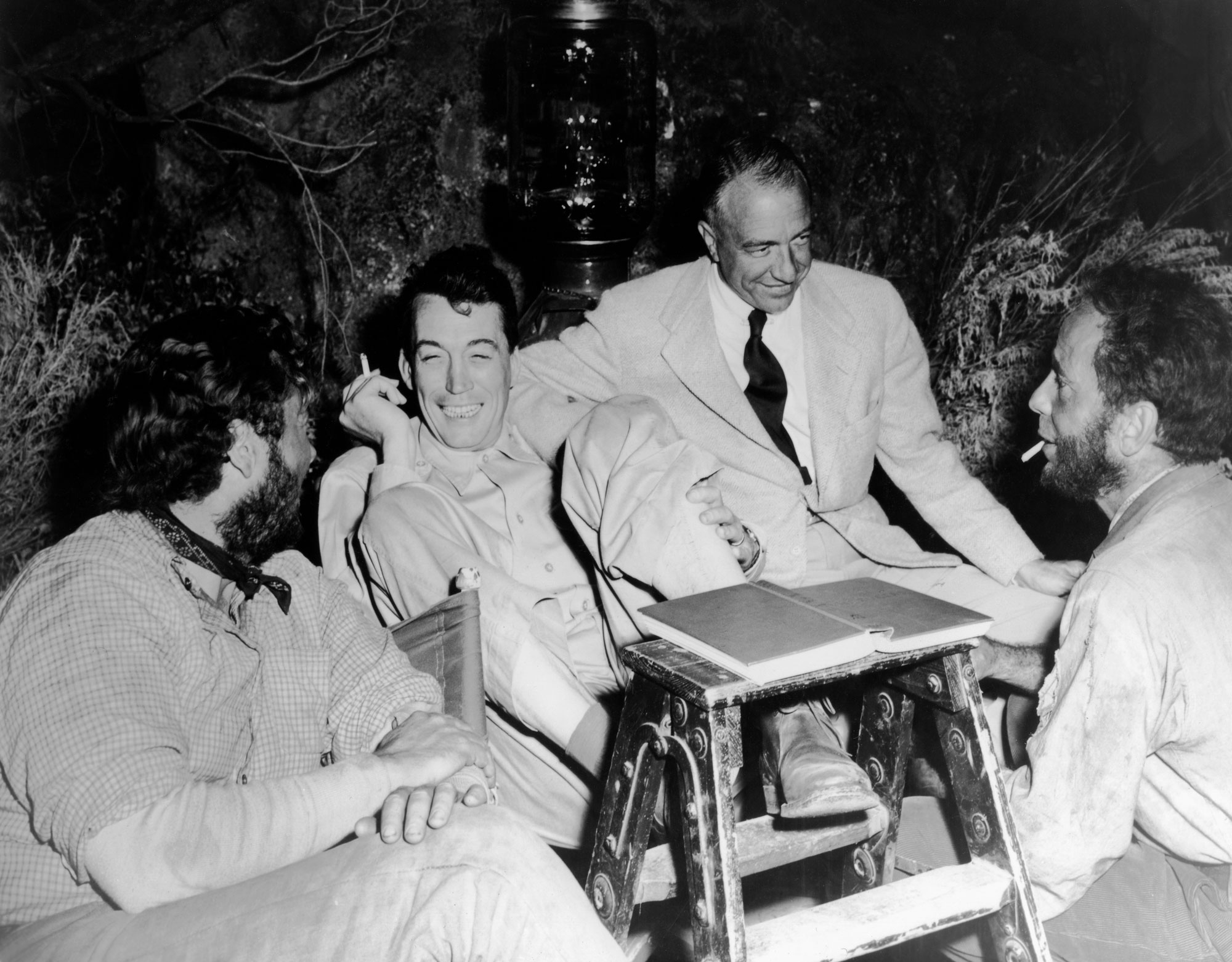
So Croves stuck around for the filming of the Sierra Madre. Or was it Traven? Huston observed that, “Croves had a slight accent. It didn’t sound German to me, but certainly European.” But after two further meetings – including a fishing trip out to sea – he concluded that, “He was nothing at all as I had imagined Traven… I decided that this surely was not he.” But, even then, Huston offered tantalizing new possibilities, including that “Traven was two or more persons who worked in collaboration.” All of this may seem beside the point: why fuss about the author when we should be fussing about his books? Indeed, Traven’s most famous quotation, given in 1926 in response to a request for details from his publisher ahead of the release of The Death Ship, is that “the creative person should have no other biography than his works.”
The simple answer to the question? Because fussing about the author is fun. Traven led a purposely twisty-turny life, and trying to grasp its meanderings is certainly more enjoyable than reading biography after biography of, say, Ernest Hemingway.
It would explain a lot if we were to discover that there were several people behind the stories’ creation
But there’s also a more complicated answer. Traven’s novels are such an amalgam of different things – of sweaty detail that could surely only be conveyed by someone who had sweated it himself; of political interludes that could only come from someone who truly believed; of American idioms translated into German and perhaps back again – that their authorship is more than incidental. It would explain a lot if we were to discover that, as Huston theorized, there were several people – perhaps an anarchist, a sailor and a US citizen – behind their creation. It would even explain something if we discovered that that were not the case, that Traven was indeed one man. Because here would be a truly singular writer.
And that is why The Treasure of the Sierra Madre actually is one of the great American novels. It is as broad as the mountain range of its title, and as impenetrable. It is republished this month by Penguin with two of Traven’s other books, The Death Ship and (perhaps his masterpiece) The Bridge in the Jungle, in which a village in the Mexican bush mourns a small boy who drowned during a fiesta, and Traven’s rage softens into something like tenderness. Reading them all again has been a fantastic, if pulverizing, experience. They represent nothing less than – yes – the bridge between the American naturalists of the 1890s and 1900s, novelists such as Jack London, Theodore Dreiser and Upton Sinclair, with their concern for social realism, and the Beat Generation of the 1950s, with its emphasis on the road and its freewheeling prose.
Come to think of it, that’s yet another theory that has done the rounds: that Traven was, in fact, Jack London, the author of White Fang and The Call of the Wild, who faked his own death in 1916, before publishing exclusively in Germany to cover his tracks, then emerging in Mexico. Mad? Perhaps. But a century on from the creation of bothB. Traven and his mystery, it’s a madness you suspect he would have relished.






Comments