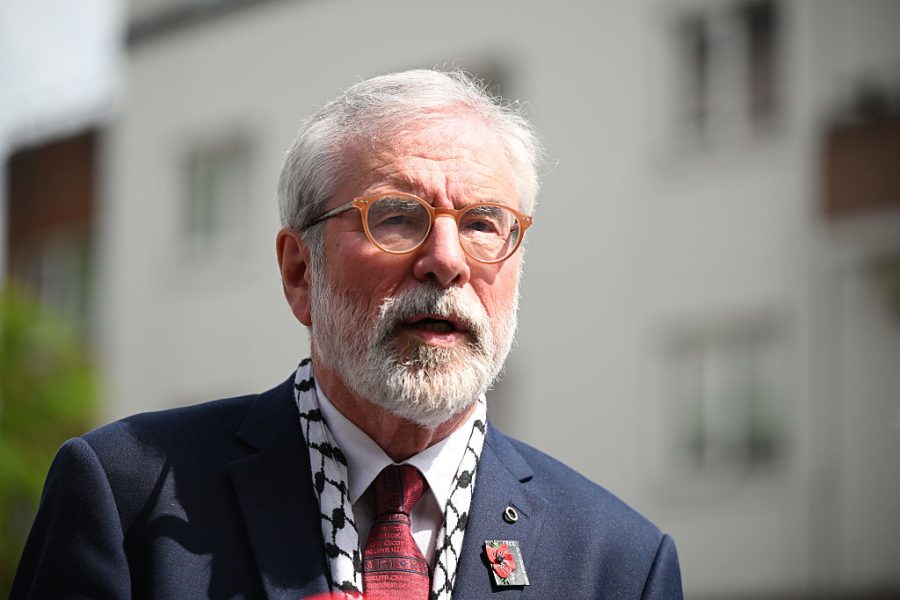
Picture Gerry Adams in a dimly lit courtroom, one hand raised in statesmanlike denial, the other twitching like Dr. Strangelove’s infamous Nazi salute, struggling to contain the contradictions of his many roles. Peacemaker? Politician? Bearded bard? Or something darker, as my late father always insisted: the architect of republican violence, a figurehead for the IRA and Sinn Féin, like ‘two cheeks of the same arse’, to borrow George Galloway’s colourful phrase? Adams has always denied involvement with the IRA.
Starting today, Adams will face a civil trial in London’s High Court accusing him of IRA membership and involvement in bombings that scarred innocents between the 1970s and 1990s. This could be Adams’s last chance to fully confront the past. But if history is any guide, expect more elevated language, vanity, and evasion from the man who has allowed supporters to compare him, with a straight face, to Nelson Mandela.
I predict Adams will play the persecuted plot victim and tout his peace credentials
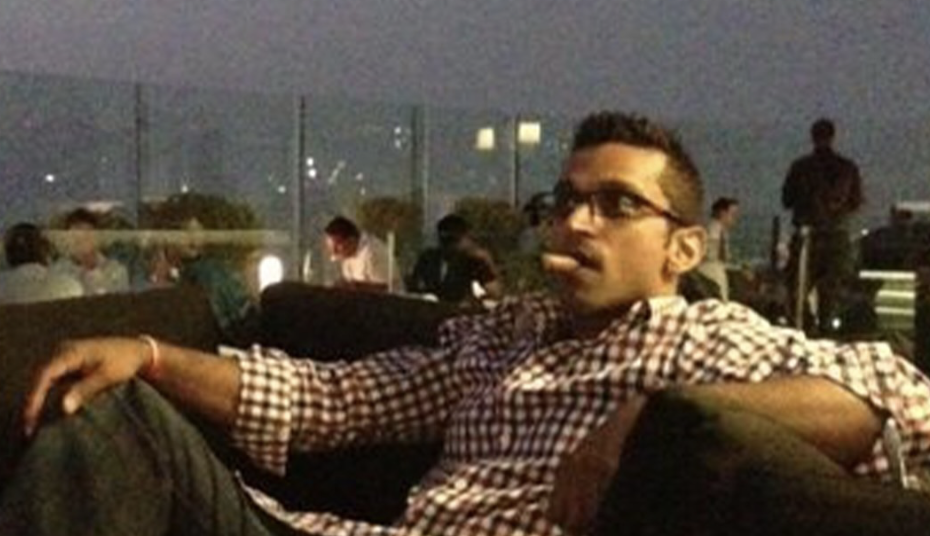
Mandela endured 27 years in prison, emerging to unite a nation through truth and reconciliation. Adams? He’s the eternal enigma, spinning tales of Irish freedom while dodging the sordid details. This trial centres on three ordinary, brave Brits: John Clark, Jonathan Ganesh, and Barry Laycock, who suffered devastating losses in the Old Bailey bombing of 1973, the Docklands bombing of 1996, and the Manchester Arndale bombing of 1996. They’re seeking accountability according to the civil standard of being on the balance of probability. They are asking for symbolic damages of just £1 for their vindication, where evidence from the grave might finally outweigh republican rhetoric. Adams denies the claim and will be giving evidence in his defence at the trial.
In a newspaper column written earlier this month, Adams drips with apparent empathy for these ‘poor ordinary victims’, claiming they’ve been manipulated by ‘shadowy figures’. As he puts it:
I offer no criticism of the claimants, but those people who support this case from the shadows are wedded to the past and unable to accept the new reality of our island moving towards self-determination and unity.
It’s a mid-1990s Hollywood trope. Wicked Brits versus noble Irish rebels. That Adams can’t conceive of these folks pursuing justice without being ‘groomed’ reveals his disdain for ordinary people who challenge his script.
For me, this is deeply personal. My father, Sean O’Callaghan, was an IRA volunteer who planted bombs, robbed banks and committed murder. But by the late 1970s, his conscience had cracked. He became an unpaid informer for Irish special branch, rejoining the Provos to inflict as much internal damage as possible: disrupting operations, sending terrorists to jail and saving lives. Only when suspicion from his erstwhile colleagues began to deepen did he hand himself in to the police, voluntarily claiming responsibility for his terrible crimes and serving prison time. He was sentenced for the 1974 murders of UDR soldier Eva Martin in a mortar attack and RUC detective Peter Flanagan, shot in an Omagh bar, plus dozens of other IRA crimes. It was redemption through action, not words. My father didn’t hide; he faced the music, atoning in ways that demanded courage.
Adams talks endlessly of justice, peace, lofty rhetoric. The republican movement he led demands Britain expose every Royal Ulster Constabulary police file, every SAS decision, every scrap from the Troubles. And yes, the security forces made mistakes. They’re only human and got it wrong sometimes, like in Ballymurphy and Bloody Sunday. But by comparison, when did the provisional IRA (PIRA) ever get it right? And where are Adams’s demands for their documents?
The confession tapes from tortured ‘informers’ played to bereaved families? The rules of engagement, the painstaking detail of every operation and the plans to minimise civilian deaths? After all, the Provos claim they were fighting a war and, when arrested, demanded to be treated as prisoners of war, so where are their documents, where did they keep their own PoWs? Where are the documents from the Nutting Squad, the IRA’s feared internal security unit that acted as brutal enforcers, hunting down and interrogating suspected traitors?
Victims were stripped, bound, beaten, sometimes waterboarded or electrocuted, forced to confess on tape before being given a bullet to the head. In 1989, Sandy Lynch, accused of informing to the police, was blindfolded and interrogated by Freddie Scappaticci, aka Stakeknife, of the Nutting Squad. Lynch confessed on tape, which was meant for IRA leaders and potentially families as ‘proof’. Though Lynch survived, rescued in a raid, the tape exemplifies the brutality: torture sessions where bones broke, screams echoed, and his ‘confessions’ were extracted under duress.
Adams, as Sinn Féin leader, often fronted the propaganda machine. How does he not know the origins of those tapes? His chilling quip after one young man’s brutal murder – that the victim, along with ‘anyone living in west Belfast, knows that the consequences for informing is death’ – sounds less like Mandela and more like a mob boss.
The vanity shines through in Adams’s books: a shelf-straining collection that spans decades of self-reflection, from Before the Dawn in 1996 to A Farther Shore in 2003, My Little Book of Tweets in 2016 to Black Mountain and Other Stories in 2021. My favourite? Before the Yawn, er, Dawn. It’s his autobiography, a tedious ramble through life that’s as exciting as stale soda bread. No action, no grit: just introspective fluff with glaring omissions.
Something’s always missing: despite the demands of Adams’s movement for British transparency, nowhere is there any equivalent demand from those on the republican side or an acknowledgement of their actions. His titles evoke poetic struggle, but the prose is grandiose statesman chic, masking the reality. As Dr. Strangelove juggled personas to avert nuclear doom, Adams juggles his: peacemaker one minute, denier the next.
That grandiose facade is in contrast to what my father described in Belfast. Take punishment beatings: the Belfast brigade developed them into a sick technological arms race. ‘Six-packs’ – shots to ankles, knees and elbows – gave way to innovative horrors, as doctors and surgeons got better at treating such injuries. This forced the Provos into a twisted race against hospitals to keep the terrifying threat of punishment beatings as raw as possible. Baseball bats wrapped in barbed wire, drills to joints, acid burns: all to terrorise communities into submission.
And the informers? Jean McConville, a widowed mother of ten from Belfast’s Divis Flats, was abducted in December 1972, accused of signalling to British forces. She was interrogated, possibly tortured, as IRA policy often involved beatings and forced confessions, then shot and secretly buried. Her body wasn’t found until 2003. McConville’s ‘crime’? Allegedly passing information, unproven, like many victims. My father saw this as the underbelly of ‘the cause’: grim brutality contradicting the heroic myths.
The PIRA’s calling card wasn’t the ArmaLite rifle in gun battles with the British Army; it was the IED, the improvised bomb that made them infamous. On Bloody Friday in 1972, 22 bombs in Belfast killed nine. There was Canary Wharf in 1996; Manchester in 1996; the 10 Downing Street mortar attack in 1991 – these cowardly explosives targeted civilians, not soldiers. The RUC, Ulster Defence Regiment and British Army, despite mistakes and individual atrocities, prevented Northern Ireland from descending into full civil war. The RUC operated under impossible conditions: bombed, shot at, vilified. Yet they performed their duty with bravery, honour, and skill, saving countless lives.
Compare the endless hounding of soldiers and policemen through the courts for nearly 30 years and the never-ending legacy inquests dragging on and on. South Africa’s truth and reconciliation commission began in 1996 and had concluded by 2003; the Nuremberg trials took around four years. Those processes delivered swift justice and closure. But for PIRA? Silence from Sinn Féin and Adams. No documentation released, no court cases for old Provos, no one dragged to answer for the La Mon restaurant bombing of 1978 which left 12 civilians incinerated; Enniskillen, 1987, left 11 dead at a Remembrance service. Dr. Strangelove’s many faces, victim, peacemaker and author, hide this hypocrisy.
I predict Adams will play the persecuted plot victim and tout his peace credentials. His pivotal role in the Good Friday Agreement notwithstanding, his ongoing denials perpetuate uneven justice, overlook who fuelled the conflict and dismiss evidence as hearsay. But the voices of IRA members Brendan Hughes and Dolours Price from the grave allegedly implicate him.
Hughes, a veteran IRA commander in Belfast and Adams’s close comrade during the Long Kesh hunger strikes, left taped interviews for the Boston College oral history project. These were released posthumously after his 2008 death, following legal battles over confidentiality, in the book Voices from the Grave. Price, an IRA volunteer jailed for the 1973 Old Bailey bombing, provided sworn affidavits and interviews before her 2013 death, allegedly accusing Adams of ordering disappearances like McConville’s, testimony fought over in courts before public release and in the face of Adams’ categorical denial of any knowledge or involvement.
This trial isn’t a conspiracy; it’s closure for victims. Drop the act, Gerry. Let truth prevail. It might make your next book readable.
Comments