
Mind your language! There has recently been another smattering of incidents featuring accusations of inappropriate choice of words, or even just the wrong tone. I think it’s worth taking a closer look at some of these for what they reveal about our hang-ups, the tender areas of our discourse. What makes us wince? What is considered appropriate, and what isn’t?
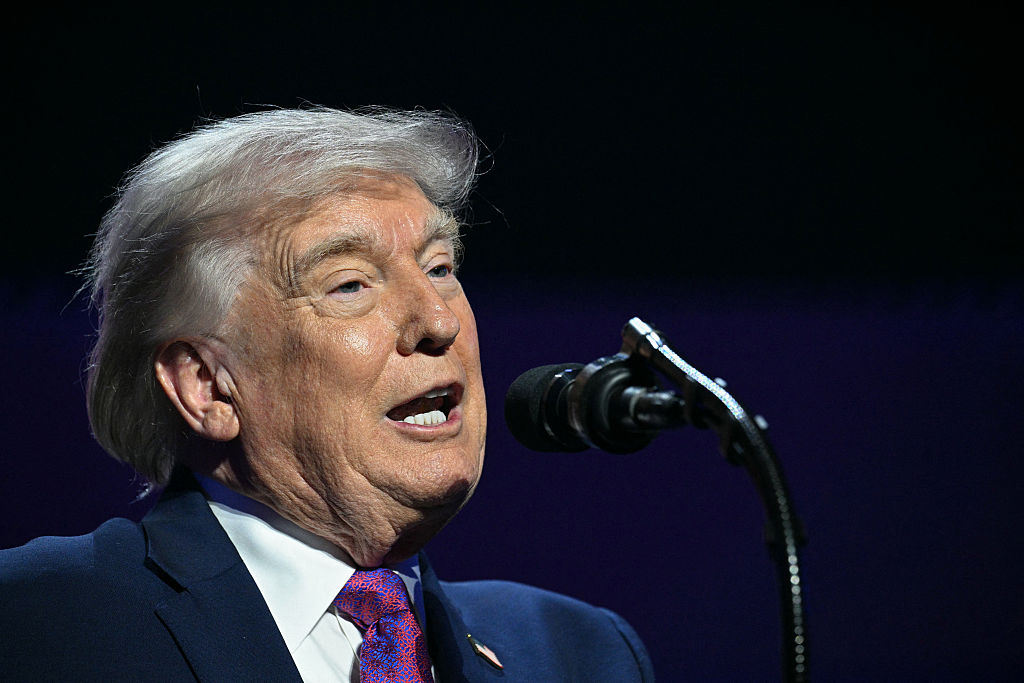
On last week’s Edition podcast, former Archbishop of Canterbury Rowan Williams spoke of there being something “demonic” about the current political culture of the US. Secretary of War Pete Hegseth’s “rhetoric about the violent obliteration of enemies” strikes him as “diabolical” – and of course Trump’s recent threat that “an entire civilization will end” (it didn’t).
What unites all of these awkward and uncomfortable moments? I think we have lost the vocabulary to address really big things – war, repentance, blame and grief
One of the most disconcerting things about Trump in general is that he is often surprising, in a way that politicians generally very much aren’t. We really don’t like to be surprised. When a politician does something sudden, bold or unexpected, we gulp and get scared; the last time it happened in Britain was when Boris Johnson and his advisor prorogued Parliament back in 2019 to try to force Brexit through. Most political outrages are grindingly slow and procedural – the current saga concerning the former UK ambassador to Washington Peter Mandelson, for example, has been a tangle of knots emerging by increments.
Hegseth and Trump disconcert us because they drop discourse bombs (as well as actual ones). This makes life very hard for pundits and commentators, because extrapolating from a snapshot of what Trump is saying or doing at any particular moment is impossible. Still, one gets the impression that if only people like Trump and Hegseth would comport themselves correctly, then their war talk would be, for the likes of Williams, if not entirely kosher then much less personally upsetting. Both Obama and Tony Blair had the knack of finding more acceptable words and striking the appropriately somber tone while deploying their armies, despite regularly doing quite crazy and indeed bloody things with them.
Using the appropriate euphemisms – and avoiding words that make good people swoon on to their metaphorical fainting couches – often seems more important than the actual serious matters in hand. The emergence last year of the full horrors of the rape gangs in the North of England caused a flurry of conniptions in Parliament. Labour MP Sarah Champion got up to say how “disgusted” she was by the independent populist MP Rupert Lowe after he described the “mass rape of young white working-class girls by gangs of Pakistani rapists” as “a rotting stain on our nation.” “Can anyone imagine listening to that as a victim or a survivor?” fluttered Champion. “I am sure his intent is to get to the truth and get justice, but the language… I ask him please to think about who hears our words.” It didn’t seem to occur to her that some of those victims might appreciate a politician eschewing the usual niceties.
Of course, Keir Starmer himself was at it again in the House of Commons yesterday, prefacing his statement on Mandelson with the standard “thinking of the victims” rubric. If I were a victim I suspect I’d think not “how nice that I am being thought of” but reflect that it was a shame he didn’t consider me when he appointed Mandelson in the first place.
What unites all of these awkward and uncomfortable moments? I think we have lost the vocabulary to address really big things – war, repentance, blame and grief. When we were a more religious society, these enormous emotions were carved out of everyday discourse and placed atop a higher platform. Rituals of grief and atonement were separated from the broad flow of social life. No longer. How can the giddy babble of 24 hour news and social media possibly bear the weight of the horrors of war and abuse?
We just don’t know how to talk about these things, and we no longer have places of communal contemplation and rituals of reverence. So instead our words slip out in an ungainly fashion, either too big or too small.






Comments