I’ve been geekishly obsessed with US politics since my early twenties, when I stumbled upon a speech by the then governor of New York, Mario Cuomo. I had never before heard such compelling oratory, the like of which no British politician would even try to match, even if they were capable.
It has been a 40-year passion. But this year’s midterms are among the most entrancing and exciting of all, with so many states in play and a feeling that the polls – which predict carnage for the Republicans – aren’t necessarily telling the full story.
But for anyone who is looking for commentary and analysis of what’s going on, I have some advice. Go anywhere but the BBC. The BBC seems to think a prerequisite for its North America correspondents should be that they either sneer at Americans or totally fail to understand them and their country. We’ve all heard these reporters; much of the time it feels as if you can actually see their mouths curling upwards.
The pendulum has swung far the other way since Sarah Smith arrived as North America editor
Indeed, the BBC itself seems to have an institutional sneer when it comes to the US – and especially to President Donald Trump. Whatever one thinks of him, the BBC behaves more as a partisan commentator explaining to viewers and listeners why we should loathe him rather than as an organization simply reporting on him. The doctored Panorama broadcast of Trump’s speech on January 6, 2021 showed this well, giving the impression that he had made a direct call for violence.
Last year, for example, the BBC website ran the headline: “Trump signs order restricting gender care for young people.” What a swine! But what the executive order – “protecting children from chemical and surgical mutilation” – actually does is restrict drugs that stop children from going through puberty and surgery that makes children look like members of the opposite sex, such as girls having their breasts cut off. Similarly, its coverage of deportations, with headlines such as “Migrants on edge as Trump administration ramps up raids and arrests” makes it seem as though all migrants are being targeted for deportation, when in fact it is only illegal migrants. On and on it goes.
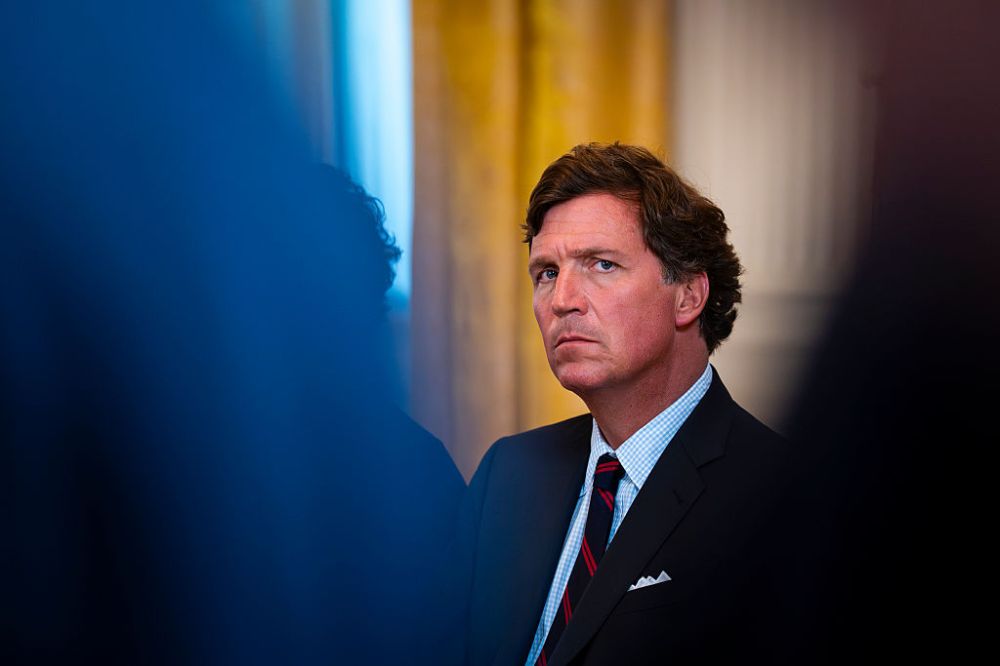
I should point out that there is one great exception to this: the BBC’s former North America editor, Justin Webb, who is up there with the very best. He not only understands the US; when he speaks, it’s obvious that he actually loves the place and the people. And that means that his reporting and analysis is not only reliable but insightful, with all the benefits an outsider can bring.
But the pendulum has swung far the other way since Sarah Smith arrived as North America editor in 2021. The problem with Smith, however, goes deeper. Some of her reporting seems so incomplete and misleading that it makes you wonder how she can possibly live there.
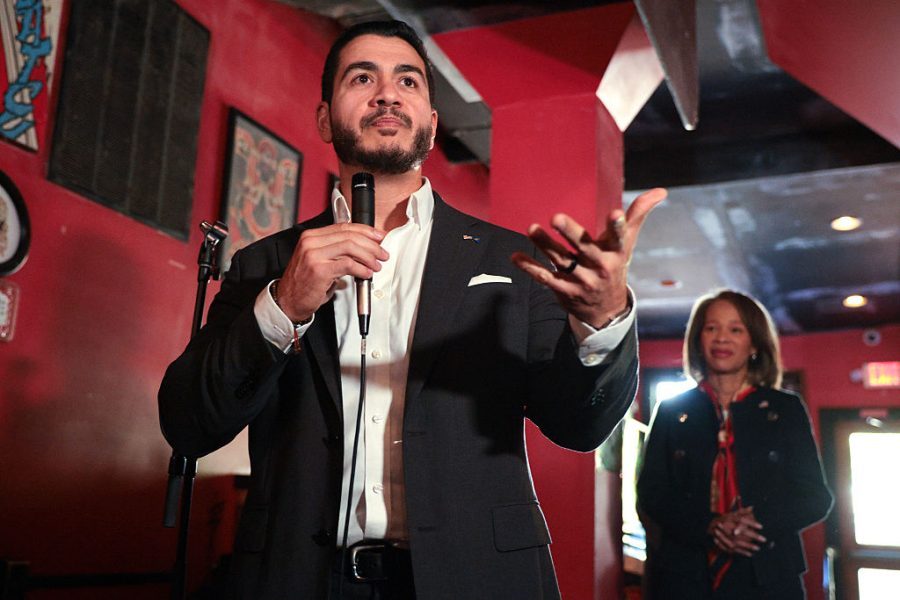
Take Smith’s story this morning for the Today program on the midterms. One of the most fascinating and important Senate races is in Michigan, where the Democrats are running a deeply controversial character, Abdul El-Sayed. Smith rightly describes El-Sayed as a progressive left-winger. His position on every issue is immediately predictable, coming from the extreme left wing of the Democrats, which is increasingly influential.
There has been huge media focus on the race – with still more in the past few days after the woman El-Sayed beat in the Democratic primary, incumbent moderate Congresswoman Haley Stevens, came out in support of his Republican opponent. According to Smith, the reason for all this coverage and the focus on El-Sayed is that he “has been strongly critical of Israel, and that’s upset a number of Jewish Democrats in that state.” Ah yes, those pesky Jews are up to no good again, getting upset that someone is strongly critical of Israel.
It seems to have escaped Smith’s notice that there are any number of anti-Israel Democrats on the ballot tomorrow across the US. Being anti-Israel is one of the defining credos of the progressive left-wing democrats who are taking over the party. But none of the rest of them are getting the coverage attached to El-Sayed.
That’s because none of them are tainted by alleged association with the Muslim Brotherhood – which is the real issue why so much attention is being paid to El-Sayed. First, he denied that he had any connection to the Brotherhood, which he maintains. Then he denied – unambiguously, and without caveats – that any of his family had any connection, which he also maintains.
But El-Sayed maintains this despite the emergence of a series of tweets which suggest that a number of family members, including his mother, have been active in the Islamist group. In a 2012 post, for example, his half-sister Eman Abdelhadi, a professor at UChicago, wrote:
Had an amazing talk with my mom about her activism in the Muslim Brotherhood during the early 70s while she was in college #respect.
In another 2012 post she wrote:
My family has long been MB, but I’ve always felt that it has navigated the political sphere poorly/destructively.
And in a post the following year, she wrote:
Praying for all my family that supports the #MB in #Egypt. Lie low, stay safe.
The issue around El-Sayed isn’t that some Jews don’t like him because he is anti-Israel. It’s the allegation that, at the very least, his family are Muslim Brotherhood supporters and are thus anti-American. And it’s not just Jews who are concerned. Haley Stevens isn’t Jewish. But you’d know none of that if you only listened to the BBC’s North America editor.



Comments