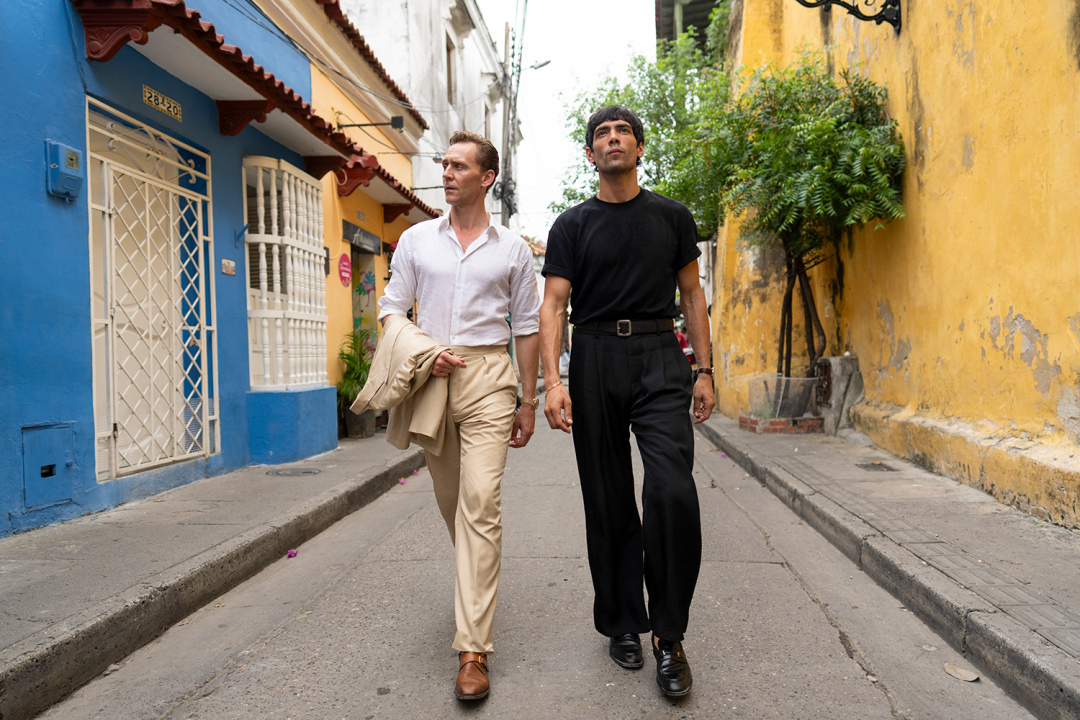


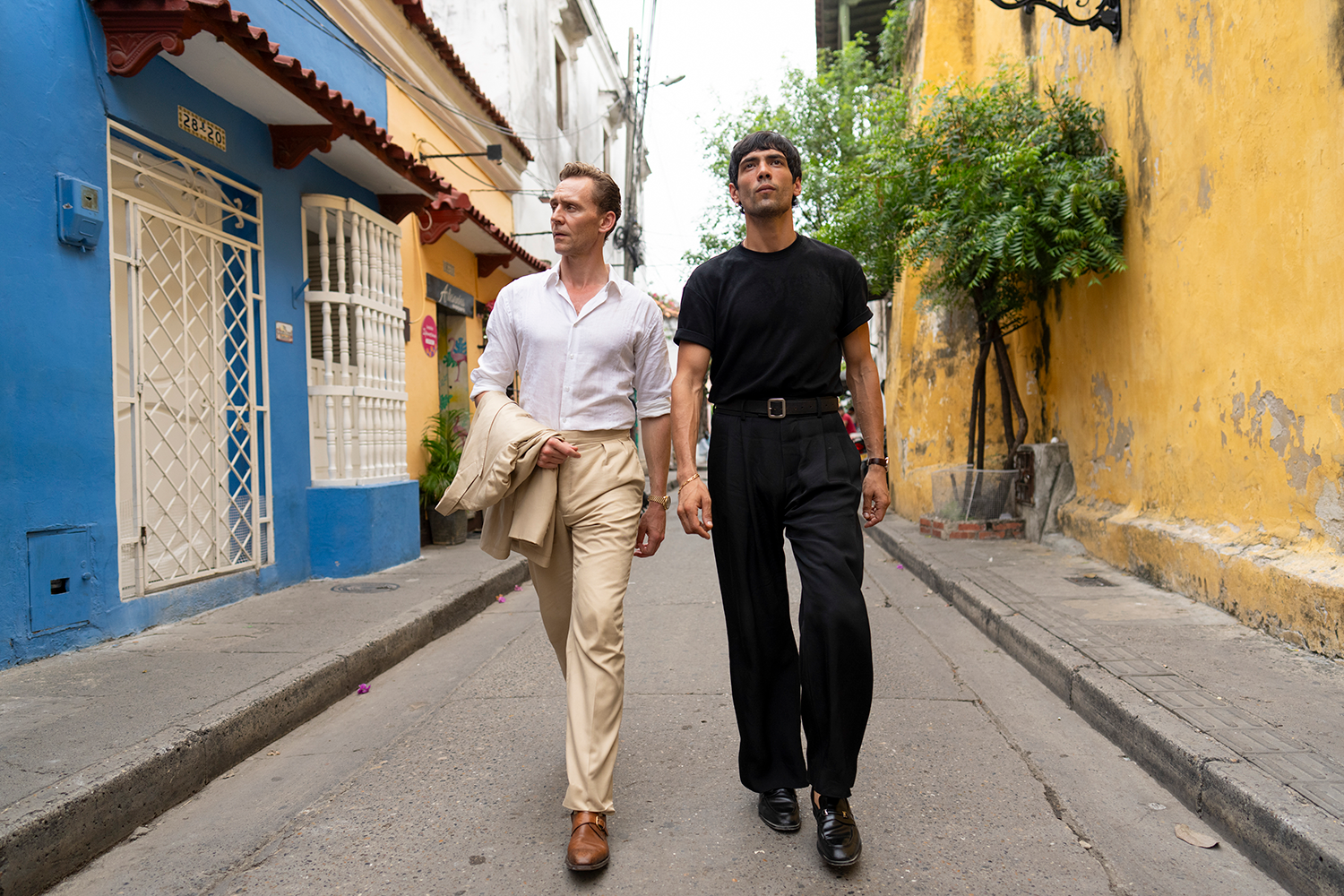
The Night Manager is finally back after ten years with three major drawbacks: no Elizabeth Debicki for the sex scenes; no Tom Hollander for the comedy scenes; and no Hugh Laurie for the evil-kingpin-in-his-toothsome-mountaintop-lair scenes, I nearly claimed.
But only because at the very beginning of the new season the Laurie character’s grizzled body is identified by Olivia Colman (in her most irritating performance ever, as a dowdy but capable MI6 officer with a gratingly suburban accent). And I didn’t want to spoil the coming plot twist in case any of you were foolish enough to have fallen for this blatant case of Chekhov’s misidentified corpse.

Now the cat’s out of the bag in all the papers, though, I might as well acknowledge that Laurie makes a surprise reappearance at the end of episode three. Let’s hope he can inject a bit of excitement into the series.
So far I don’t feel as if I’ve been enjoying it on its own merits. Rather, like le Grand Meaulnes in search of his lost domain, I’ve been watching it in the hope of recapturing some of its predecessor’s nostalgia-inducing magic.
What made the original so good? It really ought to have been a flop because its premise was so fundamentally flawed: that the most hateful man in the world, someone we the viewer should yearn to see being destroyed at any cost, was a pukka, Panama hat-wearing arms dealer called Richard Roper.
OK, so Roper did horrible things, like having nice people tortured or murdered. But none of this behaviour felt psychologically convincing. One suspected that it was all a rather desperate plot device by an out-of-ideas author (John le Carré) to make Roper more detestably villainous. I’m not suggesting that arms dealers are misunderstood saints. What I am saying is that arms dealers are just middlemen (as an ex-intelligence services man, Le Carré would have known this). Far, far worse in the baddie league are the people who engineer the wars that employ them (the CIA, Mossad and Le Carré’s old outfit, inter alia); and worse still are the shiftless global elites for whom those wars are the primary business model.
So, no, I was never rooting for Richard Roper to come to a sticky end as much as I felt the plot contrivances in season one were trying to tell me to be. But I didn’t mind this because everything else about the series was so perfect: the casting, the costumes, the apparently limitless budgeting, and above all, the sumptuous locations.
It was like James Bond without the tongue-in-cheekness. When Bond schmoozes into yet another of his exotic locales, you’re never not aware that this is a fantasy world which exists only on the big screen. But we’ve all – Spectator readers have, anyway – been to places a bit like La Fortaleza, the former 17th-century fortress, now a private estate, in Pollensa, Majorca, which served as Roper’s lair in season one. Probably we didn’t get to stay the night there. But we might at least have been invited for drinks. Or, failing that, insisted on giving a lift to a friend who’d been invited for drinks, just so we could get a peek inside the guarded gates.
Trying now to recall that first series – which I haven’t seen since it came out in 2016 – what I remember most vividly are scenes like the ones where Roper and his family and entourage are having an extended lunch in one of those Mediterranean restaurants, right next to the sea, that cost you an arm and a leg, but to which, again, all of us have been. The social observations – the interactions, for example, between rich parents, children and nanny – were so accurate, the setting and behaviour so recognisable, it made what could have been a contrived, silly plot seem utterly believable and the preposterous scenarios more relatable.
What this lifestyles-of-the-uber-rich travel pornography also did was give the series space to breathe. Watching a very tense thriller, where people could die at any moment, and where you’re always on tenterhooks as to whether the baddies are going to walk in before the goodie has had time to finish downloading the software, can be draining. What The Night Manager did was give us the occasional break from the relentless emotional torture by building in a bit of ‘me time’ for the viewer, like when you’re overwhelmed with guests and you sneak off to a quiet room for a private coffee and cigarette and a rifle through Condé Nast Traveller. The White Lotus is probably the finest exponent of this. But The Night Manager got there first.
Season two is much more generic thriller than its predecessor. Also – perhaps he was like this before, but I don’t remember it – Tom Hiddleston’s character Jonathan Pine is pretty unappealing: essentially a humourless, vengeful prig, who’s implausibly brilliant at being a spy. In one scene, in order to gain the trust of season two chief baddie – a delightfully louche Colombian Teddy Dos Santos (Diego Calva) – he ingests so much cocaine and booze he comes close to ODing. Yet still, somehow, he manages to keep his head and say the cunning things required to ensnare Dos Santos. Later the new season’s love interest Roxana Bolanos (Camila Morrone) asks him how he managed this. Pine doesn’t answer. Because there is no answer, the viewer realises: that scene was just the purest bollocks.




Comments