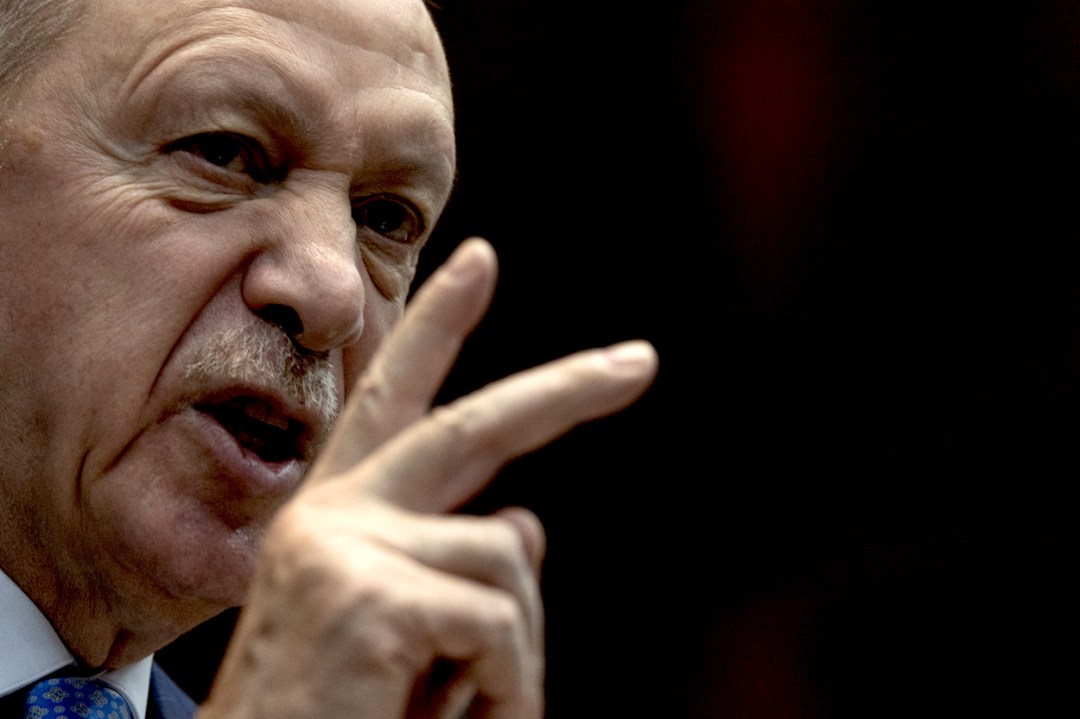
The Iranian regime remains firmly in the crosshairs of American bombers. As President Trump mulls whether to strike, Turkey is using every available channel to halt a military intervention. President Recep Tayyip Erdoğan has personally offered to mediate between Tehran and Washington. At the same time, Turkish authorities have tightened their grip on exiled Iranian opposition figures.
Turkey’s sudden support for Iran is not born of friendship. Over the past two decades, the two countries have repeatedly found themselves on opposing sides. In the Syrian civil war, Iran sent Shi’a proxies to prop up the dictator Bashar al-Assad, while Turkey armed and trained Sunni rebel groups. Ankara’s push for dialogue is driven by a fear of regional destabilization. Should the US strike, Turkey worries Iran will descend into chaos or an all-out civil war. This could prompt over a million people to flee – likely toward the Turkish border.

Turkey can hardly handle another such wave. There are still almost three million Syrians in the country who fled their own civil war. Hosting the largest number of refugees in the world has cost Erdogan dearly among the electorate. If another wave of migration begins, even billions of euros from the EU will not persuade Ankara to reopen its doors.
In fact, reports have leaked of a government contingency plan to create a buffer zone inside Iran if the state collapses. This would serve to contain migration and stop Kurdish militants from gaining a foothold in a post-Ayatollah Iran. The Turkish army already maintains similar zones in Syria and Iraq.
There are well over 100,000 Iranians already living in Turkey, many of them dissidents. While the Iranian security forces were massacring protesters by the thousand, Iranian opposition rallies in Turkey were banned.
An Iranian dissident journalist, Kaveh Taheri, was arrested by Turkish police on January 26 and sent to a deportation center. He had lived in Turkey for 13 years and was awaiting a humanitarian visa for Europe. The authorities may now deport him for “posing a threat to Turkish national security.”
“If they deport Kaveh, the regime will execute him. I am 100 percent sure,” an Iranian who knows him well tells me on the phone.
Saeid Soltani (not his real name) is another Iranian dissident who has been living in Istanbul for many years. He fled Iran after he was repeatedly jailed for his journalistic work and activism. His crime was campaigning against underage children being given the death sentence.
“Everyone I spoke with knew someone who was killed,” Soltani says of the latest protests. “In the city of Rasht, fleeing protesters hid in the bazaar. The [IRGC] set fire to the bazaar to force them out. Then they opened fire. The bodies were left on the streets. In Rasht alone, at least 700 people died in one day.”
Despite having left Iran, Soltani still lives in fear. His Turkish residence permit was denied a few months ago. If the police catch him, he’ll go straight to a deportation center. Last summer, he began receiving threats and photographs of his Istanbul apartment from an Iranian phone number.
The Iranian secret service is active in Turkey. Soltani believes that as long as they target fellow Iranians, the Turks will rarely intervene. In 2019, an IRGC whistleblower was shot dead in the middle of Istanbul. The following year, an opposition leader was abducted from Turkey, smuggled across the border and executed.
Israel is a key reason why Ankara lobbies for dialog over regime change in Iran
“I know for a fact that the Iranian consulate in Istanbul has 400 people on its payroll,” Soltani continues. “Do they need 400 diplomats just in Istanbul? Of course, a lot of these are intelligence.” He claims that regular Iranians are often approached to become informants. This creates an air of paranoia where it is difficult to trust anyone among the diaspora.
When agents target the US or Israel, the Turkish response changes. Last week, six people were arrested for carrying out surveillance at the Incirlik NATO airbase in southern Turkey. Other alleged Iranian plots against Israeli tourists have also been thwarted.
While Turkey does not want Israelis getting assassinated on its soil, Israel is a key reason why Ankara lobbies for dialogue over regime change in Iran. A common narrative in pro-government media is that after Iran, the next target will be Turkey.
The anxiety is not entirely baseless. Israel bombed Syria, Lebanon, Iran, Yemen, Qatar and the Palestinian territories in 2025 alone. While hitting a NATO member like Turkey is probably a step too far, the collapse of the Iranian regime would leave Israel’s military dominance in the region unrivaled.



Comments