A tube of Pringles sits before me. It’s an odd blue-green colour, has a candy-cane question mark curled across its front and, in all-caps lettering just beneath the logo, the words ‘Santa’s Secret Flavour’. Which sounds frankly unappetising. Yet this is just one of a growing number of mystery-flavoured snacks currently on supermarket shelves: crisps, ice creams and other sweet treats committed to keeping their contents under wraps. What’s going on? When did we start playing Russian roulette with our palates and — more to the point — who’s paying good money for food that could taste of, well, anything?
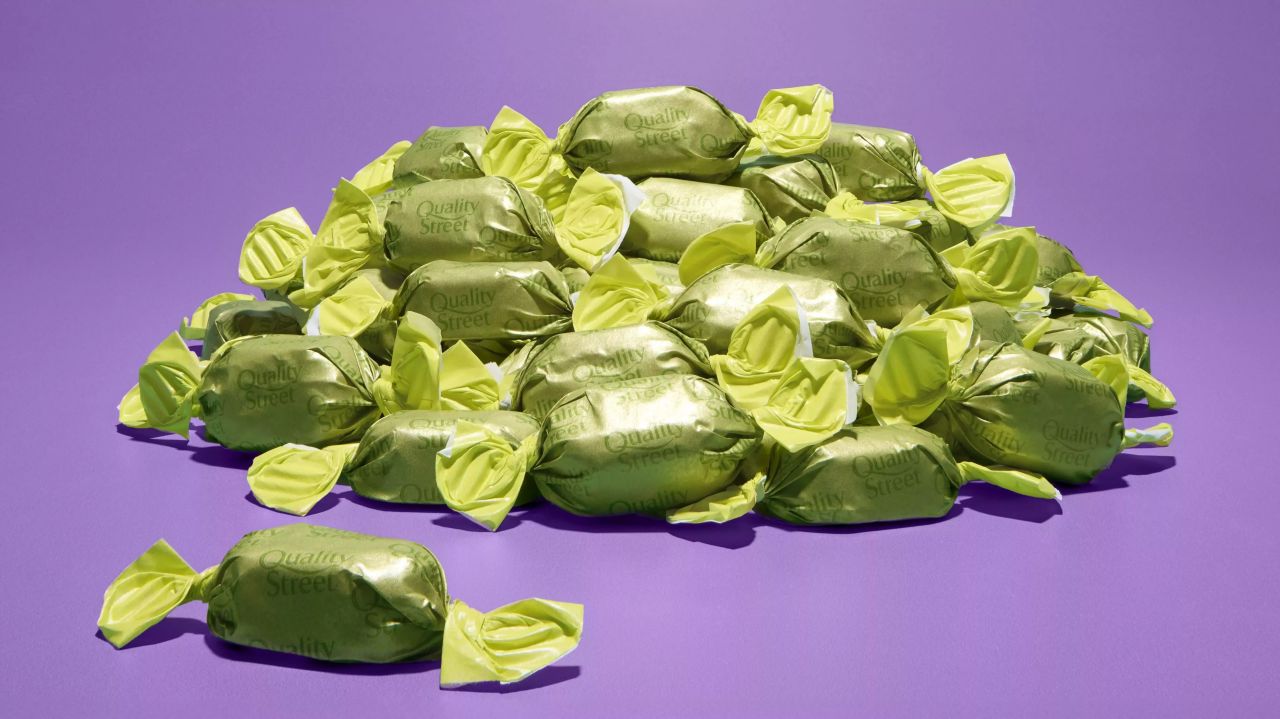
From Gatorade and Chupa Chups to Fanta and SunnyD, several such cryptic products have been rolled out by brands in the past year. Quality Street introduced a mystery chocolate (later revealed to be ‘Pineapple Creme’) to its selection last Christmas, allegedly to ‘add some sparkle to the festive lull’. Sweet Freedom launched a ‘Mystery Syrup’ around the same time. When quizzed about its flavour, the brand’s managing director was tight-lipped: ‘We’ll never admit it.’
‘It’s less about deception and more about excitement,’ says Claire Hooper, group marketing director for Calbee Group UK, which owns Seabrook Crisps. Last month, the snack brand unveiled two new mystery crinkle-cut flavours, one in a black bag, the other orange. ‘We wanted to have some fun with our audience,’ Hooper says. ‘And those choosing to purchase are taking the opportunity to share their ideas about what each flavour is across social channels.’
Perhaps that’s it, then — these mystery products are puzzles rather than food; less scoffing, more sleuthing. Seabrook’s new flavours have inspired Instagram theories ranging from bloody mary to pumpkin soup and ghost chilli. Pringles, meanwhile, is doubling down. Its second Christmas mystery flavour follows last year’s Truffle & Butter, when the brand urged customers to ‘kick up a storm on socials’ and ‘crack the crisp code’. The formula seems to be working: even after another mystery tube was revealed to be Cheesy Garlic Bread in May, online commenters were still baffled. ‘So why could I taste mushroom?’ asked one. ‘Tasted like prawns to me lol,’ wrote another.
My own guesses for the new Santa’s Secret Flavour are no less fanciful. Maybe chicken Kiev? Was that a note of Paxo? The more crisps I eat, the less certain I become. But perhaps that’s precisely the point. ‘Not only are mystery flavours engaging, with people trying to work out what each flavour is, but they’re also a light-hearted way to introduce a new audience to the brand,’ says Hooper. Is that the play, then? Simply goading us into buying something we wouldn’t otherwise pick up?
Dr Laura Wilkinson, associate professor of psychology at Swansea University, is not so cynical. ‘At a time when so much of what we hear about food is macro-nutrients and micro-nutrients, I think this trend is a good reminder that food is so much more,’ she says. ‘Food is social, food is culture, food is fun!’
Mystery products are puzzles rather than food; less scoffing, more sleuthing
And there is, apparently, something genuinely thrilling about not knowing what we’re putting into our mouths. ‘We’re actually not brilliant at recognising a completely unlabelled scent or taste,’ Wilkinson explains. ‘So it may go beyond guessing the flavour in advance and then tasting it to find out. We may taste it and still be unsure!’
Clearly. Half a tube down, and I’m still none the wiser. Perhaps a hint of thyme? Something citrusy? The ghostly aftertaste of a Greggs Festive Bake? Who’s to know. But Wilkinson insists that uncertainty is part of the appeal. Psychologically, it can even make the eating experience more engaging. A 2021 study involving researchers at Bangor University found that mystery can intensify taste and encourage us to eat more.
But it can also backfire, Wilkinson adds. In 2008, Heston Blumenthal worked with researchers at the University of Sussex to create a smoked salmon ice cream. They found, perhaps unsurprisingly, that people who knew to expect something savoury enjoyed it more than those expecting something sweet.
Yet perhaps, as a culture, we’re becoming more comfortable with this sort of consensual trickery. Blind bookings and mystery holidays, for one; secret cinema screenings, for another. Even The Traitors, raking in the ratings, is built on double-crossing and misdirection. (Fans of the show might be interested to learn that Iceland has recently launched a Traitors-branded mystery food range. ‘Round Table Jalapeño Wheel’, anyone?)
And, like the show, there’s sometimes even money at stake. Last Easter, Aldi dangled a £1,000 voucher in front of anyone who could identify the flavour of its mystery hot cross buns, while Cadbury offered £5,000 to anyone who could crack its ‘Mystery Bars’.
But Wilkinson thinks plenty of people will want to be ‘part of the game’, even without the prospect of a payout. She admits that Asda’s new mystery ice cream, which also launched last month, piqued her interest. Still, she has a more practical question: what happens to the unsold stock when the novelty wears off? ‘Will we see food banks handing out mystery-flavoured food?’ she asks. It seems unlikely. Then again, nobody is entirely in the dark. These bags and bottles may have question marks on their fronts, but Hooper says ‘the ingredients and all necessary legally required messaging remain on the back of pack’.
So I turn the tube around. The small print is there, as promised. Garlic powder, citrus fibre, herbs. I’ve spent the best part of an hour trying to work out what these crisps taste like, and a sort of answer has been sitting on the back of the packet all along. My final guess? Roast turkey and stuffing. But I still wouldn’t put — or spend — money on it.





Comments