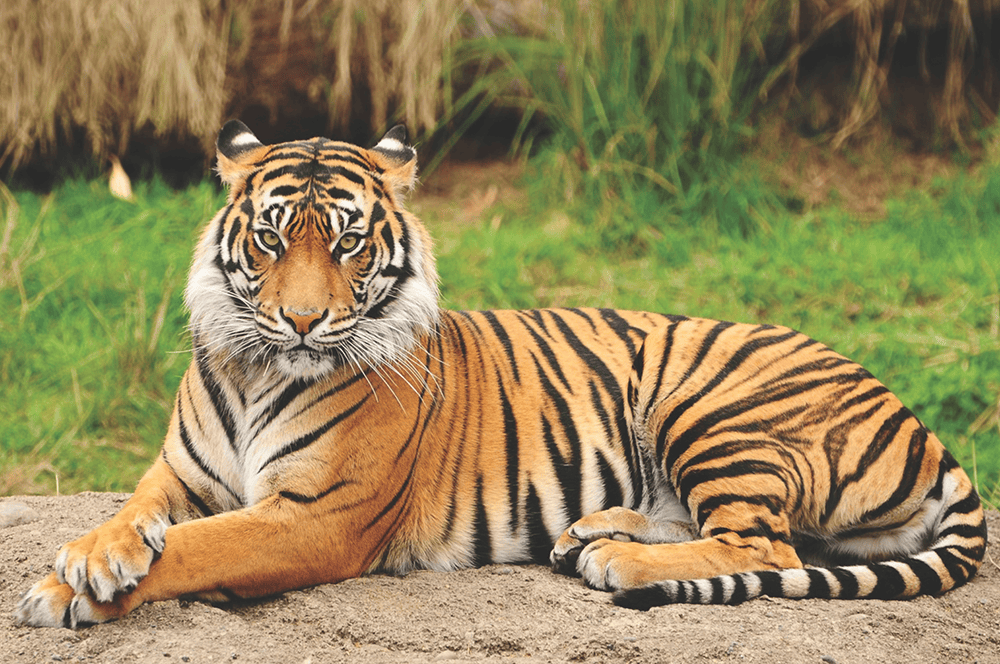


Should Altai the tiger be euthanised? Hardly the cheeriest way to start, I know, but since he mauled a man to death at Yorkshire Wildlife Park last Saturday, here at The Spectator we have been debating the fate of the Doncaster-based big cat.
Why the man chose to enter Altai’s enclosure remains unclear. But as tragic as his death is, the park’s decision to spare Altai is surely the right one. Altai was only acting according to his instincts; there is no justice delivered or example set by killing him, only the sorry loss of a beautiful young animal.
Zoos have stringent safety requirements to make these incidents as rare as possible. But earlier this year, a toddler was attacked by a crocodile at a Cambridgeshire animal park after being thrown into the enclosure by a man later assessed as being unfit for police interview. Can we ban the mentally ill from wildlife parks? As someone who cheers himself up by reading T.S. Eliot to London Zoo’s penguins, I fear I’d be barred.
Despite this, enclosing animals leaves me a little uneasy. If Altai had been running free the poor man would be alive. To balm my conscience, I recently dressed as a penguin outside the London Aquarium as part of a Daily Express-sponsored protest at the housing of 14 penguins in a small basement pool without natural light. The aquarium is now improving conditions.

Zoos can serve conservation and research purposes, funded by the entertainment they provide. But visitors must follow the correct etiquette. Research suggests they can have a negative impact on the animals, which can tell the difference between them and their keepers. The noise and stares of passers-by correlate with higher stress levels among some big cats and primates, so keep as quiet as you can; mutter ‘The Wasteland’, don’t declaim it. Great apes, like gorillas and orangutans, are sensitive to eye contact. Trying to stare them down, let alone banging on the glass or shaking a fence, freaks them out. And, please, resist the urge to climb in.
Don’t be surprised if the animals attempt to defend themselves. Gu Gu, a giant panda, bit three separate trespassers in his cage in China after they’d broken in to try and hug him. Earlier this year, permanent security was introduced at Ichikawa City Zoo in Japan after two American influencers entered the enclosure of Punch, a baby macaque who had gone viral for his attachment to an orangutan toy.
Some break-ins have darker endings. In 1999, the body of a 27-year-old man was found on the back of Tilikum, a killer whale at Florida’s SeaWorld. Tilikum had dragged him down to drown him. Sometimes, though, it’s the animals that come off worse. Harambe, a 450lb silverback gorilla, became an internet sensation in 2016 after keepers at Cincinnati Zoo shot him dead to protect a three-year-old boy who had fallen into the enclosure.
There are exceptions to every rule. In 1990, Rick Swope, a truck driver, intervened at Detroit Zoo to save Jo-Jo, a chimpanzee who had fallen into a moat. Seeing him struggle, Swope dragged Jo-Jo to safety, and was thanked by the zoo for his heroism.
These are living animals to be loved and protected, not mindless amusements to be disturbed and provoked.




Comments