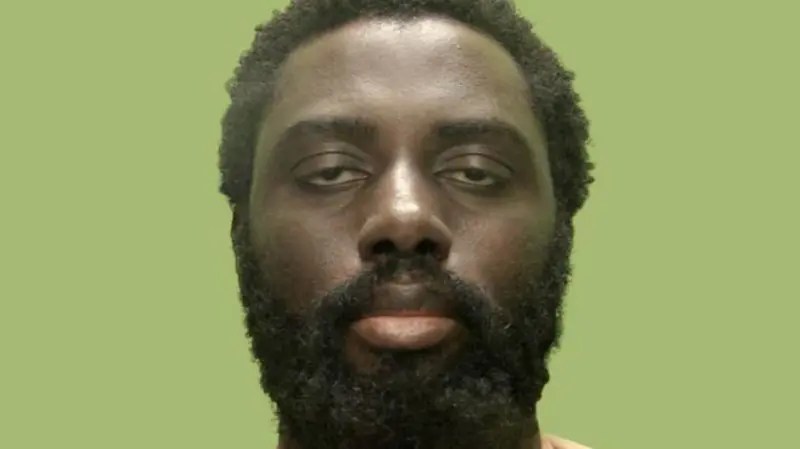
When the triple killer Valdo Calocane was allowed to walk free from medical custody in 2020, it appears to have partly been because he was black. One doctor had leaned towards sectioning Calocane, who had just attempted to break into his neighbour’s house during a psychotic episode. Had this sound medical judgement prevailed, Grace O’Malley-Kumar and Barnaby Webber, both students aged 19, as well as Ian Coates, a 65-year-old caretaker, might still be alive.
Unfortunately, Calocane’s insanity was matched by the foolishness of those charged with his care. An inquiry into the killings heard on Monday that he was discharged after a ‘team of professionals considered the research evidence that shows over-representation of young black males in detention.’ On a separate occasion, according to a previous independent report into Calocane’s care, he was similarly spared being forced to take long-lasting anti-psychotic medication because he didn’t like needles and NHS staff ‘felt a pressure to avoid restrictive practice because of his ethnicity.’
It’s hard to discern exactly who Calocane’s doctors thought they were helping. The violent and psychotic man deprived of effective treatment? Or the public he was unleashed on, over and over again, despite being sectioned four times? One medical report published after Calocane was detained for breaking into another neighbour’s flat might offer some clarity. A psychiatrist wrote: ‘There seems to be no insight or remorse, and the danger is that this will happen again and perhaps Valdo will end up killing someone.’ That was three years before he fatally stabbed three people. It appears that while the mere insinuation of racism helped free Calocane, the prospect of murder was not enough to keep him in custody.

This grotesque moral calculus cannot solely be placed at the door of individual doctors. It is an institutional failure. An investigation found that a clinical team attending to Calocane was influenced by the draft Mental Health Bill in 2022, which called for a reduction in forcing medication on patients, highlighting the disproportionate use of such measures ‘for black people’. Little thought seems to have gone into the possibility that pursuing more proportionate statistics can come at an intolerable price.
Nor is this sort of thinking isolated to the NHS. The Southport killer Axel Rudakubana’s headteacher was told to remove the word ‘sinister’ from his education plan after mental health workers accused her of racially profiling ‘a black boy with a knife’. Similarly, a chance to apprehend Salman Abedi before he detonated a rucksack bomb in the Manchester Arena, killing 22 people, may have been missed because a security guard declined to approach him for fear of being branded racist. The same fear across countless institutions enabled the grooming gangs to prey on vulnerable English girls for decades with near impunity.
This is the human toll of anti-racism, by which I mean the privileging of certain groups over others in the erroneous belief this will reduce uncomfortable disparities. There is nothing in Calocane’s case which suggests racism against him factored into his crimes. Indeed, there’s mounting evidence he was enabled by a series of overcompensations in the other direction, rooted in the bigotry of low expectations; holding minorities to different standards to everyone else.
The result of this has been condescending for law-abiding minorities and a health hazard for the public, who have been taking part in a social experiment they did not consent to – an experiment that encourages doctors and the police to act as sociologists. It has made those in vital frontline professions have to consider contested shibboleths around identity and race when it comes to life-and-death decisions that are better made by removing as much noise as possible. Calocane’s doctors should have been focused solely on whether he was a threat to himself or the public. Yet the spectre of racism has muddied the waters.
The Macpherson report into the murder of Stephen Lawrence lent this ideology its institutional authority. Among its 70 recommendations to rid society of the scourge of ‘institutional racism’ were two that were particularly insidious. It urged the police to redefine a ‘racist incident’ as ‘any incident which is perceived to be racist by the victim or any other person’, a hopelessly subjective definition that Macpherson suggested should include non-crimes. And the report outlined measures to ensure the judiciary, civil service and NHS, among other bodies, instituted a similar sea change to combat the presence – at once ill-defined and ubiquitous – of institutional racism.
Such an all-encompassing brief naturally lends itself to excess. One consequence of this has been the recalibration of what our institutions are trained to fear. Fastidious attention to racism, real and imagined, now takes precedence over genuine threats to the most vulnerable people in society. We are long overdue for a Macpherson-style reset which puts our institutions on notice that there is no excuse, no matter how lofty, for this dereliction of their duty.





Comments