
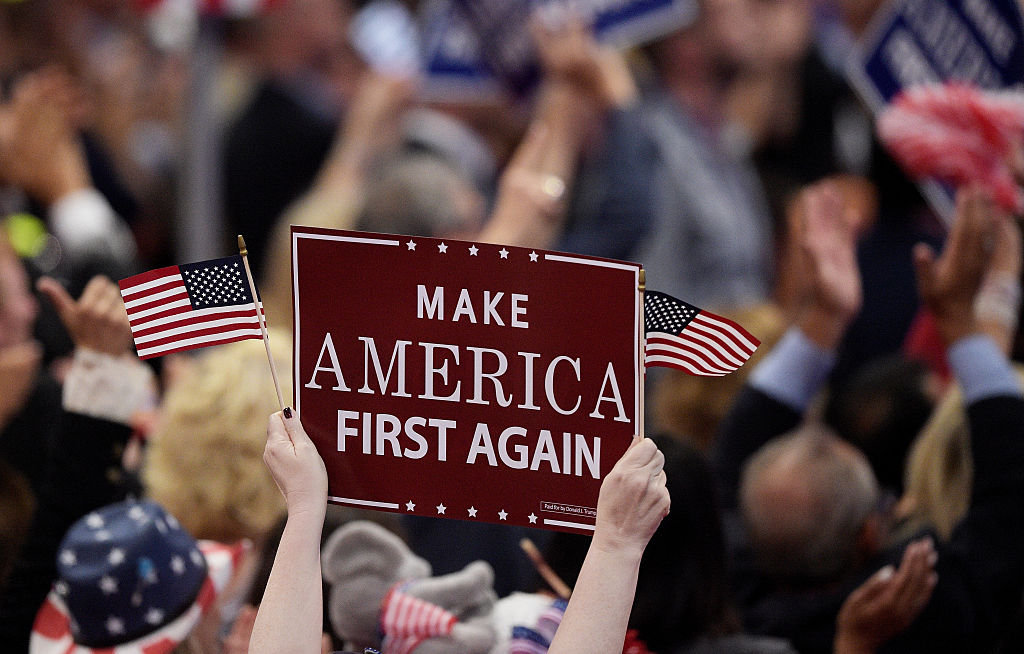
Sizable minorities on both the left and the right want America to intervene in fewer foreign conflicts and to exercise more restraint in foreign policy. In the 2006 midterm elections, antiwar voters contributed to the Republicans’ loss of both houses of Congress. They also helped defeat Hillary Clinton in the 2008 Democratic presidential primary contest and the Republican nominee, John McCain, at that year’s general election.
While McCain styled himself a “maverick,” the label could be more accurately bestowed upon the anti-interventionist Republican Ron Paul, who shocked the GOP establishment by showing that an unstinting critic of the Iraq War could mount an insurgency within the party of George W. Bush. A decade earlier, Pat Buchanan had also demonstrated that being antiwar could be popular, or at least no barrier to popularity, on the political right.
We enjoy a security surplus, which is more politically significant (for now) than our financial debts
Donald Trump was well aware of all this when he decided to make his first run for president in 2016. His opponent was Mrs. Clinton, the woman who’d been too hawkish for voters eight years earlier. As a senator, she had supported the Iraq War. As a private citizen – with a visible public profile – Trump was an early critic of the war and made a point of saying so in his campaign. He won, and in his first term he started no new wars, in contrast to every other president of the past 25 years.
Yet two years into his second term, Trump has gone to war with Iran twice and forcibly deposed the dictator of Venezuela, with a warning that the same may soon be in store for Cuba’s communist leaders. Trump built a winning electoral coalition two years ago that absorbed such antiwar ex-Democrats as Robert F. Kennedy Jr. and Tulsi Gabbard, along with their supporters, and he picked as his running mate a rising star of the intervention-critical right, J.D. Vance. Voters who cast their ballots for the Trump-Vance ticket in the hopes of no more wars are feeling baffled or downright betrayed. Neoconservatives and other hawks who have long loathed Trump are equally disoriented by the turn, with some regretting the way in which they’re finally getting the confrontation with Tehran they’ve always demanded.
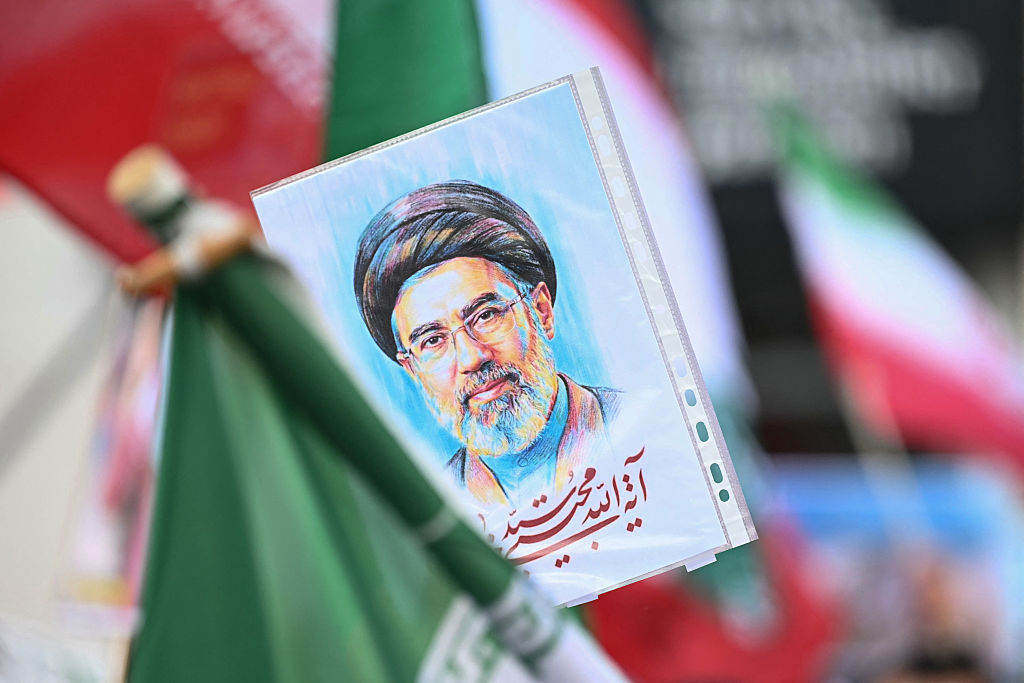
Trump has insisted all along that he wouldn’t allow Iran to acquire a nuclear weapon. But when Israel went to war last June to destroy the Islamic Republic’s uranium-enrichment facilities, the task proved tougher than expected. Trump intervened to bring a speedy conclusion to a war whose purpose was in accord with his commitments. The trouble, certainly for Israeli Prime Minister Benjamin Netanyahu, was that his country’s need for American help signaled to Tehran that it might well get away with nuclear weaponization the next time. After all, Trump wouldn’t be around forever. Would America support the next war against Iran’s nuclear program?
The only way to be certain of it was to make sure it happened while Trump was still in office, so Netanyahu and others made the case for a renewed war, with the popular uprisings against the clerical regime in December and January perhaps providing the last incentive needed to get Trump to act. Regime change seemed ready to happen naturally, with just a nudge from outside. Or, in light of the success the Trump administration had with regime decapitation in Venezuela, the President and his planners might have thought that a brittle Iranian regime, jolted by bombing, would cut a deal with Washington as quickly as Nicolás Maduro’s deputy dictator, Delcy Rodríguez, had done.
An explanation of President Trump’s thinking does answer the bigger question, however, which is not why he has waged a war, but why America seemingly never enjoys peace. We’re always at war, whether the president is a Republican or a Democrat, an enthusiast for globalization and the “liberal international order” or, like Trump, a critic of liberal international institutions. The question’s framing is also its answer: in fact, most Americans do enjoy peace, so why should they worry about war? It adds to the national debt, says Representative Thomas Massie, but so does everything else, and Americans don’t care about that, either – not enough to vote for presidents or Congresses who will cut government services or raise taxes to curb the debt. The dollar cost of a war will never stop one, not until the country is actually bankrupt. The strategic conditions that noninterventionists point to as the reasons we don’t have to fight wars all around the world are actually the reasons we can, and therefore do: America, with oceans on either side of our homeland and no great-power competitor in this hemisphere, as well as a nuclear arsenal and a conventional military capable of deterring any distant great power, is so safe that it can use its power for more than just local defense.
We enjoy a security surplus, which is more politically significant (for now) than our financial debts, as both the public and the nation’s elites have foreign projects they wish to undertake. When these projects turn out badly, the nation’s morale suffers and the politicians who led the undertaking may lose office and esteem. But as long as the surplus doesn’t disappear as a result of a catastrophic gamble, it remains to be put to new use by the next set of officeholders.
Switzerland is neutral and noninterventionist because, despite its formidable mountains and resilient people, it is a small country with no security to spare. (That wasn’t always the case – the pope has Swiss guards to this day because Switzerland was once so safe from foreign threats it could export mercenaries to its neighbors; back then neutrality arose from the fact the confederation’s constituent cantons were so religiously and politically divided that Switzerland as a whole couldn’t take any one side in Europe’s conflicts without risking civil war at home.) The US cannot be a super-sized Switzerland – for the simple reason that a super-Switzerland with surplus security wouldn’t be Switzerland at all.




Comments