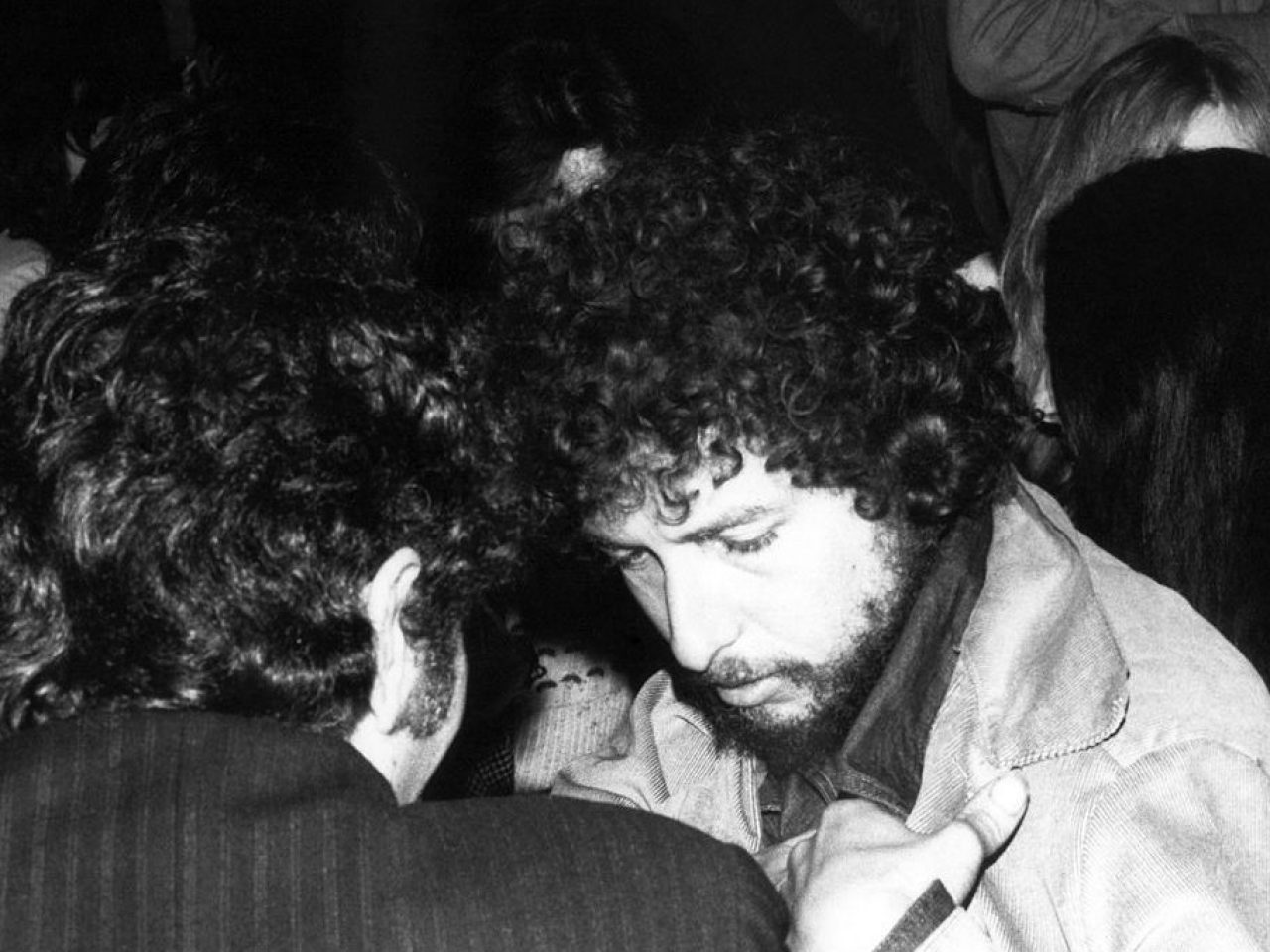
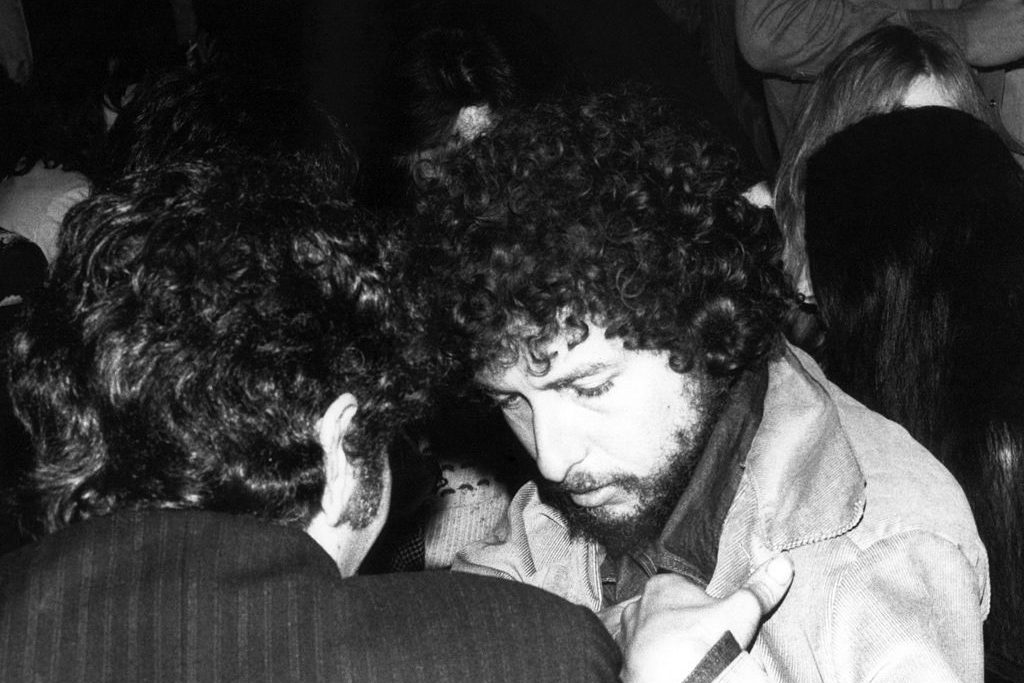
For all the billions Taylor Swift has made from guiding her career into carefully delineated “eras,” it was Bob Dylan who pioneered this career path. With practically every new album, Dylan traded one persona for another. There’s the folkie hobo of The Freewheelin’ Bob Dylan, the pill-popping beat poet of Blonde on Blonde, the cleaned-up country crooner of Nashville Skyline, the Christian revivalist of Slow Train Coming and many, many others. This year marks the 50th anniversary of Dylan’s The Basement Tapes, a tranche of previously unreleased hoedowns, goof-offs, shaggy-dog stories and barroom ballads that was never meant to be a proper album, but might be the closest we can get to seeing the man behind the mask.
When he was coming up as a Greenwich Village folkie, Dylan talked in a coalminer’s patois and spun wild tales about his time as an orphan, a circus runaway and a Sioux Indian – despite being a middle-class Jewish boy from Minnesota. His most spectacular story, cut at the last minute from the liner notes of Freewheelin’, involved running away at the age of ten to hobo around with the bluesman Big Joe Williams. “We knew it was baloney,” recalled his friend Dave Van Ronk, but “hell, we figured why spoil the kid’s fun?”
When Dylan donned a leather jacket and shades, permed his hair into an afro and plugged in his electric guitar at Newport in 1965, it’s no wonder many booed. By casting it off as the costume it was, Dylan rendered the folkie image absurd in one stroke and shook the social-activist program that had underpinned it.
By 1967 Dylan was in full retreat from the public eye after a nasty motorcycle crash. Or was it staged? That’s never been hashed out. Either way, it seemed the right moment to hop off the carousel of success before it spun out of control, so Dylan traded the road for a bucolic life with his wife and children in Woodstock, New York. He was soon joined there by members of his touring group, the Hawks, soon to make it big as the Band.

Hanging out with these four savvy Canadians, working-class boys who had cut their teeth on the club circuit in the backwaters of Canada and America, must have been a breath of fresh air for Dylan after two years of his amphetamine-fueled highwire act. In the basement of Big Pink, the Band’s house in nearby West Saugerties, they recorded more than 100 songs together over several months, with Dylan tapping out lyrics on his typewriter upstairs, then heading downstairs to try them out. “That’s really the way to do a recording – in a peaceful, relaxed setting, in somebody’s basement, with the windows open and a dog lying on the floor,” he later recalled.
With Robbie Robertson on guitar alternating between soulful rhythm and piercing leads, Rick Danko on bounding, tuba-like bass, Richard Manuel hopping between piano and drums – a kind of wiry, white Ray Charles – and the classically trained Garth Hudson playing carnival organ and manning the tape deck, Dylan and his buddies came up with a lightning-in-a-bottle homebrew that producers have been trying to recreate ever since.
But that fine balance of musical fluency, camaraderie and nonchalance will probably never be matched. What we have here is Dylan and the Band’s radical vision of America’s melting pot: blues, rockabilly, country and soul fused back together into the primordial stew from which they all arose. It transcends genre and agenda in a way that imitations – labeled Americana, alt country, what have you – never will.
Dylan’s home recordings quickly became the stuff of legend and, once they were shopped around as demos, Basement Tapes songs began popping up everywhere. Manfred Mann hit the charts with “The Mighty Quinn,” the Byrds covered “You Ain’t Goin’ Nowhere,” and the Band themselves mythologized the whole affair on their debut Music from Big Pink(1968). Rolling Stone demanded “Dylan’s Basement Tape Should Be Released,” and the world’s first rock bootleg record soon circulated, whetting the public’s appetite. When an official album of 24 recordings unexpectedly appeared in 1975, called simply The Basement Tapes, it was a revelatory moment. Suddenly, the old legends were affirmed: here were the Dead Sea Scrolls.
Dylan has always been a little cagey about these recordings. Perhaps that’s because he’s never sounded so unguarded as he does here, among friends and without expectation to cut an album. He’s having a hoot on “Please Mrs. Henry,” daring some earnest disciple to take him seriously:
Well, I’m groaning’ in a hallway, pretty soon I’ll be mad,
Please, Mrs. Henry, won’t you take me to your dad?
I can drink like a fish, I can crawl like a snake,
I can bite like a turkey, I can slam like a drake.
Or “Lo and Behold”:
I came into Pittsburgh at six-thirty flat,
I found myself a vacant seat and I put down my hat.
I said, “What’s the matter with you, Molly, dear?
What’s the matter with your mound?”
“What’s it to you, Moby-Dick?
This is chicken town.”
It’s funny stuff, but it also speaks in the language of old folk songs, Dylan’s surreal lyrics sounding like the innuendos and garbled meanings of ballads passed down through the oral tradition. Take a nonsense song like “Ring Around the Rosie” – is it much different?
Dylan could also wax achingly sincere. “Goin’ to Acapulco” sounds like the weary song of a dying barroom pianist. “Tears of Rage,” almost rises to the diction of the King James Bible or Protestant hymnody:
Oh, what dear daughter ’neath the sun
Could treat a father so?
To wait upon him hand and foot
Yet always tell him “No.”
The 1975 release buried the fact that Dylan and the Band had cleaned up the tracks that year, dubbing in new instrumental parts and slipping in some Band originals with members of the group on vocals. Yet those eight Band compositions – some of which might have been recorded as late as 1975, decidedly not in a basement – somehow integrate perfectly with the rest.
Whether he meant to or not, Dylan had created a new canon of true folk songs – true because they were injected into the cultural bloodstream, spread by rumor and word of mouth, bubbling up into our consciousness via the campfire singalong and the hit parade and the shady man selling bootlegs down an alleyway.
If folk music exists today, it exists like the dodo does in the Oxford Museum, motionless, taxidermied so that we can study it carefully, but euthanized in the process. Still, in a basement in the wilderness of the Catskill Mountains, Dylan and his friends breathed life into it for a few moments more, and it walked the earth just like in the good old days.
This article was originally published in The Spectator’s December 22, 2025 World edition.

Comments