

One of the drawbacks of being on the jabs is that you can lose muscle mass as well as body fat. I’ve been taking Mounjaro for about six months and, apart from the expense, I have few complaints. I’ve lost about 20lb and generally feel healthier. But Caroline insists I combine the weight loss with lifting weights, so I’ve been making regular visits to a gym in White City.
I hear horror stories from gym users about people treating the space as if it’s their personal film set
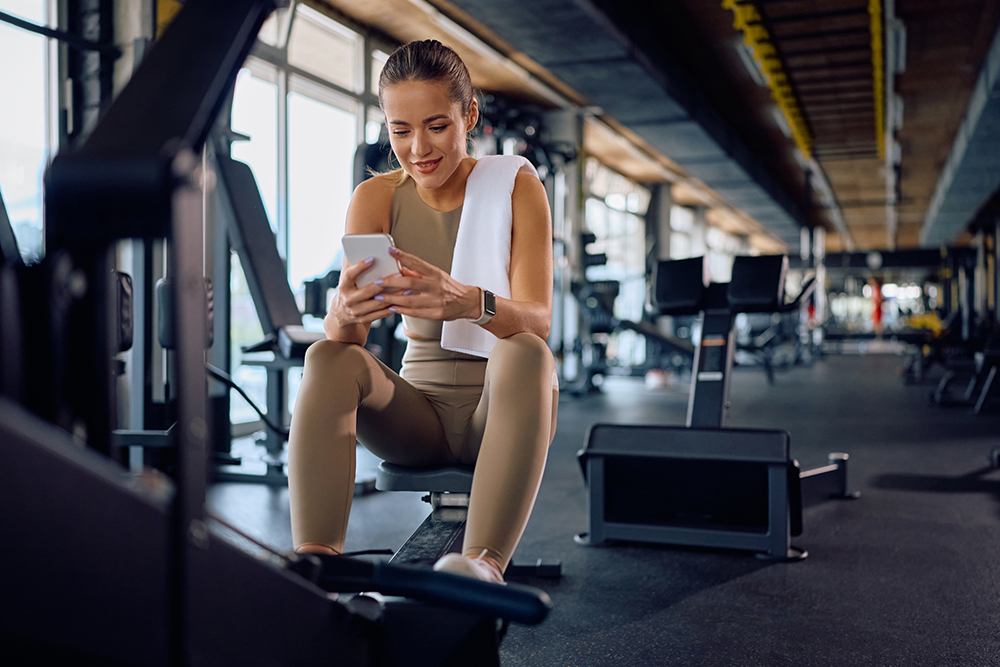
I used to be a bit of a gym rat in my twenties and thirties, but marriage and children, not to mention a full workload, put paid to that. Not much has changed in the last quarter century, save for one glaring difference: everyone is constantly on their phones. I don’t just mean while waiting to use a resistance machine, like a shoulder press or a lat pulldown. I mean while sitting on a piece of equipment in between sets. I’m not exaggerating when I say I can do almost an entire circuit, doing two sets of ten reps each on nine different machines, while some man has been staring at his phone the entire time, parked on a piece of equipment without moving. Given that he’s sitting on a machine I’m waiting to use, this is intensely irritating.
I say ‘man’ but the women are just as bad. In some ways they’re worse, because if you approach the seated divas and say, ‘Do you mind if I work in?’ they look at you as if you’ retrying to hit on them. That may be because they usually have AirPods in and cannot hear anything you’re saying. With a look of great annoyance, they then switch off whatever it is they’re listening to, remove their AirPods and say: ‘What?’ When I repeat the question, they often look confused, as though the expression ‘work in’ is unfamiliar to them – and perhaps it is.
‘Sorry, what?’
‘Work in. As in, turn. Do you mind if I have a turn?’
They then look incredibly put out, as if asking them not to sit on a pec deck for 20 minutes, doomscrolling TikTok, is a terrible imposition. In the 1990s, asking people if you could share a piece of equipment was completely standard, and if it was a bench press they would often offer to ‘spot’ you, meaning help you with the last few reps. That was one of the nicest things about going to the gym back then – the fact that you would trust a total stranger to suspend a 80kg barbell just inches from your head.
Have phones and AirPods made the whole experience less social, so everyone is now marooned in their own private space? Or is it another example of high levels of immigration eroding social trust? Being in west London, this gym has a very diverse group of customers and I’ve noticed that when they do strike up conversations with each other, it’s usually with people of the same ethnic and cultural background. Or maybe I’m reading too much into this and it’s just me, often the oldest bloke in there, that no one wants to talk to.
One of the saving graces of my gym is that filming anything or taking photos is strictly verboten, something I discovered when I took a picture of myself doing a bicep curl to send to Caroline. ‘You can’t do that here,’ said a member of staff, who then stood over me as I deleted it. I think this rule exists because the gym’s owners have convinced themselves it’s frequented by celebrities, although I’ve never seen one there and probably wouldn’t recognise them anyway.
But it means you don’t have to put up with fitness ‘influencers’ screaming at you because you’ve just walked through their shot. I hear horror stories from users of other gyms about people treating the space as if it’s their personal film set, which must be extremely annoying. I have a curmudgeonly dislike for people who point their phones at themselves, and am tempted to ask them if they’re compensating for the fact that no paparazzo has ever taken a photo of them. I guess this is what being ‘social’ means these days – creating reels for your Instagram account. Talking to strangers is fine, so long as they can’t talk back.
I know, I know. I sound like a grumpy old man. And to be fair, these gym bunnies are in much better shape than the ones I remember from the 1990s. They’ve been taught how to isolate and exercise different muscle groups – either from personal trainers or YouTube videos – and I’ve learnt a lot from watching them. They know what they’re doing, these 21st–century muscle-worshippers. I just wish they were a little friendlier and spent less time on their phones, particularly when I’m waiting to use a piece of equipment.

Listen to Toby Young on The Edition:






Comments