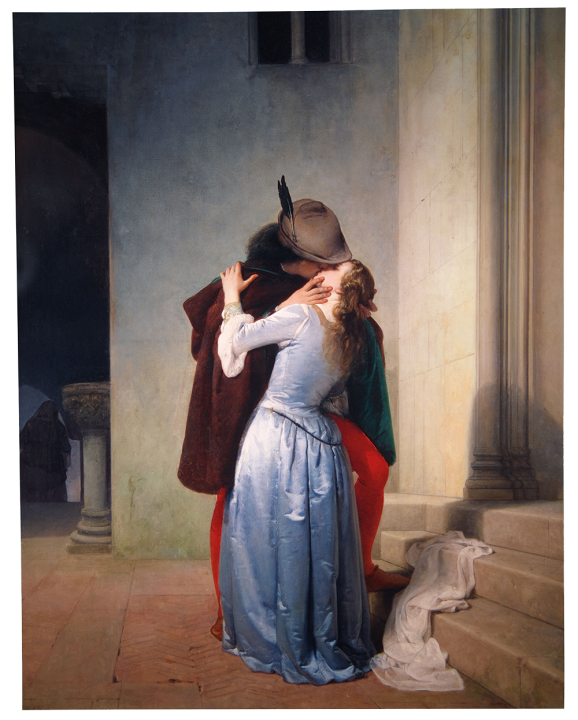
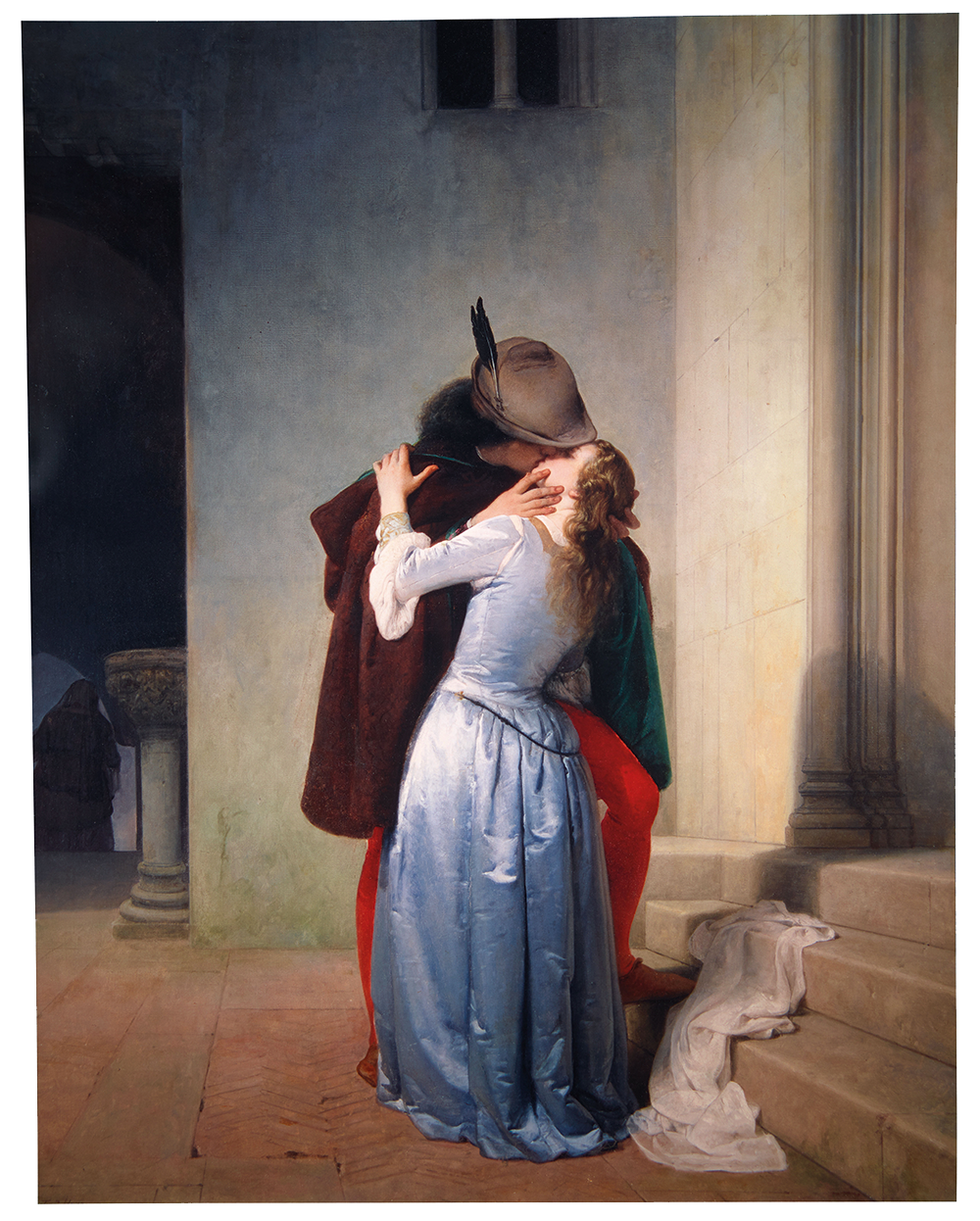
Kissing is a tricky subject. It has a complex, baffling history. The kiss of a baby is one thing; the kiss of lust something quite else. Kings, generals and prelates used to kiss, as did mafiosi – often before killing. The kiss has many meanings, all of which are explored in this informative, if sometimes wearing, book. Finally, a warning: if you’re queasy about arse-kissing, don’t read it.
But then you would be missing a lot. Katie Barclay, a diligent Australian academic, has written an “overview of the world of the kiss in Europe from medieval times to the present.” Her opening words begin listing the startling variety of the kissing involved: “Smooch, snog, pash, smack, peck, canoodle…” But the core of the book concerns the changing historical connotations of osculation.
Nowadays a kiss denotes something primarily sexual, largely because of mass media. Nothing sells like sex, and so the snog is the dominant form of the kiss in the contemporary imagination. This is followed by familial kisses – which, strangely, may be lifesavers. American insurance companies have claimed that men who were kissed goodbye by their wives before driving to work were less likely to have car crashes. I find this a little threadbare, but maybe…

Barclay sees the kiss of peace as a “central ritual of medieval life for Europeans.” We are told that for many Christians the mouth was the entry to both the body and soul, so taking the Eucharist could signal an intimate form of a kiss. The most notorious use of the Christian kiss was when Judas kissed Jesus to indicate he was the one who should be arrested and crucified by the Romans. Another case of perilous intimacy involved St. Francis Assisi in 1206, climbing down from his horse to kiss and give alms to a leper, who then disappeared.
Should men kiss each other? In 18th-century France, “Lamourette’s kiss” was a way of bonding men in the legislative assembly. At the same time, the British were distancing themselves from man-on-man snogging and replacing it with handshakes. The Danes produced an osculatory text in The Kiss and its History (1901) by Kristoffer Nyrop: “We all yearn for kisses and we all seek them: it is idle to struggle against this passion.” Scandinavian eroticism was thus unleashed.
Richard Wagner suggested that “the kiss of love is the first intimation of death,” but then modernity brought us the “kiss of life,” by which a dying person could be resuscitated by the application of lips and blowing in air. (It happened to me once, but I was unconscious and unaware.) The present century pursued osculatory truth in brain scans, designed to see what exactly is happening when we kiss. But this is difficult. So scientists resorted instead to monitoring people as they viewed others kissing. It turned out that watching same-sex kissing produced the most striking results. But it was all still unclear: “Measuring the impacts of the kiss remains a fraught and rather futile business,” Barclay observes.
Finally, there’s that arse-kissing – “an inversion of the holy kiss, a corrupted ritual used by heretics and witches to shame and humiliate others.” It was apparently much favored by the Waldensian movement that began in 12th-century France. The practice crops up quite often in this book – and seems to be considered OK for animals. I will pursue the subject no further.
Barclay’s scholarship is formidable, but the deluge of information can be confusing. Were, for example, medieval kisses never sexual? Surely all kinds of kisses are going on all the time. I hope so.





Comments