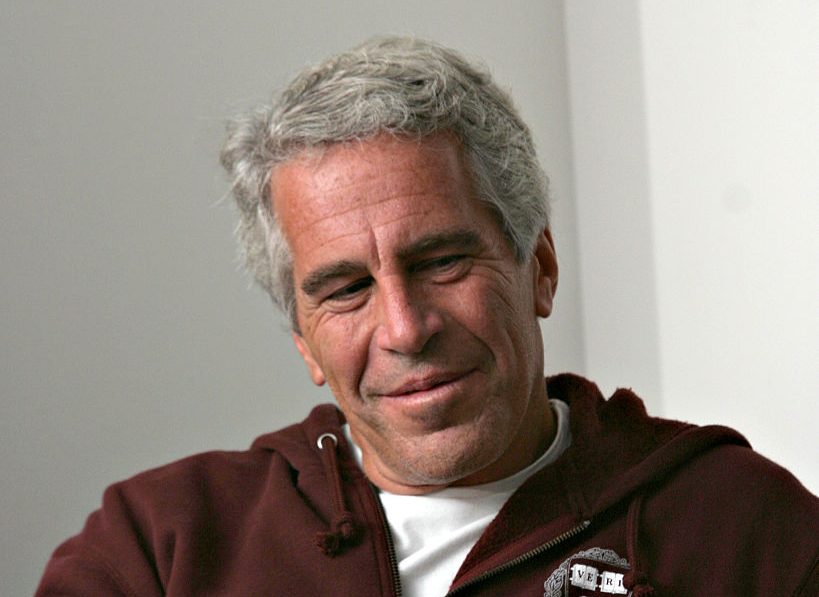
Just before Andy Burnham jetted off to the sun this week, his junior minister for victims Alex Davies-Jones announced that he might be willing to set up a new public inquiry into the activities of Jeffrey Epstein and Mohammed al-Fayed. And matters could go further: there was, for example, mention of the allegedly dubious behaviour of David Sullivan, the owner of West Ham FC – something Sullivan denies.
The stimulus for this move, which has the air of a proposal intended to be plausibly deniable if the going gets rough, comes from an internal Labour document produced by campaigners on violence against women and girls. This was artfully bounced on Burnham when he was packing up for the summer recess: hence the announcement.
At first sight, all this sounds like sweet reasonableness. In fact it is a doubtful idea, but nevertheless one that indirectly tells us something about the Burnham style of government.
We don’t need this inquiry – as Andy Burnham, who is no fool, probably realises
Why not hold an inquiry? To begin with, there is the matter of cost. The direct expense to the taxpayer of an inquiry nearly always runs into eight figures, and that is without the extra hidden costs such as diverting civil service and other governmental time. The Covid inquiry, for example, has so far cost £31 million and counting; the Post Office inquiry a similar sum. Expenditures on seriously high-profile investigations have run vastly higher than that. In the financial year 2023/24, the total expenditure by government on continuing inquiries was something over £130 million. If the Prime Minister thinks he has found a cheap way to buy off political pressure, he is wrong.
Furthermore, public inquiries are serious affairs. Direct costs aside, they take up a great deal of administrative time and trouble, take public employees away from more important jobs, and often require government responses that generate further costs (some £25 million, for example, for the Covid inquiry so far). They are also intrusive, being able to force anyone to give formal evidence and to punish the recalcitrant for contempt. This is not a currency that should be readily devalued: before we hold an inquiry we need to be sure of getting some noticeable return.
Sometimes the case is obvious. The Post Office scandal uncovered a monstrous culture of bureaucratic back-scratching coupled with lofty unconcern for the rights of individual postmasters. Deciding what to do about this clearly merited a full inquiry. So too with the grooming gangs. We must change our institutions so that we never again see the kind of ‘don’t ask, don’t tell and shut up’ culture of the police and social services when faced with horrific abuse of vulnerable girls; to tell us how, only the full works will do.
With Epstein and Al-Fayed, it’s much less clear. Of course we owe every possible support and sympathy to victims of predatory plutocrats who have turned out to be sleazebags and worse: they were and remain appallingly done by. However, an inquiry isn’t a means of showing sympathy or solidarity. We know the facts: a smooth-talking predator successfully enfolded numerous young women here into his international Caribbean web of sex, trafficking and money, and a dictatorial business tycoon used his position to brutalise good-looking females on his payroll who took his fancy. This can’t be allowed to happen again. But airing these facts again in front of a judge won’t give any answers we don’t already have. Inquiries exist to teach lessons for the future. It is hard to see any useful lessons coming out of such an exercise.
In short, we don’t need this inquiry – as Andy Burnham, who is no fool, probably realises. But his public receptivity to the idea of holding it tells us two interesting things about him. First, he needs to be seen as a man who returns political favours. Alex Davies-Jones, an otherwise very loyal Welsh Labour bag-carrier, resigned in May to help push Starmer out. When asked back by Burnham post-coup, one suspects her quid pro quo may have been the inquiry.
Secondly, Burnham depends more than he would like to think on his continually creating the impression of a man of action. Think of his previous grand if symbolic acts: creating a second office in Manchester, promising to get tough with Israel, making portentous suggestions of a constitutional reset and a written constitution and even EU re-entry. This, looked at closely, is more of the same.
Ultimately it is this tendency that may undo him. Sooner or later the public will twig that for all his words Burnham isn’t actually doing very much. Labour fully realises that the last thing they need, after the hapless Starmer years, is a prime minister with a reputation for being all mouth and no trousers. Unfortunately every announcement like this, every appeasement of a pressure group with vague promises, increases Andy Burnham’s peril of being seen as just that.





Comments