
Long before he was president of the United States, Donald Trump was a caricature. Producer Mark Burnett approached him to be the lynchpin of The Apprentice precisely because he was a cartoonishly bombastic, ‘greed is good’ era figure addicted to displays of gold-plated opulence. Since occupying the White House, Trump has also frequently acted as a stereotypical American who sees everything as an achievement of the US of A, salvator mundi. And he has been doing it again with the war in Afghanistan.
‘We will always be there for Nato, even if they won’t be there for us,’ he blurted on his Truth Social platform earlier this month. It was manifest nonsense of course, given that Article 5 of the North Atlantic Treaty, dealing with collective security, has only been invoked once, on behalf of the United States after the 11 September 2001 al-Qa’eda attacks on New York and Washington. Then, on Thursday, speaking to Fox News, he produced some trademark alternative facts.
‘We’ve never needed them,’ he said of America’s Nato allies. ‘We have never really asked anything of them. They’ll say they sent some troops to Afghanistan, and they did, they stayed a little back, a little off the front lines.’
This is either a display of the President’s ignorance – which is often proudly profound, as if knowledge were a decadent disease – or, just as plausibly, a malign rewriting of history for crude self-aggrandisement. British aircraft and warships were engaged from the very first day of combat operations in Afghanistan, on 7 October 2001, with UK special forces on the ground providing targeting data for airstrikes.
Operation Jacana between April and July saw Royal Marines from 45 Commando involved in mopping up Taliban and al-Qa’eda rebels in Khost and Paktia in south-eastern Afghanistan. Then from June 2002 to December 2014, the UK deployed thousands of troops as part of the Nato-led International Security Assistance Force (Isaf) under the codename Operation Herrick.
At the peak of Operation Herrick, there were nearly 10,000 British personnel based at Camp Bastion in Helmand Province. They carried out some of the most intense fighting of the campaign, like the nine-month siege of Sangin in 2006-07, Operation Achilles in March to May 2007 and the Battle of Musa Qala in December 2007. When combat operations came to an end in 2014, British forces remained under Operation Toral, and 15,000 British and Afghan nationals were airlifted out of Kabul in Operation Pitting in the final days before the Taliban regained power in August 2021.
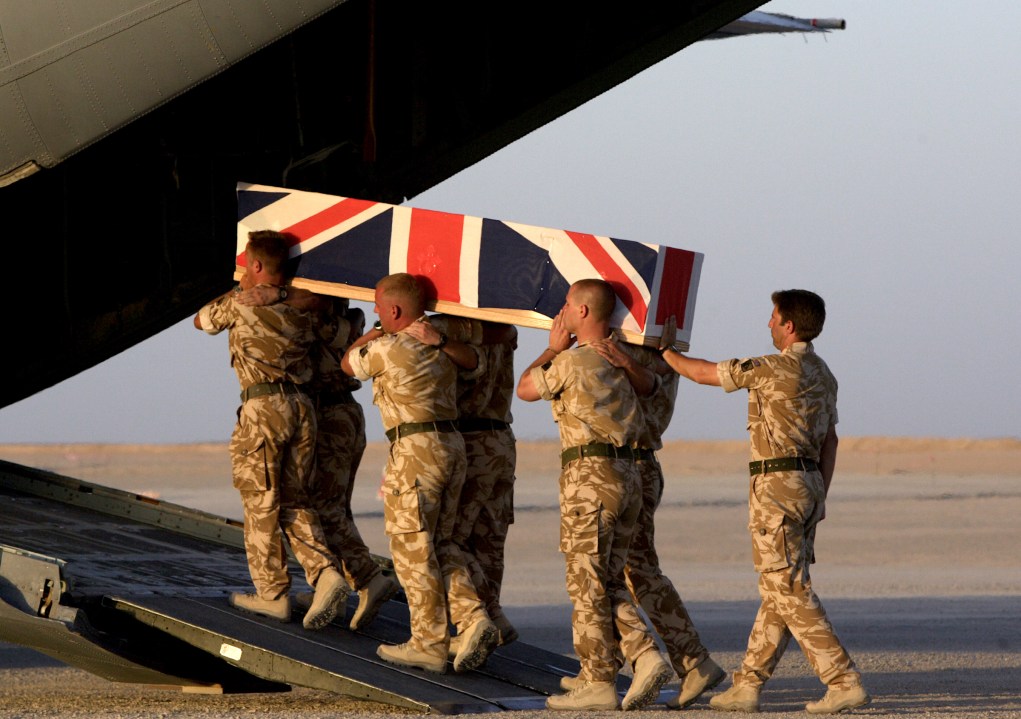
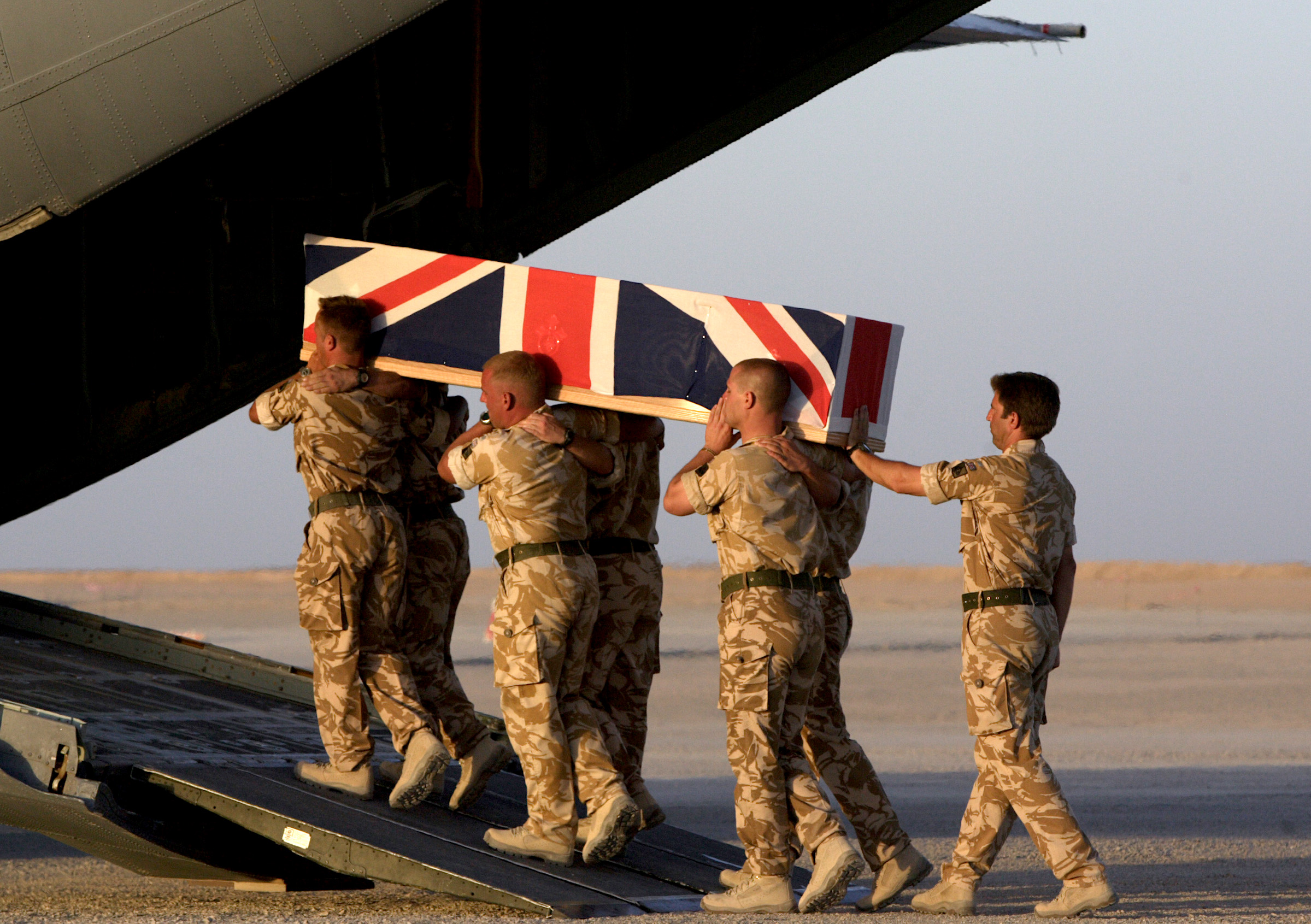
Exactly 457 British military and civilian personnel died in Afghanistan over two decades. (Five of them were killed by US ‘friendly fire’.) While 2,461 Americans were killed, both countries sustained a fatality rate of between seven and eight deaths per million of population. British soldiers did not stay ‘a little back, a little off the front lines’.
The Canadian Armed Forces also deployed troops to Afghanistan between 2002 and 2014. They relieved US forces in Kandahar in 2006 just as a major Taliban offensive began. In total, 159 Canadian military personnel and seven civilians died in the conflict. Denmark, President Trump’s current adversary, lost 43 soldiers, as high a fatality rate as the United States, and in 2009 suffered a greater rate of death than any other allied nation. Estonia’s nine fatalities represented seven per million of its small population.
When Robert Gates gave his last major speech as Secretary of Defence in June 2011, he reflected generously on the collective effort:
When I became Secretary of Defence in 2006 there were about 20,000 non-US troops from Nato nations in Afghanistan. Today, that figure is approximately 40,000. More than 850 troops from non-US Nato members have made the ultimate sacrifice in Afghanistan. For many allied nations these were the first military casualties they have taken since the end of the second world war… it is a credit to the brave Isaf troops on the ground.
Trump, a man without a generous fibre in his being, not only sees Afghanistan through a different lens but lies freely and fluently. That should not surprise us, because it is as much a part of his behaviour and essence as breathing. Equally, while it is understandably aggravating for British and other Nato veterans who served, were injured and lost comrades-in-arms in Afghanistan, they should never judge their worth against the lowest-common-denominator mean-minded vacuity of MAGA rhetoric.
How ought the UK and others to respond? For Health and Social Care Minister Stephen Kinnock to say rather wetly ‘I am disappointed by President Trump’s comments’ is the acme of pointlessness. The President does not care about ‘disappointing’ anyone, least of all a middle-ranking British government minister. Equally, when Liberal Democrat leader Sir Ed Davey asks in outrage ‘How dare he question their sacrifice?’, he answers his own question.
There is a salutary lesson here. Donald Trump exists in a reality of his own confection, a blend of ignorance, misunderstanding and lies, and that is how he likes it. He is indifferent to truth and craves fealty from other countries. British leaders must acknowledge this as part of the political landscape, distasteful though it is, but they should never mistake it for anything else. America First and America only; more than that, Trump first and only. The president can do many things; but he does not have the power to diminish the bravery and service of British personnel who served and died in Afghanistan.





Comments