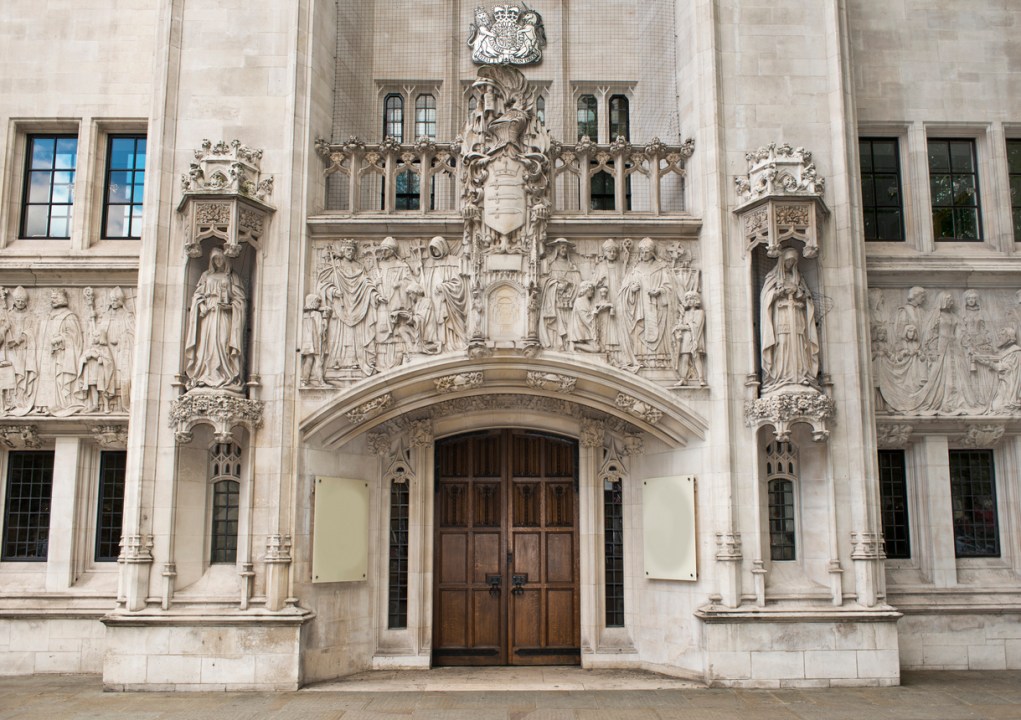
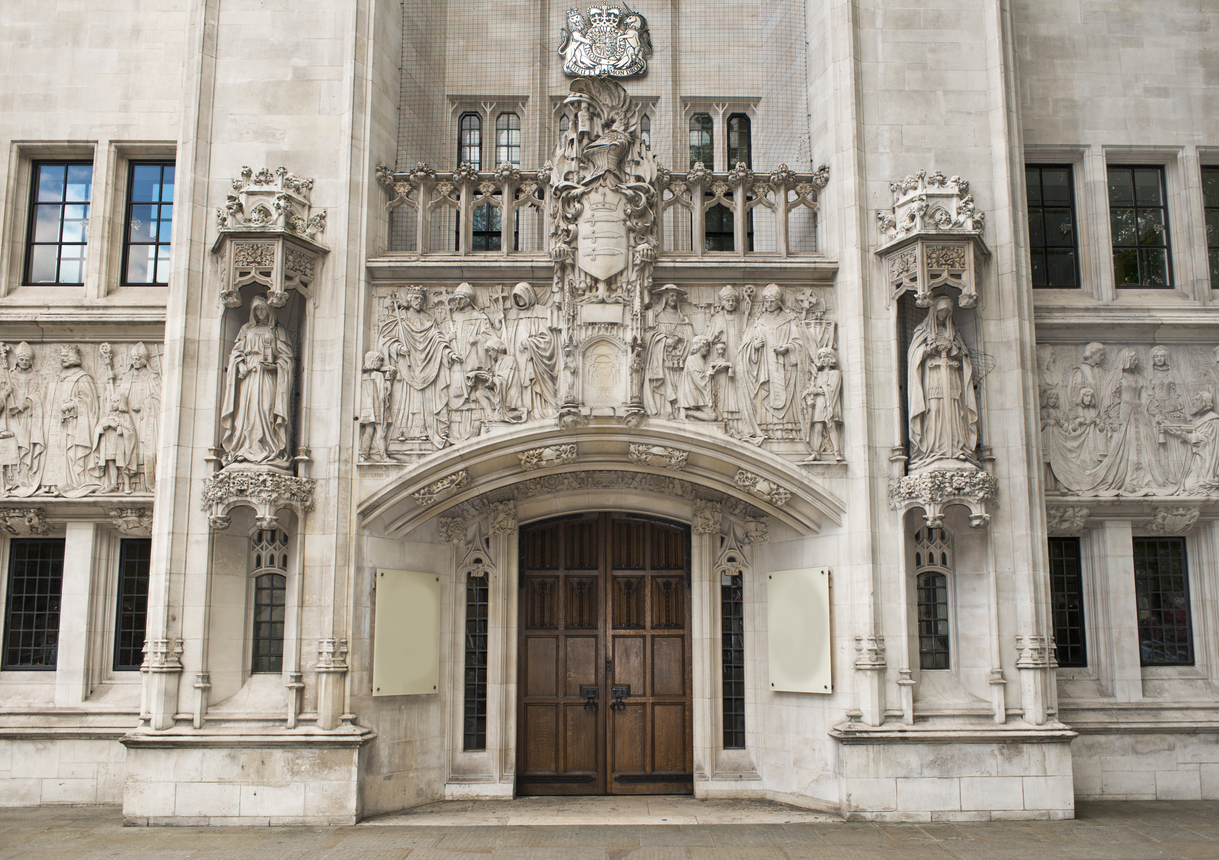
In the early afternoon of Thursday 7 May, with the polling booths open and a temporary pause in the political debate, the Supreme Court handed down its judgment in Dillon v Secretary of State for Northern Ireland. The judgment may largely escape public notice, but this was and is a highly significant case. The Supreme Court has repaired a major hole in the constitution, and its judgment should reignite criticism of the government’s choice to repeal the Northern Ireland Troubles (Legacy and Reconciliation) Act 2023.
The Legacy Act 2023 terminated legal proceedings and inquests arising out of the Northern Ireland Troubles, offering conditional immunity from prosecution to those who engaged with the new Independent Commission for Reconciliation and Information Recovery. The Act was immediately challenged in the courts. In February 2024, the Northern Ireland High Court found some key parts of the statutory scheme incompatible with rights under the ECHR.
The Human Rights Act 1998 empowers the High Court to declare legislation incompatible with Convention rights, but the legislation remains in force until the government and/or parliament choose to change it. What was striking about the Northern Ireland High Court’s judgment in Dillon was the use it made of Article 2(1) of the Windsor Framework, which is the agreement the UK reached with the EU in relation to Northern Ireland. The High Court reasoned that Article 2(1), taken together with section 7A of the European Union (Withdrawal) Act 2018, empowered it to disapply legislation that was incompatible with certain Convention rights.
The Court of Appeal largely upheld this ruling in September 2024. The Supreme Court has now allowed the Secretary of State’s appeal and held that Article 2(1) could not be relied upon in the way that the Northern Ireland courts had.

Article 2(1) provides that the UK, ‘shall ensure that no diminution of rights, safeguards or equality of opportunity, as set out in that part of the [Belfast] Agreement entitled Rights, Safeguards and Equality of Opportunity results from its withdrawal from the Union.’ The Northern Ireland courts took this to mean that vague commitments in the relevant chapter of the Belfast Agreement, in conjunction with EU law in force before Brexit, had ‘direct effect’ and, by virtue of the 2018 Act, priority over other legislation.
This interpretation of the Windsor Framework exposed Acts of Parliament to the risk of being set aside in the courts on the grounds of incompatibility with Convention rights, a conclusion that could not be reached by way of the Human Rights Act itself. The Northern Ireland courts subsequently used Article 2(1) to disapply legislation on other subjects such as immigration. It is no surprise then that so many human rights lawyers were delighted by Dillon and thought that it boxed Parliament into a corner, making its legislation subject to an effective veto in the Northern Ireland courts.
Mercifully, the Supreme Court has now cleared much of this away, reasoning that the test for direct effect is not satisfied in relation to many of the vague statements set out in the Belfast Agreement, which are not in a form fit for direct application. The Supreme Court also rejected the applicants’ attempt to deploy the Charter of Fundamental Rights of the European Union (which replicates and expands on the Convention rights) as an independent ground to disapply legislation.
So, Hilary Benn, the Secretary of State for Northern Ireland, has succeeded in his appeal to the Supreme Court, rescuing the Legacy Act 2023 from disapplication. This is the same Hilary Benn, of course, who is committed to repealing and replacing the 2023 Act and who abandoned many of the previous government’s grounds of appeal when he came into office in July 2024. Still, the current government deserves credit for maintaining the Windsor Framework appeal and so enabling the Supreme Court to correct the wrong turn taken by the Northern Ireland courts.
The Supreme Court allowed the Northern Ireland Veterans Movement to intervene in the proceedings, with Lord Wolfson of Tredegar KC, the shadow Attorney General, appearing on the Movement’s behalf. Lord Wolfson argued that the Court of Appeal had been wrong to uphold the High Court’s ruling that conditional immunity was incompatible with Convention rights. In fact, he argued, the Strasbourg Court’s case law shows that an amnesty introduced in order to support reconciliation in a post-conflict context may be compatible with the ECHR.
By the time the Court of Appeal gave judgment, Hilary Benn had abandoned this ground of appeal. An intervener cannot revive an appeal that a party to the case is not pursuing, so it was surprising that the Supreme Court gave permission for the point to be argued. The answer would seem to be that the Court fancied saying something about the point anyway, even if it could not decide it.
What the Supreme Court has said is that ‘the cases leave open the possibility that there may be circumstances in which the Strasbourg court could recognise an exception to the general rule that breaches of articles 2 and 3 of the Convention should be prosecuted but that it has not done so to date.’ However, it would be too strong to say that the Strasbourg Court had established such an exception, which meant that the duty of the UK courts was to follow the general rule.
The better view is that the Strasbourg Court has not consistently said that amnesties always breach the Convention. In fact, it has left open the possibility of exceptions. That matters, because if UK courts are meant to follow Strasbourg, they cannot say that amnesties are always forbidden. If the Supreme Court thinks that UK courts have to hold that the ECHR does not permit amnesties, despite knowing full well that Strasbourg may say otherwise, that is a very odd approach to take.
Keep this in mind in reading the Northern Ireland Office’s statement that, ‘while the question of immunity was not before the Supreme Court, the Court went out of its way to refute the main argument put forward for it.’ The Court held that the Strasbourg Court might well conclude that conditional immunity was compatible with the ECHR but reasoned that the UK courts had to leave it to Strasbourg to say as much. But the only way to test the point would be for the government to keep the Legacy Act in force and then to defend it in Strasbourg.
The government has to make its own decision about the merits of conditional immunity; it is perverse to say that the UK courts have left it with no option if the same courts say that only Strasbourg can truly decide the point. After Dillon it remains perfectly arguable that a conditional immunity scheme, or some other kind of amnesty, would be compatible with the ECHR.
In handing down its judgment when it did, and in framing its conclusions about conditional immunity as it did, the Supreme Court may have sought to steer clear of political controversy and avoid taking responsibility for the future of Northern Ireland’s past. Whether it succeeds or not, the government cannot rely on the court’s judgment to avoid taking responsibility for its own policy.






Comments