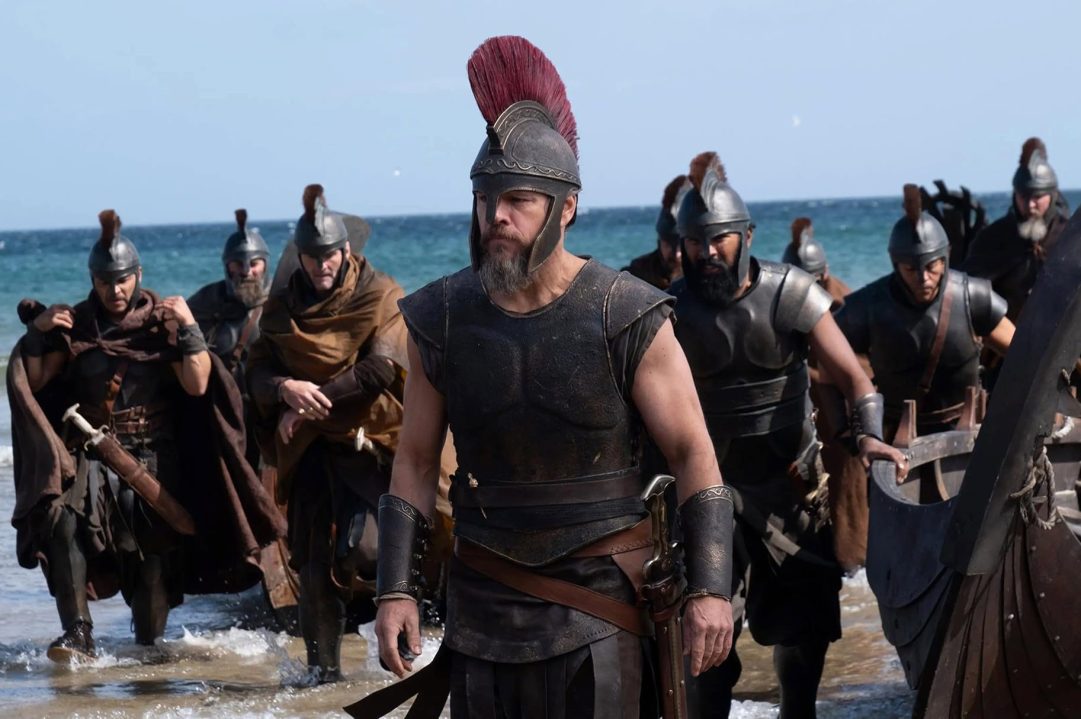
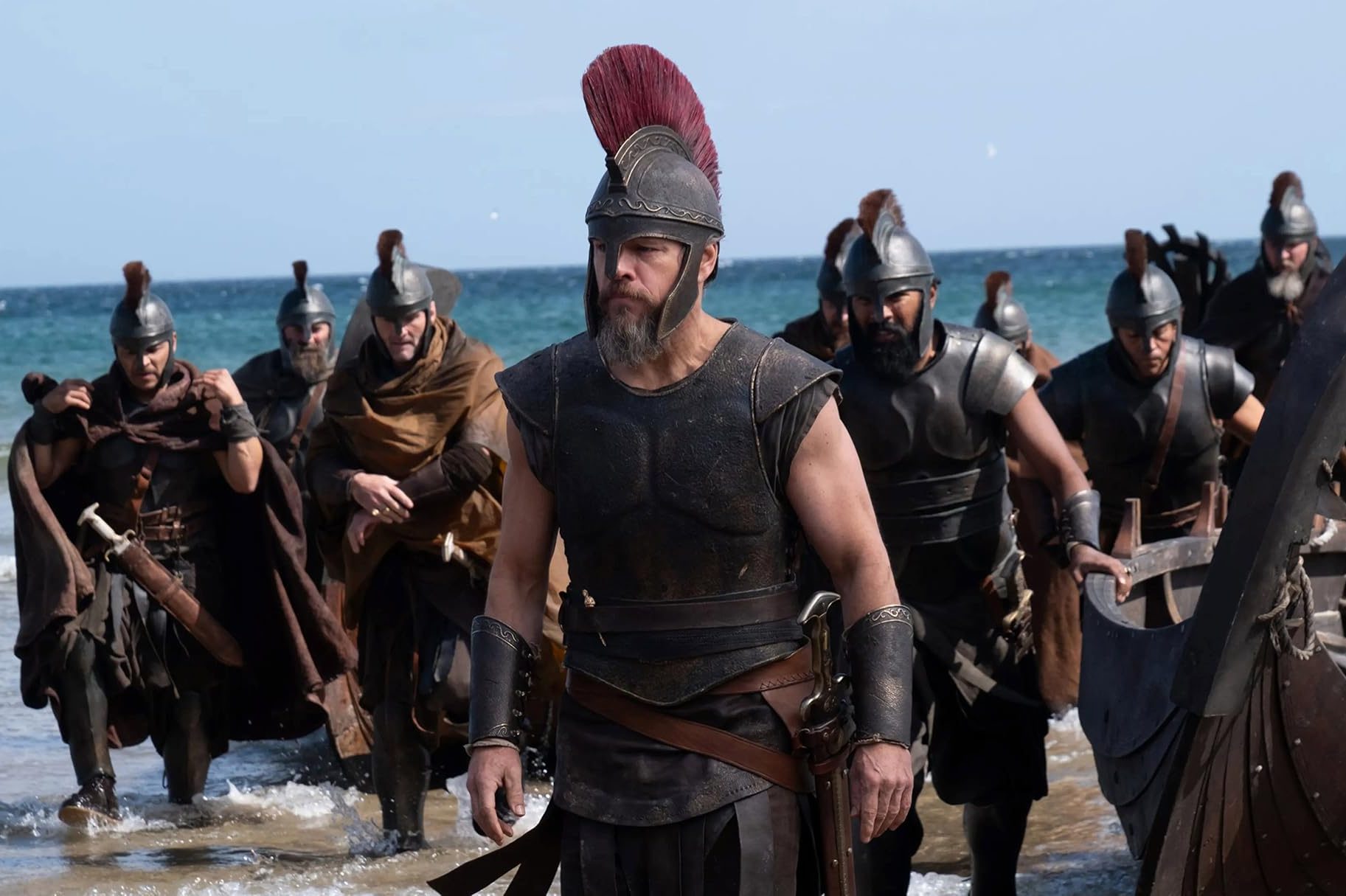
Homer’s Odyssey is a sweeping, layered epic. It reflects the legacy of an oral tradition of singers and storytellers from across the Greek-speaking world, who weaved together elements of myth and half-remembered idealized histories. Its hero, Odysseus, is among the most enduring and complicated figures in literature. Retellings of his journey home to Ithaca after the fall of Troy cast him both as noble hero and manipulative anti-hero. His latest incarnation will soon journey across the screen in Christopher Nolan’s film version, which is released Friday.
To navigate this world, ‘cunning’ Odysseus displays the characteristics of a good intelligence officer
I feel a connection to Odysseus. Like him, I have lied, deceived, and manipulated. As Odysseus entered Troy disguised as a beggar, hid inside the wooden horse, returned home camouflaged in rags, and manipulated many he encountered, including his own crew, to achieve his mission of homecoming, I donned disguises, used false identities, and exploited others to give me the information I needed as an intelligence officer.
In the Odyssey, lies, exaggerations and tall tales vie with one another in a fractured timeline (it starts “in the middle of things”). Unreliable narrators abound. Lightning can strike from a cloudless sky, a sudden storm emerges on a quiet sea. Fate and luck triumph over toil and skill. Homer describes a capricious, ambiguous, and uncertain world. This is a world that spies inhabit too.
To navigate this world, “cunning” Odysseus displays the characteristics of a good intelligence officer. He fights warrior-like when his enemy is in plain view and the odds are in his favor, yet quickly adapts, builds alliances and influence, when they are not. He is a calculated risk-taker and problem solver. He innovates solutions to transform his environment for survival, as with the Trojan horse, and the raft on which he sets sail from Calypso’s island. He is able to transform himself into multiple guises depending on the needs and desires of those he meets.

When spies create legends of who they are when working covertly, cover stories for agents to explain their actions and deceptions to mislead adversaries, the fictions are as close to a verifiable “truth” they can be. Odysseus’ cover stories include shipwrecks and odysseys that echo the path of his actual travels.
Perhaps his greatest characteristic is his ability to endure. As spies working in the shadows must do, Odysseus plows on across the unharvestable, wine-dark sea despite the physical and emotional toll.
There is recognition in military medicine of moral as well as physical injury. Acts committed to achieve the mission, even when within the laws of armed conflict, can injure your sense of right and wrong. Immanuel Kant condemned espionage (that “infernal art”) as it necessarily involves deception. This undermines the trust of belligerents in war and undermines interwar peace. Spies work at the intersection of the morality of one-to-one interactions and a wider political or ethical morality. Odysseus provokes us to ask what levels of unethical behavior we can accept in pursuit of our goals – ethical or otherwise – and what impact deception can have on you and your relationships.
Odysseus’s aim of return seems egoistic, but is inspired by love and duty to fulfill a binding commitment (that of husband to wife, father to son and king to his people). Kant argued that the means cannot be justified by the ends, even if the ends prevent greater harms. Kant would likely assert Odysseus’ duty to return to Penelope, rooted in promise-keeping, but would condemn the deceptive means used to achieve his ends. For many the tension between personal desires and love of specific others, and the duty to abstract universal ethical imperatives doesn’t have such a clear answer.
Odysseus’ reunions in Ithaca hint at the cost of his deceptions. When there is no longer good reason to hide his identity, he disguises himself for his reunion with his father. As intelligence officers know, there is an intoxicating freedom of not being yourself. Furthermore, over time, it gets harder to grasp what is fantasy and what is truth as layers of fiction accumulate.
Reuniting with Penelope after so many lies and disguises, she refuses to believe him. Odysseus has to prove that he is the same person who left Ithaca. But, no one can be the same person after so long away wandering and at war. Penelope is revered for her loyalty, but it’s her fierce intelligence and resilience that makes her Odysseus’ match. She tests him with the secret of their bed built around a living olive tree. It’s shared, private, knowledge and a recognition of their homophrosyne or “like-mindedness,” that reveals him. Only then, rather than when he sets foot on the sands of Ithaca, is he really home. We build our own olive-tree beds that provide the roots of our relationships: the shared stories and moments experienced together, those little things only we know about each other. We value secrets as spies do, but for those we love, we refuse to trade them.
I brought the context of my experiences and found Odysseus the spy, as complicated as those I worked alongside in the capricious, ambiguous, and uncertain worlds I journeyed through in the decade after the fall of the twin towers. Whatever your context, there are Odysseuses to find. I await with interest to watch Nolan’s.






Comments