What are the best Jewish books? Who are the best Jewish writers? And what are the best books about Judaism? At the beginning of March, Jewish Book Week will celebrate its 75th anniversary so there is no better time to ask these big questions.
Among the best Jewish-American books are Henry Roth’s classic novel about immigration, Call It Sleep and Saul Bellow’s Herzog
The best Jewish books are a wonderful mix of novels, short stories and plays. Some are American, many are by Soviet or east European writers, and a few are British. Among the best Jewish-American books are Henry Roth’s classic novel about immigration, Call It Sleep, Saul Bellow’s novel Herzog, Arthur Miller’s last great play, Broken Glass, and Philip Roth’s short story, Eli the Fanatic. It’s worth noting that two of these are about American Jews coming (or failing to come) to terms with Nazi antisemitism.
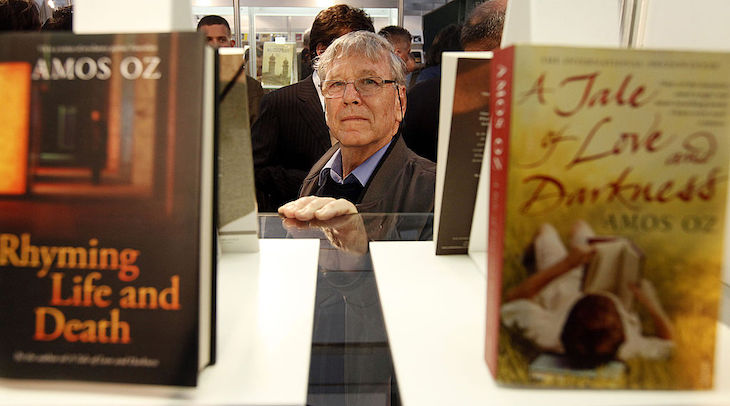
Every reader will have their favourite Anglo-Jewish books. My own would include Arthur Koestler’s novel, Darkness at Noon, Pinter’s masterpiece, The Birthday Party, and Howard Jacobson’s, The Mighty Walzer. Then there are memoirs by the great modern Israeli writers: Amos Oz (A Tale of Love and Darkness) and Aharon Appelfeld (The Story of a Life) and David Grossman’s masterpiece, See: Under Love.
Above all, there are the works that came out of central and east Europe and the former Soviet Union, short stories and novels including Kafka’s In the Penal Colony and Metamorphosis; the short stories of Bruno Schulz; Joseph Roth’s Radetzky March; and, of course, the extraordinary books about pogroms, The Holocaust and Stalinism: Isaac Babel’s Red Cavalry, Vasily Grossman’s Life and Fate, Paul Celan’s masterpiece, Todesfuge, Elie Wiesel’s Night, the Holocaust poems of Czeslaw Milosz and Lev Ozerov’s poems about Stalinism.
Finally, there are the best books about Judaism. My own favourites would include Walking with the Light: From Frankfurt to Finchley by Rabbi Jonathan Wittenberg, an extraordinary mix of family memoir, cultural history and reflections on religion, and I Believe: A Weekly reading of the Jewish Bible by Rabbi Jonathan Sacks.
To mark the 75th anniversary of Jewish Book Week its director Claudia Rubenstein has invited leading figures to choose books they would wish audiences at Jewish Book Week to discover: 75 books to celebrate 75 years.
It’s a fascinating list, often full of surprises. Perhaps the greatest pleasure of these selections is the sheer range of books. Michael Gove has chosen Simon Sebag Montefiore’s acclaimed book, Jerusalem: The Biography. The chef Claudia Roden has selected the recently published masterpiece, On the Slaughter, a book of poems by the Russian-Jewish poet, Bialik, including his masterpiece about the terrible pogrom at Kishinev. Maureen Lipman chose Martin Sherman’s memoir, On the Boardwalk. Sherman, still best known for his play, Bent, about two gay men in a Nazi concentration camp, also wrote Messiah and Rose, ‘both of which,’ Lipman writes, ‘changed the course of my life.’ The music critic, Norman Lebrecht, has chosen not one book, but a whole series, Jewish Lives, published by Yale University Press. Steven Zipperstein, a brilliant historian of the Russian Pale and the recent biographer of Philip Roth, has chosen The Letters of Oliver Sacks, an extraordinarily revealing book about a fascinating and often tormented man.
The actor Henry Goodman has chosen a work by the late Amoz Oz, How to Cure a Fanatic, for its ‘calm, far-reaching insight in extreme days.’ The great Jewish-American critic, Adam Kirsch, has chosen a book by Oz’s great contemporary, David Grossman, See: Under Love, ‘a moving fable about the legacy of the Holocaust in Israel.’ Howard Jacobson has chosen another literary masterpiece, The Puttermesser Papers, by Cynthia Ozick.
The best thing about this list is its range, from neurology to slavery, from pogroms in Tsarist Russia to the history of Jerusalem. As a result, it gives a wonderful flavour of the best of Jewish Book Week and the best of Jewish writing. It is never predictable – and I still want to know why those two plays by Martin Sherman changed the course of Maureen Lipman’s life.
London’s longest-running literary festival, Jewish Book Week, is taking place from today to 8 March at Kings Place, London and online. Book tickets here




Comments