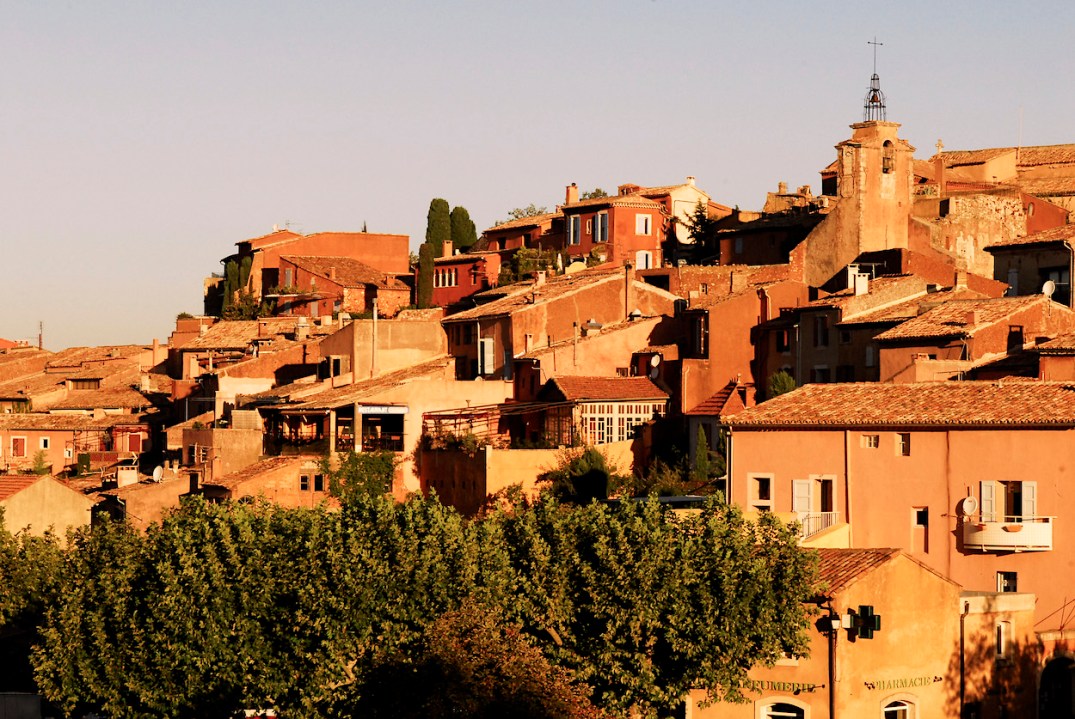
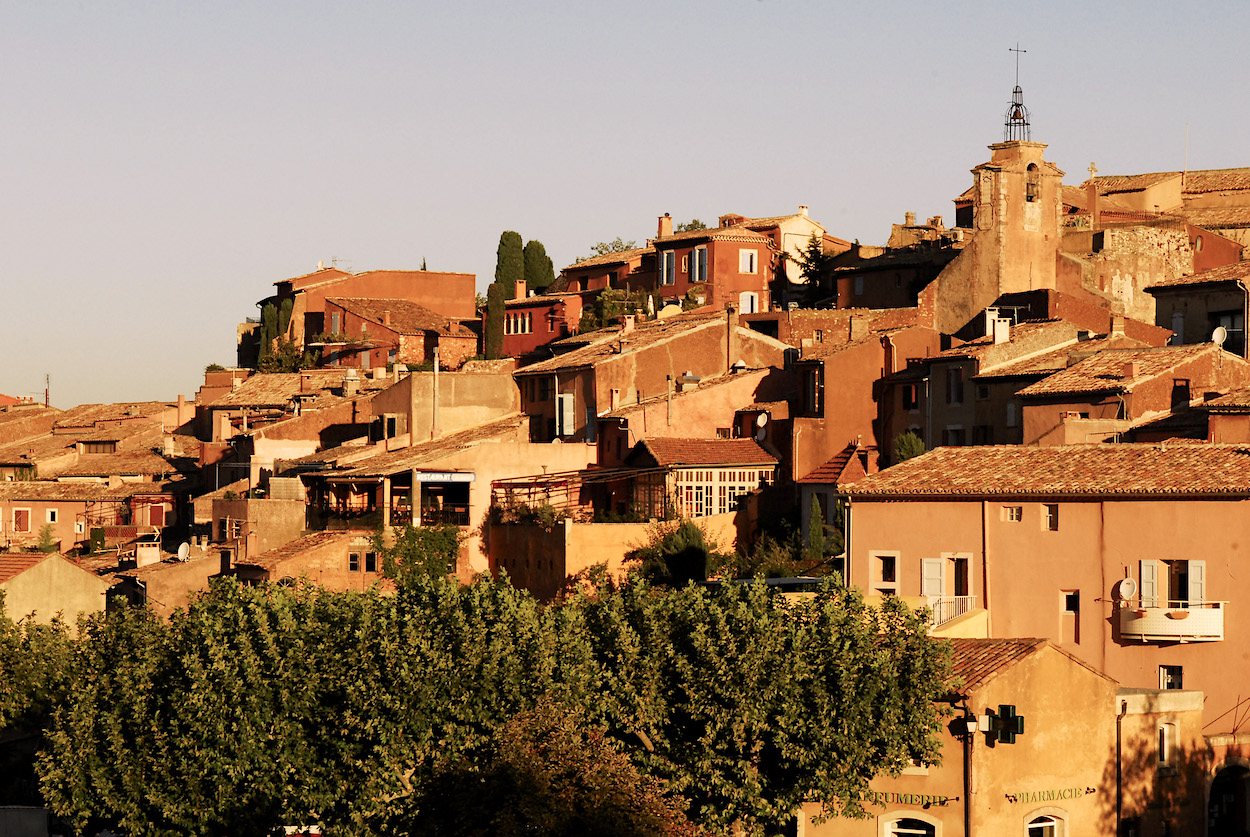
The best time to visit Provence, I always advise when asked, is in the spring before the scorching heat and summer crowds.
I have been spending time in the south of France since the early 1990s. Provence was fashionable in those days. Peter Mayle’s massively successful book, A Year in Provence, inspired thousands to pull up stakes and move to southern France to emulate his idyllic life in the Luberon hills. Some settled farther west in the Dordogne, famously called “Dordogneshire” for its concentration of British expats. Mayle became a one-man publishing industry, following up with sequels including Toujours Provence and Encore Provence.

Thirty years ago, I stayed with friends who owned a renovated farmhouse with a spectacular view of the Dentelles de Montmirail. I returned frequently, renting charming villas overlooking lavender fields in full bloom. Like most visitors to the region, I immediately surrendered to Provence’s exquisite charms: the slow mornings, the pulsing music of cicadas, the open-air markets selling pungent cheeses, plump Carpentras strawberries, wild thyme, olive oil, lavender honey and robust wines from Vacqueyras, Gigondas and Beaumes-de-Venise. I promised myself: one day, I will buy property here.
Today, I’m not so sure. The Provence delightfully described by Peter Mayle four decades ago is harder to find. The region’s once-quaint towns are encountering the grim realities of violent crime from drug trafficking and gang rivalry. Only last week, a court in Aix-en-Provence was prosecuting top bosses of a Marseille-based crime gang called “DZ Mafia.” Charged with ordering hit-job murders, four were sentenced to 25 years; another was acquitted for lack of evidence. Last year, a DZ Mafia gangster called Mahdi Zerdoum (known as “The Brute”) was sent up for 30 years for attempted murder.
The dark side of Provence is largely ignored in Anglo-American newspapers. Many are still peddling the Provence-as-paradise fantasy. The region’s breathtaking landscapes are splendid distractions from a deeper backdrop of troubling social realities.
The Wall Street Journal informed readers several years ago that Provence had changed. That was true. But the newspaper was focused on cosmetic changes of interest to upmarket tourists. The region, it observed, had shifted “from quaint to uber-chic” thanks to an influx of designer hotels and modern cuisine on restaurant menus. Provence was gentrified.
A few weeks ago, the New York Times published a similar article: “Why the ancient city of Arles continues to enchant.” It featured dreamy postcard descriptions of the town famous for its Roman arena and Vincent Van Gogh, who painted some of his masterpieces there. Not a word about how local authorities in Arles are struggling with drug-trafficking and violent crime. Last year, a gunfight erupted in the town center only a stone’s throw from where Van Gogh once lived. Three men were gravely injured; one was transported to a Marseille hospital via helicopter.
Gang-related violence has torn through southern France lately; drug gangs are spreading their tentacles deep into the region. Many towns popular with tourists – Avignon, Arles, Nimes – are encircled by hideous ring roads and soulless housing estates where youths from immigrant families are unemployed and see no future for themselves. These estates are fertile ground for drug traffickers recruiting lookouts (called guetteurs in French, choufs in Arabic). Some foot soldiers who have been arrested for violent crimes, including score-settling murders, are as young as 14.
In Avignon, a policeman was shot dead five years ago in the town’s historic center when attempting to make a drug bust. The shooting occurred in a public square not far from the Palais des Papes, an area usually crawling with tourists. In nearby Cavaillon, France’s “melon capital” located at the foot of the Luberon hills, a housing estate called Docteur Ayme has a reputation as the region’s drug-dealing hub. Entire communities in Cavaillon and other towns have been destroyed by the illegal trade.
Entire communities in Cavaillon and other towns have been destroyed by drug gangs
Those who live in the remote hilltop villages of Provence can probably keep at a safe distance, unmolested by the violent crime tearing apart the region’s social fabric. They cannot avoid, however, the hard political consequences. With mounting anxieties over immigration and crime, voters in the south have swung dramatically to the far right. In local elections last month, Nice’s longtime conservative mayor Christian Estrosi was defeated by far-right Éric Ciotti. Marine Le Pen’s far-right Rassemblement National made big gains throughout the region, including victories in Orange, Carpentras, Aubignan and Monteux.
Even in picturesque little towns such as Brignoles, which counts George Clooney among its local residents, the mayor Didier Brémond is a conservative. He won re-election thanks to support from Le Pen’s party which desisted in his favor. Clooney, who has posed for photos with his local mayor, owns a sprawling eighteenth-century estate (he calls it a “farm”). It is protected by security guards and round-the-clock surveillance cameras.
Farther north in Ménerbes, the village where Peter Mayle was once a local celebrity until his intrusive fans became unbearable, the newly elected mayor is also a conservative. I suspect that if Mayle were alive today, he might be tempted to publish a final sequel: Au Revoir, Provence.






Comments