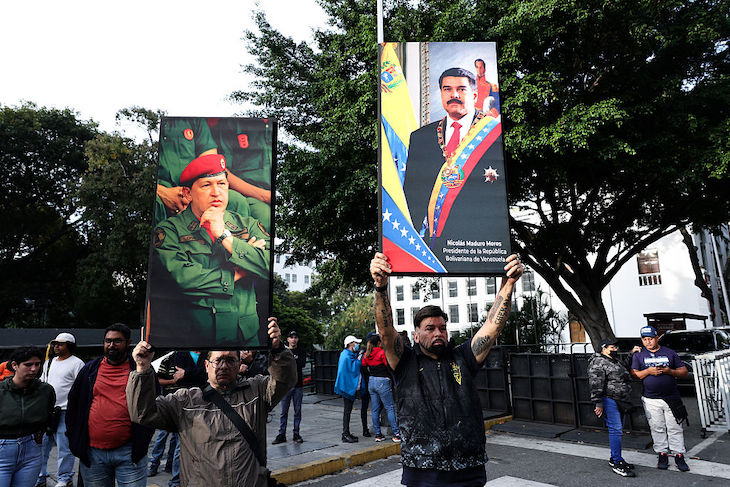
Hugo Chávez’s eyes are everywhere across parts of Caracas, Venezuela’s capital. In stark black and white, his gaze is stamped onto government buildings, public housing blocks and murals. But if the late socialist president could truly see what has become of the movement he founded, he would likely be dismayed. Most Venezuelans have abandoned chavismo. His protégé Nicolás Maduro – who had led the government since 2013 – has been captured by the US, while many Venezuelans cheered his exit. What remains is a thin but loyal chavista base – and a leadership operating firmly in survival mode.
Trump needs some continuity within the chavista elite to avoid a chaotic power vacuum
At this pivotal moment, it is President Donald Trump’s watchful gaze, not Chávez’s, that the regime’s leadership will be paying most attention to. The images of Maduro blindfolded and in handcuffs shattered the chavista elite’s lingering hope that Trump’s threats of intervention were mere hyperbole.
Amid overwhelming US pressure, Delcy Rodríguez – the country’s interim president – has found herself steering a new phase of Venezuela’s socialist experiment: chavismo 3.0. Chavismo, an ideology built on anti-imperialism, state-led socialism and populist nationalism, has also presided over economic collapse, corruption and democratic erosion during its 27 years in power. Its latest incarnation has softened some of its defining ideas and is shrouded in both paranoia and pragmatism.
The movement has been wrapped in anti-imperialist rhetoric since its founding, adopting a posture of permanent ideological and diplomatic confrontation with “the empire” – the US, while drawing closer to Russia, China, Iran and Cuba. Hugo Chávez once called President George W. Bush “the devil.” His successor, Nicolás Maduro, inherited that same propaganda playbook during chavismo’s second era – even spawning a cartoon superhero and doll of his alter ego – Super Bigote (Super Mustache) – designed to vanquish imperialist foes. Anti-Americanism was not just a sentiment; it has functioned as ideological glue, binding supporters together.
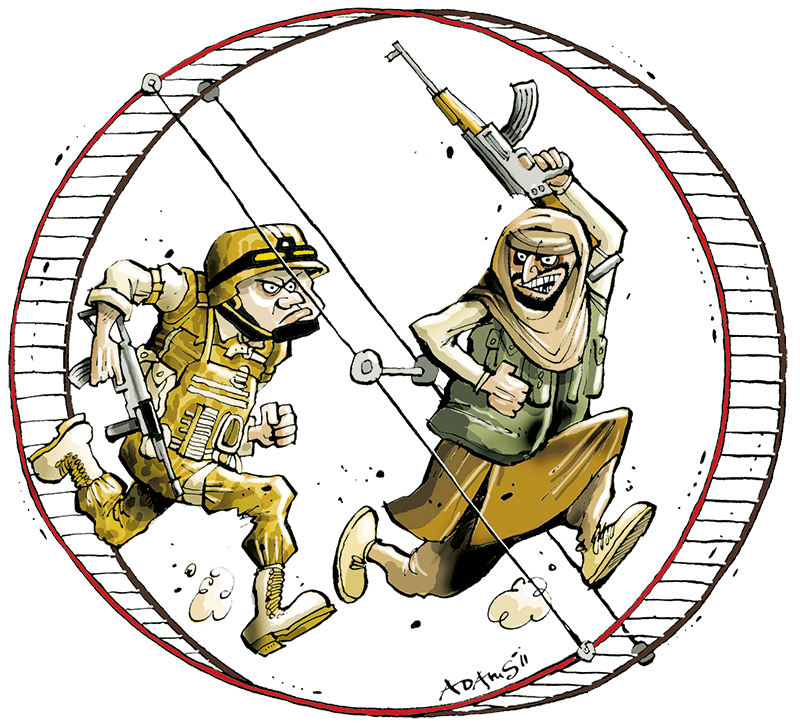
Today, although references to a homeland under siege and the plundering of natural resources still play to parts of the domestic audience, they sit alongside a tone of cooperation directed towards the US. Diplomatic channels have widened, oil arrangements are being renegotiated, and some of the hundreds of political prisoners accused of terrorism and treason have been released, albeit reluctantly.
Of course, refusing to engage with Washington now would be political suicide for Rodríguez, a regime insider and ally of Maduro’s who previously held various government positions. After Maduro’s capture, Donald Trump was quick to warn her: “If she doesn’t do what’s right, she is going to pay a very big price, probably bigger than Maduro.”
Yet despite his threats, Trump also needs some continuity within the chavista elite to avoid a chaotic power vacuum. A clean sweep of regime stalwarts and the immediate handover of power to María Corina Machado’s movement would almost certainly have triggered resistance from those embedded deep within chavismo’s power structures.
But the threat for Rodriguez doesn’t only come from external powers. At the end of last week, she reshuffled the cabinet, surrounding herself with trusted loyalists and tightening her own security. It was a move intended to consolidate her authority and head off factions that might favor a more hardline response to Trump.
Chavismo today exists in a very different climate than the one in which the original project was born. In 1998, Venezuela’s traditional party system had lost credibility, voters were searching for an alternative – and Hugo Chavez promised to deliver it. High oil prices gave the Chavez government the resources to invest heavily in social programs – education, health and housing – and living standards improved, at least initially.
Today, the regime’s inner circle does not have the luxury of a buoyant economy to appease the population, nor a leader with Chavez’s charisma. Economic mismanagement, the expropriation and forced exit of foreign oil companies, corruption and a failure to diversify the economy hollowed out the state’s coffers – damage compounded by international sanctions. At its lowest points, supermarkets emptied, inflation catapulted above 1,000 percent and millions were forced to flee abroad.
Yet what the regime lacks in finances and popular support, it has made up for in its ability to quash dissent. Under Maduro, the military and security service bodies became powerful tools to achieve this. Protests were met with mass detentions and even deaths, and prisoners were subjected to enforced disappearances and documented torture. Maduro’s bruising defeat in the 2024 election and victory for the opposition – which he denied – marked a new wave of fear and repression, still lingering today.
In its early years, chavismo ensured military loyalty through ideological conviction. Today it is largely transactional. Economic incentives, including profits from illicit economies such as drug trafficking and illegal gold mining, as well as positions of power – Venezuela has around 2,000 generals and admirals, more than the United States despite having a far smaller military – have commanded continued obedience and a willingness to crush those opposing the regime.
For the military and political elite – including Delcy Rodríguez – the survival of chavismo is inseparable from their own. Its collapse would threaten their income, power and, potentially, their freedom. But chavismo 3.0 will now have to operate under far tighter constraints to comply with Washington’s demands.
Chávez’s eyes will continue to glare out across Caracas – but so too will President Trump’s – tracking every move the chavista leadership makes, with no promises on how long he’ll allow it to survive.
Comments