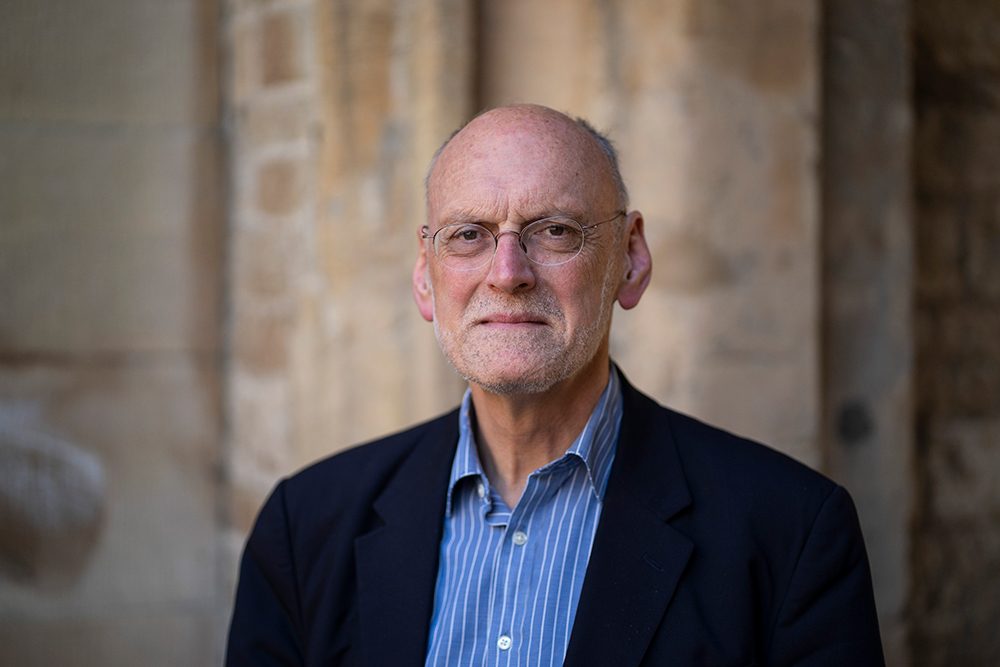
Nigel Biggar was not an obvious target for cancellation. A New Labourite, a Remainer and a public supporter of gay marriage and abortion up to 18 weeks, he might have seemed almost right-on – for an Oxford Professor of Divinity, at any rate. Nonetheless, when in 2017 he had the temerity to suggest that the British Empire had done some good as well as bad, 170-plus academics signed a letter urging Oxford University to withdraw support for his work. This was one of the first stirrings of ‘cancel culture’, the tactic of quashing wrongthink not by argument or persuasion but by sheer force of numbers.
Unfortunately for themselves, Biggar’s detractors had picked on the proverbial ‘wrong guy’. Biggar bounced back to lead the fight against woke, helping to set up the Free Speech Union and lobbying for the (still only partially implemented) Freedom of Speech Act. His latest book displays many of the qualities that have made him so effective a campaigner. Its writing is plain and vigorous. It presses its claims doggedly but without a hint of malice. Its prejudices, which are many, are all on its sleeve.
I should at this point declare an interest. Biggar was my theology tutor in the 1990s and has remained a friend and mentor ever since. His distinctive virtues were evident from the outset. When I once mentioned depression as an excuse for not handing in an essay on time, he replied immediately: ‘How dare you try that one on me. I know very well that you have been partying.’ He was right: I had been partying. I recall that episode with shame every time I acquiesce in silence to my own students’ mumblings about ‘mental health issues’.
The New Dark Age is an overview of the UK culture wars, with a focus on Biggar’s own field of colonial history. Its main target is the impulse – Marxist in origin, but now all-pervasive – to see the cloven hoof of ‘racism’ in every achievement of western thought and culture. Why bother grappling with J.S. Mill when we know in advance that he was a paid servant of imperialism? Why bother indeed with arguments at all, when ‘truth’ is whatever serves the cause? This way of thinking is like woodworm, insidious and invasive. Any field of enquiry infected by it will soon be rotten to the core, though it may still exhibit outward signs of life.
But our civilisational self-hatred is not just an offspring of Marxism, suggests Biggar. Its deeper source lies in the Christian idea of repentance, which it parodies and perverts. It is right and sometimes noble to acknowledge your own nation’s wrong-doings, but it should also be difficult – just as personal confession is difficult. (‘It is all within me, I have been through it all,’ said Thomas Mann in 1945, referring to the spiritual forces that drove Germany into the arms of Hitler.) The woke, however, find it all too easy to condemn their own nation’s past because for them that past is something ‘over there’ – a swamp of sin from which they, the righteous ones, have once and for all been liberated. This is the sectarian attitude, now secularised. It is a powerful inducement to pride and licence. Get on the right side of history and what wrong can you do? Are not all things pure to the pure?
True believers in the woke gospel have always been few in number. Their influence depends upon the surrounding many who are not true believers but merely anxious to stay out of trouble. During the 2017 campaign against him, Biggar was bewildered by the ‘almost total silence’ of his university colleagues. Only four, three of them strangers, reached out with messages of support. The vast majority, including many he counted as friends, carried on as though nothing had happened. ‘It was as if I had become diseased and they were terrified of contagion.’ Biggar reminds us of the behaviour of German scholars under the Nazis, but the comparison is all in their favour, not ours. Dachau and Buchenwald awaited those few German academics who dared step out of line. What is our excuse? The real revelation of the past decade was not the fanaticism of the few but the unforced acquiescence of the otherwise decent many.
The New Dark Age makes the case for a robust classical liberalism rooted in an enlightened Christian faith. But the past few years have made clear that wokism’s real enemy is not liberalism but another ideology, still inchoate but giving signs of being every bit as fanatical and vindictive as wokism itself. In this situation, Biggar’s liberalism looks increasingly like a holding operation – a temporary keeping at bay of mighty forces of destruction. Can liberalism ever be more than a holding operation? I’m not so sure.



Comments