
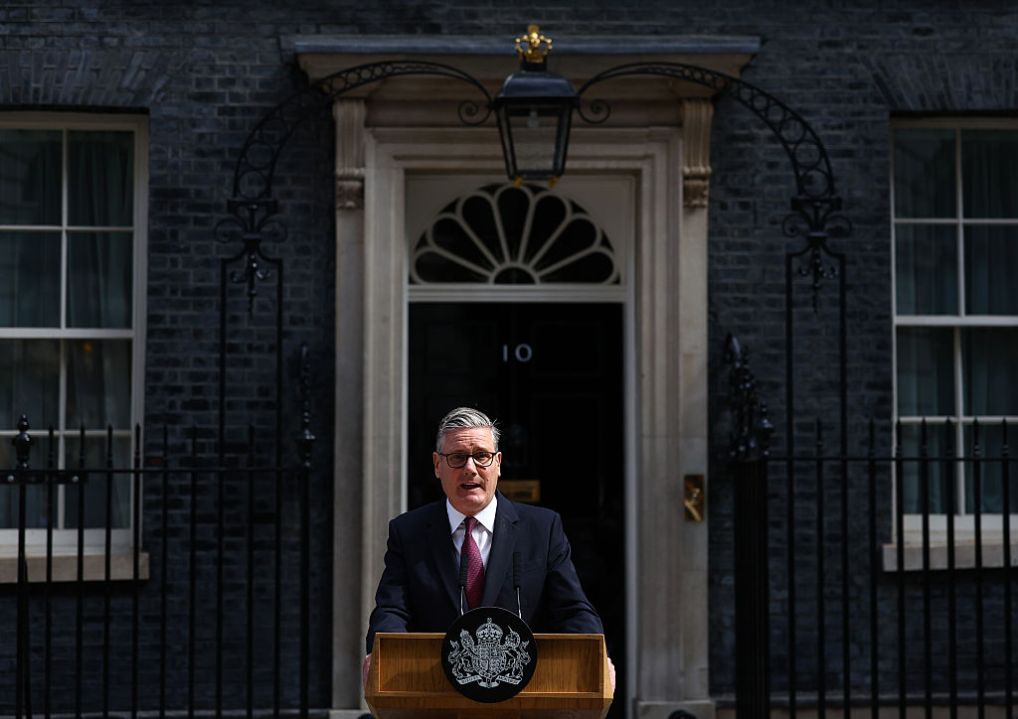
Now that the end has come for Keir Starmer, history can get to work, analyzing and anatomizing his failures. The central question for posterity: how did a politician win a huge majority yet end up powerless less than two years later?
A lot of the political obituaries will rightly talk about a lack of politics. Starmer just wasn’t interested enough in party politics or, especially, party politicians. His Labour colleagues were not just strangers but strange to him. The tearooms were foreign territory, so their residents were never inclined to do his bidding.
How did a politician win a huge majority yet end up powerless less than two years later?
There will also be a widespread view that he lacked ideas. That’s fair: his preparation for government was woefully lacking, not least in subcontracting policy development to Sue Gray, a career civil servant with no experience of policy development.
But – and I say this as a former think-tank director – it’s possible to overstate the importance of new policy ideas. Even without a treasure chest of clever plans for new policies, Starmer could and should have been a good – if never stellar – PM.
That’s because Britain’s biggest problems don’t need much in the way of new policy thinking. They just need a government that acknowledges them and tries to make them a bit better. And to give Starmer his due, his government often started with the right analysis of modern Britain.
This is a country where stagnant productivity has led to stagnant living standards. Fixing it requires making it easier to build and invest in the things that allow more people to do more stuff more efficiently and cheaply. It also means moving more people from inactivity to work, and putting more value on the half of the population who don’t go to university.

Meanwhile, in a dangerous world where the UK can’t and never should depend on the US for security, Britain should spend much more on its defenses. Keir Starmer would agree with everything I’ve just written about Britain. He said as much. It was all there in the speeches that other people wrote for him. And if he’d actually done all, or even just some of it, then it might be possible to believe that he was leading Britain out of the slough of despond, to believe again that things can get better.
But he didn’t. Talking to ministers, spads and officials, time and time again you heard the same story: nothing happens in No. 10. He doesn’t grip and he doesn’t drive. He doesn’t ask questions. He doesn’t direct or demand. He doesn’t lead.
Hence a government that drifted into a succession of crises and reset speeches, that hopped from message to message, slogan to slogan – as if finding just the right form of words could finally give an aimless premiership focus and direction.
Yes, these are difficult times, full of geopolitical and macroeconomic uncertainty. Yes, the Labour party has fundamental challenges that go beyond any individual. Yes, the fractured, discontented electorate would make governing hard for anyone. And yes, we always overstate the importance of individuals in history – beware the Great Man explanation of events.
But individuals do matter, especially when they occupy the highest office. What Keir Starmer did and didn’t do really mattered, and it explains the doom of his premiership.
He didn’t lead. He didn’t drive. He didn’t use the power he won, didn’t take the opportunity he had. His is a story of personal failure on a national scale.





Comments