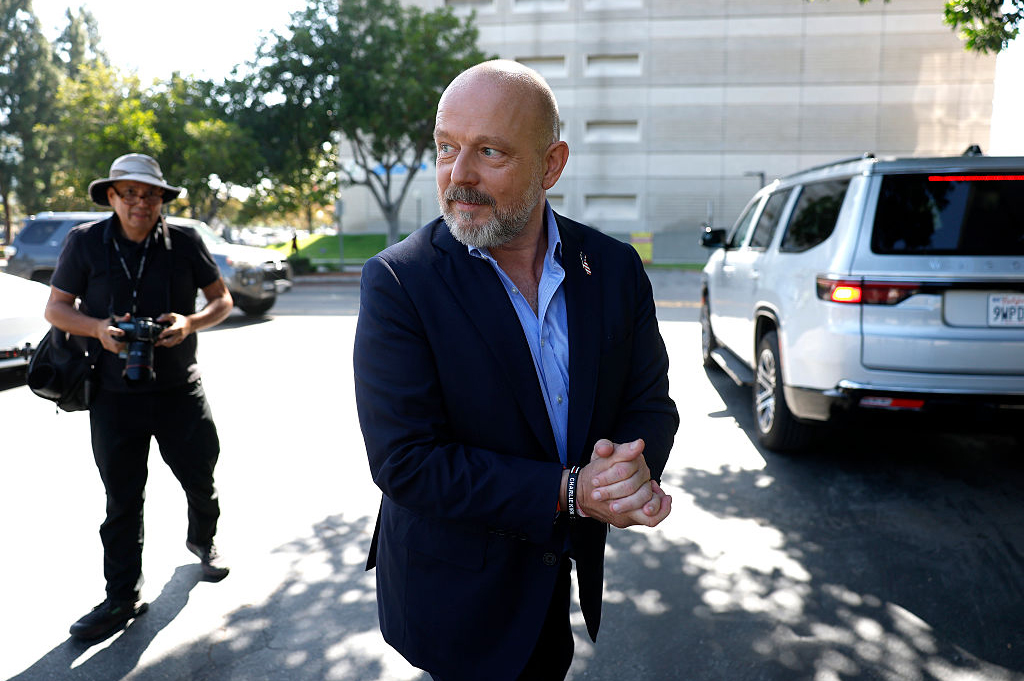
When late arriving ballots in the race for Los Angeles mayor turned dramatically against conservative Spencer Pratt last week, Donald Trump reacted with his usual subtlety.
“They’re cheating on the election,” said the President, as it became clear Pratt would be knocked out of the runoff for the November general election.
Democrats were quick to respond. California Attorney General Rob Bonta dismissed claims of vote fraud as “a figment of the imagination of Trump and others involved in that conspiracy theory.”
Bonta is right there’s no direct evidence that fraud swayed the LA mayor’s race. But California’s notorious tardiness in counting votes has been almost universally ridiculed and has undermined public trust in elections.
“It’s hard to overstate how much of an outlier California is for its slow vote-counting relative to literally any other state or almost any other industrialized democracy,” says Nate Silver, a former top election analyst for ABC News.
Apologists for California’s snail-vote system mumble excuses for its shambolic nature. The office of Democratic Governor Gavin Newsom says the state prioritizes accessibility to voting over speed. It notes that incumbent Los Angeles Mayor Karen Bass didn’t take the lead in her 2022 victory until a week after Election Day.
But that just shows the system is broken and fuels growing public skepticism and distrust. Certainly, California voters have concerns. There will finally be a statewide citizen initiative to require ID to vote for both in-person and mail-in balloting on November’s ballot. Polls show it’s likely to win.
In an era when everyone expects everything to be delivered more quickly, California has deliberately slowed down ballot counting to allow a chaotic expansion of mail-in voting, which now makes up over four-fifths of votes cast in the state’s elections. Two decades ago, California used to count 80 percent of its ballots within the first two days after an election. That has now fallen to below 50 percent.
California’s rules are a textbook example of how not to construct an election that inspires confidence.
The state mails ballots to every registered voter, 23.2 million of them. But California does not adequately maintain its voter rolls. A new lawsuit by the public interest group Judicial Watch claims there are 873,000 people on the rolls who are felons, have moved, died, or don’t have a real address but are still getting ballots.
In 2024, a previous Judicial Watch suit forced Los Angeles County to agree to remove 1.2 million inactive voter registrations from its rolls. But several California voters I’ve talked to say they still receive multiple ballots for themselves or ballots for people who have died or moved.
Ballots received by officials up to seven days after Election Day are counted. The US Postal Service often now doesn’t postmark first-class mail, but if a ballot is received without a postmark after the election it’s counted if the voter has handwritten the date on the envelope. If a voter claims they can’t physically sign their ballot, state regulations allow them to make a “mark” and have it attested to by a witness. But the witness signature isn’t checked.
There is, effectively, an open invitation to fraud or coercion. A decade ago, California repealed its ban on ballot harvesting, the mass canvassing and collection of ballots favorable to one candidate by third parties. Anyone can collect and deliver a limitless number of mail-in ballots.
Mark Penn, who was the chief pollster for President Bill Clinton’s re-election in 1996, is appalled at California for allowing partisans to “game the system” through ballot harvesting. “[It] is banned in most states and should be banned everywhere as it promotes people sitting around tables pressured to vote certain ways as their ballots are collected by partisans,” he wrote on X. “Add loose registration rules in states with a lot of non-citizens and you compound these problems.”
The system is broken and fuels growing public skepticism and distrust
For this election, the Democratic Socialists of America chapter in Los Angeles issued guidelines on how to harvest votes going door-to-door. It suggested conversation-lines for would-be canvassers such as: “If we fill [the mail ballot] out together right now, there’s an official place to sign it over to me and I can bring it to the city directly either today or first thing tomorrow morning.”
California also allows first-time voters to register to vote using shockingly informal forms of ID. They include:
- Gym membership card
- Employer ID card
- Credit or debit card
- Prescription drug label
- Insurance card (California hands such cards out in providing free health coverage to illegal aliens)
- a sample ballot
Just last month, a woman pleaded guilty to federal charges of paying homeless people on Skid Row in Los Angeles to register using her former address, meaning ballots would be sent there.
Los Angeles County uses machine scanners to compare signatures on mail-in ballots to all signatures in a voter’s registration file. In California, each county sets its own threshold for ballot authentication. Los Angeles says its overall approach to ballot validity is “liberally construed in favor of the voter.” The settings on its machines are set at a very low level of scrutiny. In the 2024 presidential election, only 21,300 ballots in LA were rejected in a county where 3.75 million votes were cast. In neighboring Orange County, where humans screen the signatures, 13,600 ballots were rejected out of 1.39 million cast – a rejection rate almost twice as high.
California has a system that puts flexibility first at the cost of certainty and reliability. “California Democrats have become so obsessed with removing every conceivable barrier to voting that they’ve gone too far – stripping away the integrity and finality that a trustworthy election system demands,” says Jon Fleischman, who writes a popular state political blog called “So, Does It Matter?”
The preposterous quality of California’s laws is finally causing Democrats some embarrassment. “We must acknowledge that the longer the voting count takes, the more mis- and disinformation spreads,” Governor Newsom wrote in a letter to election officials last month. “That means we must do all that we can to tabulate votes quickly and accurately.”
After the latest debacle, Newsom’s office sheepishly posted: “For the record: we wish the votes were counted faster, too.”
But will the state’s one-party Democratic machine do anything about it? The Wall Street Journal editorial page, which concluded “the state’s loose voting rules and dilatory counting fuel distrust in elections” is skeptical: “As long as progressives are winning, maybe not.”
That’s why outside parties may soon step in.
Bill Essayli, the federal prosecutor for the Central District of California, announced last week that his office has “multiple election fraud investigations underway,” and he expects to issue some indictments within one or two months. “The Department of Justice has been trying to audit California’s voter rolls,” he wrote on X. “California refused to comply, so we’ve sued California in federal court… If California genuinely wants voters to trust its elections, it should open its records, not fight to keep them closed. What are they afraid of?”
This month, the US Supreme Court is also set to announce its decision in a case in which it will likely rule that states such as California must treat Election Day as an endpoint for voting and thus eliminate permissive policies allowing ballots to trickle in afterwards.
Voters will have their say in November when the citizens initiative mandating voter ID will be on the ballot. For many frustrated and distrustful Golden State voters, that Election Day can’t come quickly enough.


Comments