Nobody ever believes me when I tell them that my relatives founded Middlesbrough but it’s entirely true. Having raised the money to build Stephenson’s Rocket, my Quaker forebears realised that, if only there was a port nearby, there might be options for export. Their brainwave gave birth to ’Boro, a town now widely assumed to be the Detroit of England. It’s an interesting place: there’s no grand architecture, but it does at least have the vestiges of the old ICI chemical plant, a complex so prominent that it supposedly inspired the cityscapes of Blade Runner. There’s no romanticising it, though: Middlesbrough is deprived to the extent that I should probably be paying reparations.
Freije is entirely awful, so I have no doubt whatsoever that she’ll win
But at least I’m not pushing the Turner Prize, this year hosted at MIMA, the town’s strangely consistent Blair-era contemporary art museum. As reported by the Observer’s Laura Cumming, the Tate – the travelling award’s parent organisation – has contributed nothing to the project except for the extremely modest prize money; Middlesbrough, meanwhile, has had to raise approximately £1 million in order to stage the show. How can this be right?
The Tate’s pitch to the regions is absurd: it offers vague promises of national recognition and potential exposure for future exhibitions. Yet Middlesbrough is already home to a tight-knit and ferociously intent community of artists, drawn to the area by circumstance and/or the low cost of living. The results can be patchy but it makes the place demonstrably nicer.
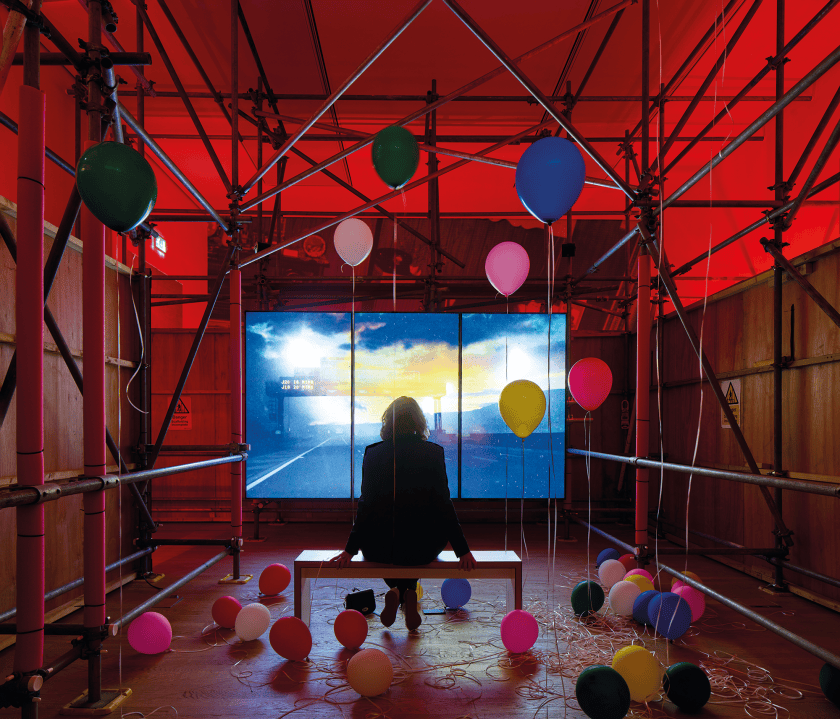
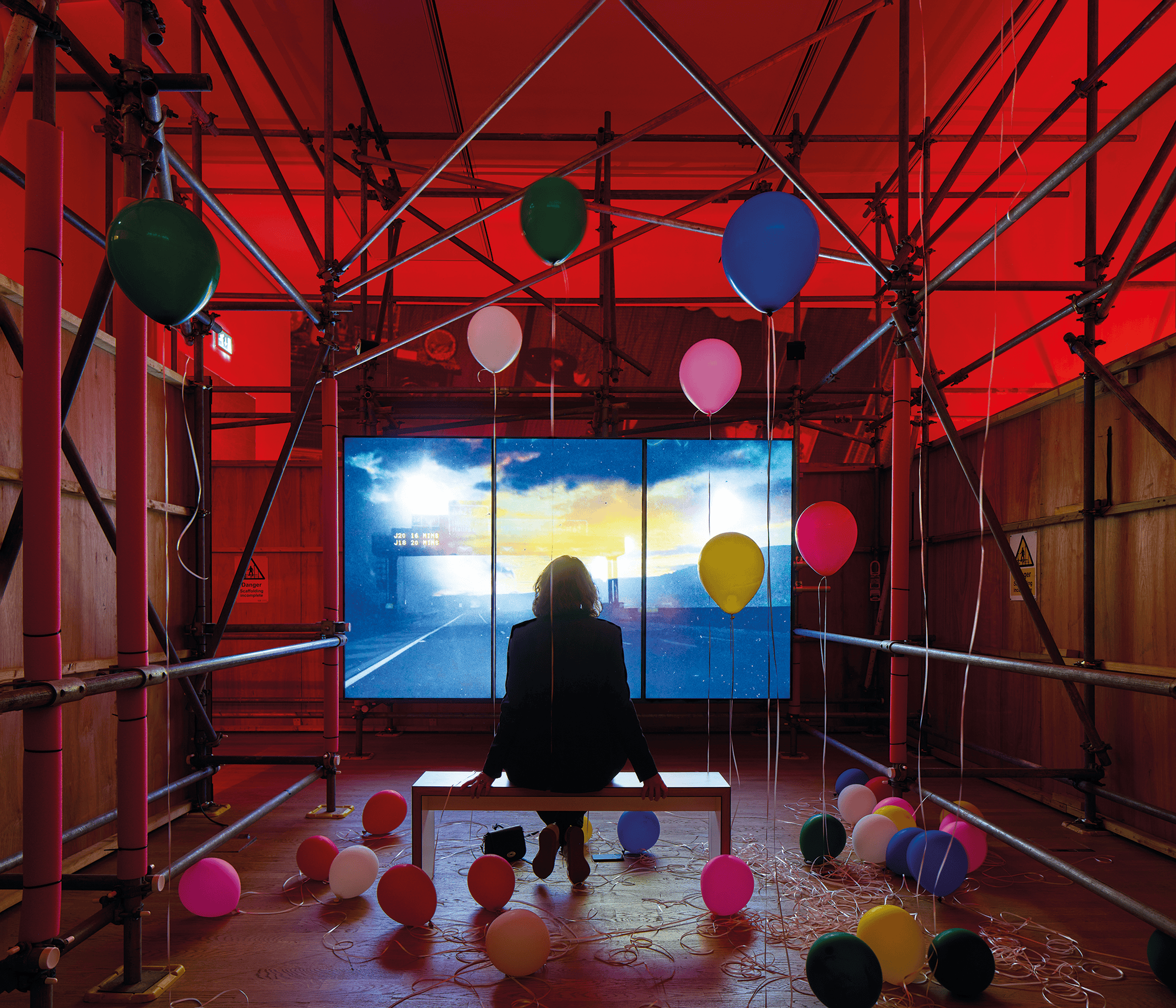
Still, the exhibition itself is only 50 per cent shit. One contender, the Huddersfield-born Simeon Barclay (b.1975), even conjures up something genuinely brilliant. His space consists of a prefab room-within-a-room, flanked by scaffolding which towers up to the gallery’s ceiling. It’s dark, save for an eerie red glow and the intermittent, goblin-green flash of a neon sign modelled on a design that hung outside Huddersfield’s trendiest club when Barclay was a teenager. He was never allowed in, and he never forgot it.
Inside the structure, there’s a film: and blow me is it weird. Barclay interweaves footage of 1980s fire-safety instruction videos with moody shots of a black youth at the wheel of a car; there are even cartoon speech bubbles affixed to the mouths of the figures we see, the whole thing set to an atonal hum. Then, evocatively, blurry shots of the M62 – a road that Barclay claims ‘liberated’ him – accompanied by an angry monologue. The message, based on a previous live performance, is deliberately chaotic, a splurge approximating the artist’s memories of growing up black in a Yorkshire backwater. The spatial constraints of the makeshift cinema force viewers into uncomfortable proximity and the result is eerie, atmospheric and quite unlike anything else I’ve ever seen.
The other three range from the acceptable to the emetic. Tanoa Sasraku (b.1995) is a promising, Glasgow-based conceptual artist whose work – which is largely predicated on oil and power structures – will, I reckon, become more focused in time. She fields massive sheets of newsprint saturated with the most intense of pigments in a way that resembles Rothko. The patterns she recreates are derived from fabrics – her father was a tailor – and we can reasonably assume that memory and loss are the big themes at work here. There’s also a huge table supporting tiny vessels containing oil, a slightly obvious stab at capitalism and fossil-fuel dependence. It looks good, but it’s not quite great; I really hope she drops the lightweight societal critique and delivers on her promise.
The result is eerie, atmospheric and quite unlike anything else I’ve ever seen
Marguerite Humeau (b.1986) makes slightly irritating sculptural installations which, voguishly, insist that fungi know better: there are room-filling effigies of mushrooms, constant allusions to the ‘wisdom’ of nature and even a soundtrack of sorts – a tuba blasts through the space intermittently, supposedly giving voice to the mutant elephant sculpture she’s mounted in the opening gallery. Humeau’s ambition is impressive but way too wacky and slightly too familiar for my tastes: ‘I like Pierre Huyghe and mushrooms,’ she intimates. ‘And I don’t add much else.’
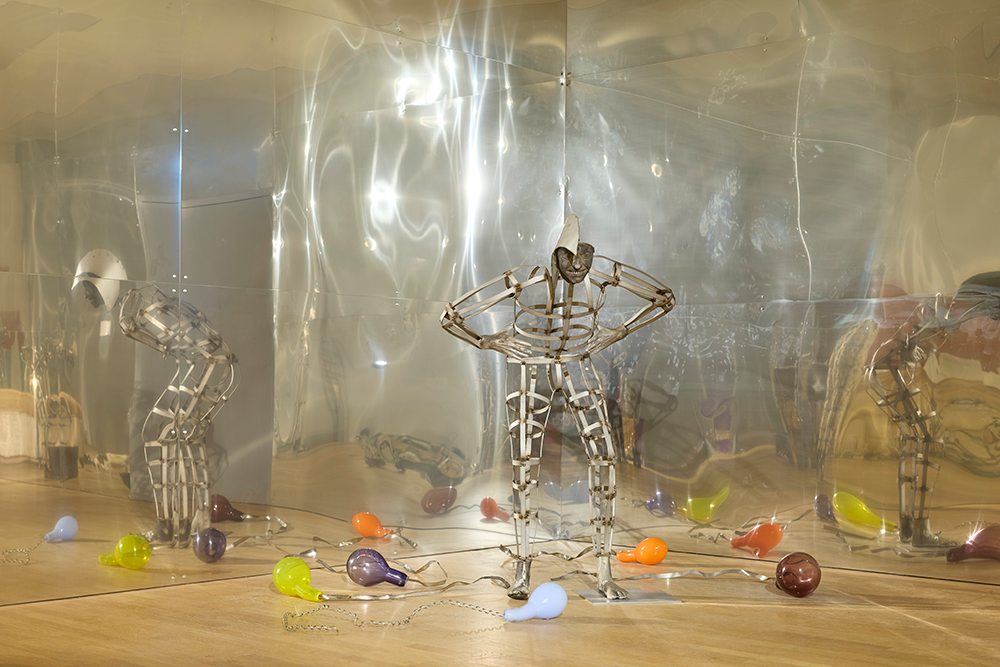
I really hated the room devoted to Kira Freije (b.1985), who gives us a load of figurative sculptures fashioned from metal helixes, with rubber masks for faces; some are draped in rags. Profound. The space looks like a ballet studio, floor-to-ceiling mirrors covering every one of its walls. Freije says that it’s all about ‘the fallacy of language’, which sounds more than slightly divorced from the piece’s formal properties. Bitchy, I know, but the installation resembles a rejected set for War Horse. In other words, it’s entirely awful, so I have no doubt whatsoever that she’ll win.



Comments