To understand the latest disturbing spasm of violence in Mexico, it helps to go back six years to an ultra-wealthy colonia called Lomas de Chapultepec, near the heart of Mexico City.
Lomas de Chapultepec is protected, partly by a large security apparatus net that has been thrown around it, and partly by the pacto de narco, which protects the high-income neighborhoods in which both cartel leadership and their political partners live, along with their families.
Not long ago, former Mexican president Andres Manuel Lopez Obrador was publicly threatening to use the Mexican armed forces to defend cartels
That was why it was surprising when, on June 26, 2020, Mexico City’s chief of police Omar Garcia Harfuch was attacked on the Paseo de la Reforma by a hit squad armed with heavy-caliber weaponry. Wounded, he escaped with his life, although two accompanying policemen did not.
This shocking eruption of military-grade violence inside Mexico City’s wealthiest colonia was swiftly attributed to the bloodthirsty and sociopathic leader of the Cártel de Jalisco Nueva Generación (CJNG), Nemesio Rubén Oseguera Cervantes: the man known as El Mencho.
Yesterday, Omar Garcia Harfuch – who is now Mexico’s Secretary of Security and Citizen Protection – struck back. El Mencho failed to kill him, therefore he has killed El Mencho.
The Mexican state’s account of events holds that El Mencho and his men attacked the force sent to arrest him, and that the CJNG boss died of wounds en route to treatment. Mexico also said that the United States forces provided intelligence and unspecified support to the Mexican effort, without any presence on the scene. One may or may not believe this. Those in the know are not issuing the press statements.
What’s clear is that the targeting of El Mencho was meant to address and appease two mutually antagonistic parties. One is the Americans, who demand ever-greater deliverables from the Mexican state in the cartel wars. The other is the ideological core of Mexico’s ruling Morena party, which is fundamentally anti-American and would react to a US presence with something close to revolt. It was not so very long ago – the spring of 2023, in fact – that the creator and central figure of Morena, former Mexican president Andrés Manuel López Obrador, was publicly threatening to use the Mexican armed forces to defend cartels against any American action against them.
If his successor, current Mexican President Claudia Sheinbaum, has allowed direct American action now, it is an epochal break with her own benefactor who bestowed the office upon her. As things stand, the effort to both claim and disclaim American involvement carries a sense of protesting too much.
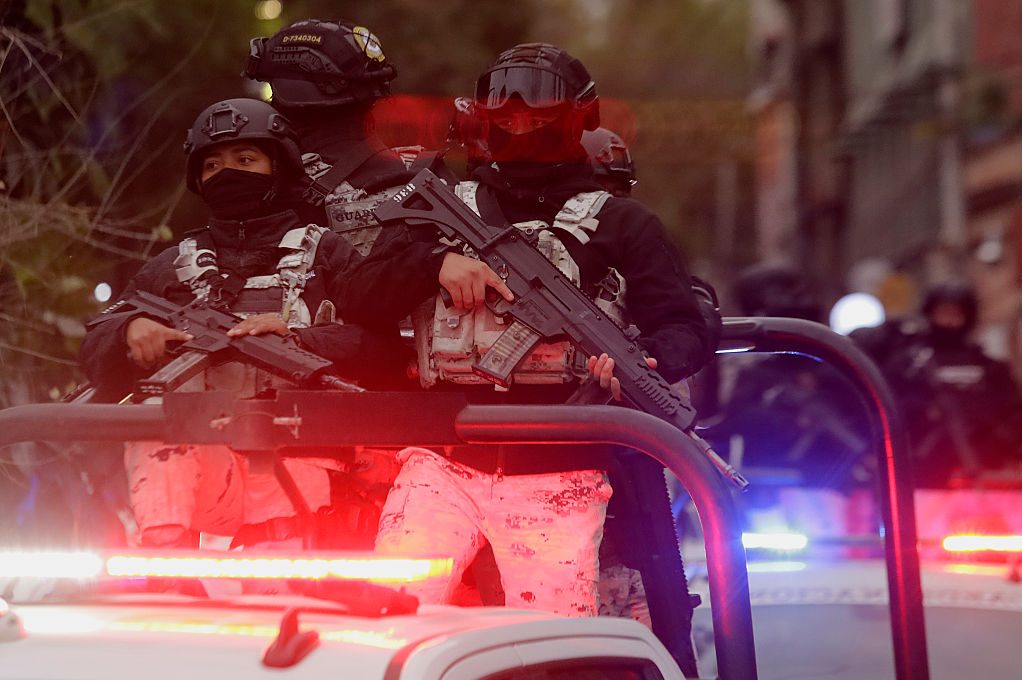
Two consequences of the hit now present themselves. The first and most-dramatic is the spasm of violence across much of Mexico, including well-known tourist areas. CJNG personnel are swarming into areas previously considered off-limits to the cartel wars. The organization that violated the peace of Lomas de Chapultepec is now doing the same to international airports, to Puerta Vallarta, to Guadalajara and beyond.
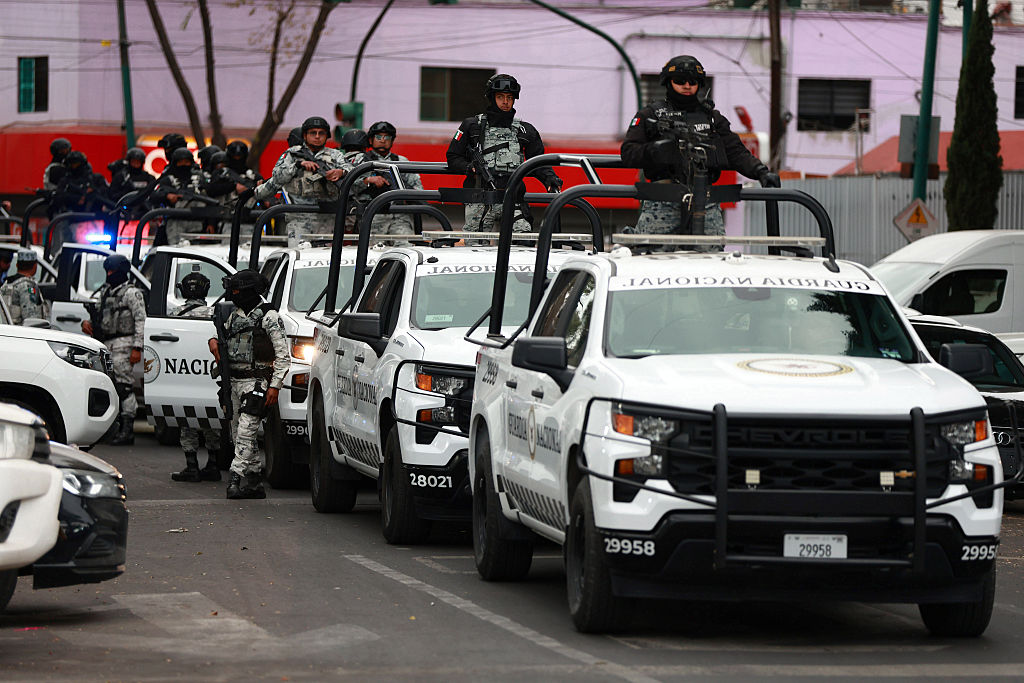
The actions appear to be comparable to those one might expect of heavy infantry units, equipped with anti-armor and anti-aircraft weaponry. The Mexican armed forces, clearly caught off guard, are slowly responding. But the reaction ought not to have been a surprise: in the Culiacanazo of October 2019, Sinaloa-cartel militia conducted a similar operation after an arrest of one of El Chapo’s sons. This is a known organizational response by major cartels when challenged by the state, and the state’s unreadiness can be explained by plain incompetence – or by an inability to trust the broader security apparatus with news of the impending raid.
As the fighting progresses, watch the speed at which the Mexican armed forces reassert control, as they likely will. Well-armed as CJNG and the major cartels are, the strongest force in the country remains the formal state. If the matter becomes pressing, America could offer intelligence and targeting assistance – none of which will become public knowledge.
Watch also the extent to which CJNG chooses to exact vengeance upon any of the several million US citizens in Mexico, now that the Mexican state has given the Americans partial credit for El Mencho’s death. The targeting of American citizens as such would of necessity draw in the direct and public involvement of the United States.
Various members of the Mexican and American establishments are proclaiming that the death of El Mencho is proof that the Mexican regime is, at long last, serious in its fight against the cartels. This is slightly naive. The traditional cartel partner of the Morena regime is the Sinaloa cartel, which, although presently in violent flux, has a perennial and bloody rivalry with CJNG.
The Mexican state will continue to offer up big-name cartel figures ad infinitum, but their elimination alone changes little. What would be transformative is bringing to account the politicians who enable, protect and promote cartels. These men are at the very heart of Mexico’s Morena regime. That is what a true strategic win would look like, and it is what the United States must resolutely pursue.

Comments