
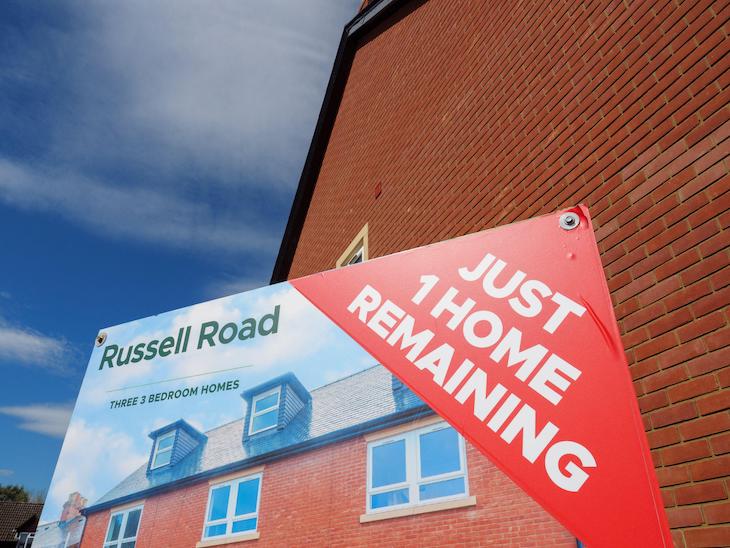
At the end of last week, the Government suggested there should be resonant names – that evoked the grandeur of past heroes – for seven magnificent New Towns to be built across England. Just as Clement Attlee had envisioned a new Jerusalem after years of Tory neglect, so Labour would once again build the wholly new settlements of the future.
If Leeds South Bank is a New Town then Stonehenge is a cutting edge aesthetic installation reflecting the vibrancy of Young British Artists
The ambition of post-war years, which gave us Milton Keynes, Harlow, Bracknell, Crawley and other visionary developments, was to be re-kindled. The names suggested for these New Towns – Attleeton, Elizabethtown, Seacole, Athelstan, Pankhurst – provoked debate. They were meant to.
Because the entire exercise was a masterful piece of misdirection. The Government aren’t marking a break with the poverty of Tory ambition on housing by building seven New Towns. The main thing they’re building on are plans they inherited from the last Government. From me, in fact.
On Monday we discovered that the seven New Towns are, for the most part, decidedly old hat. There are three urban regeneration schemes, in the heart of London, Manchester and Leeds, which have been in development for years now. There are urban extensions in Bristol, Enfield and Milton Keynes (a genuine new town eight years ago) which are again already under way. The only thing close to a genuine virgin development is the expansion of the Bedfordshire village of Tempsford to become a significant commuter town for Cambridge. But as virgins go it’s hardly fresh, the project having been vigorously advanced when I was in office, well over two years ago.
The developments the government announced are many things. Welcome investment in brownfield sites. A recognition that building more in our cities rather than always placing new homes on green fields is environmentally enlightened. A vote of confidence in the agglomeration effect, clustering talent closer to where it can find jobs. What they are not is New Towns. Certainly not as anyone might understand the term. Which is a Town that hadn’t been thought of, and didn’t exist, before.
The post-war New Towns were just that. On virgin land, or where only villages stood before, whole new communities were built. You might consider Bracknell, or Cumbernauld, Harlow or Cwmbran, realisations of a noble vision or architectural dead zones. But they were undeniably new. The Leeds South Bank development is not. Leeds has been a thriving settlement since the time of the Beaker People. A river runs through it. One of the city’s many handsome features is the Crown Point Bridge linking the north of the city with its, well its south bank. Built in the 1840s. Modernised in the 1990s.
Of course, Leeds South Bank will certainly benefit from regeneration money. I should know. I authorised it years ago. I’m delighted this Government is following where I led. But if Leeds South Bank is a New Town then Stonehenge is a cutting edge aesthetic installation reflecting the vibrancy of Young British Artists. Maybe the Government should re-name Leeds South Bank “Athelstan” – they’re about the same vintage.
To be fair, we were warned. In the introduction to the report from their New Towns taskforce, published last September, it was acknowledged that inner city regeneration and urban extensions were as much the way to go in providing new housing as any other route. But even then there were indications that genuine New Towns – including one in Cheshire – might still be established. When Monday’s announcement was made, any hint of anything genuinely ground-breaking had gone. It was Tory plans and Tory policy with a bit of additional debt-fuelled finance. Something old, nothing new, all of it borrowed, pretty much blue.
Now, it doesn’t, of course, suit the Government to admit that its flagship housing scheme is pretty much just the same as the Conservatives’. They want to portray the last administration as a radioactive dead zone, a housing Chernobyl. And for the new Tory leadership, there is an understandable desire not to revisit or re-litigate the recent past. The voters delivered their damning verdict in 2024. Far better to repudiate, apologise and move on.
And my pointing out the continuity here will, of course, only be more ammunition for those who want to denounce the existence of a “uniparty” which needs to be swept aside by the New Force which is Reform or the Insurgent Outsiders who are the Greens.
They will of course overlook the fact that Reform’s Shadow Chancellor is the former (really rather good) Tory Housing Secretary Rob Jenrick. Or the point that the Greens are led by a man who wanted us to celebrate the achievements of the Lib Dem-Tory coalition government which introduced tuition fees, austerity and the King James Bible into all schools.
Might it be the case that disaffection with our politics is fuelled not by the pragmatic adaptation of administrations to reality but the exaggerated claims made by those who promise to build a wholly New Jerusalem but end up with improving a bit of familiar old Leeds?



Comments