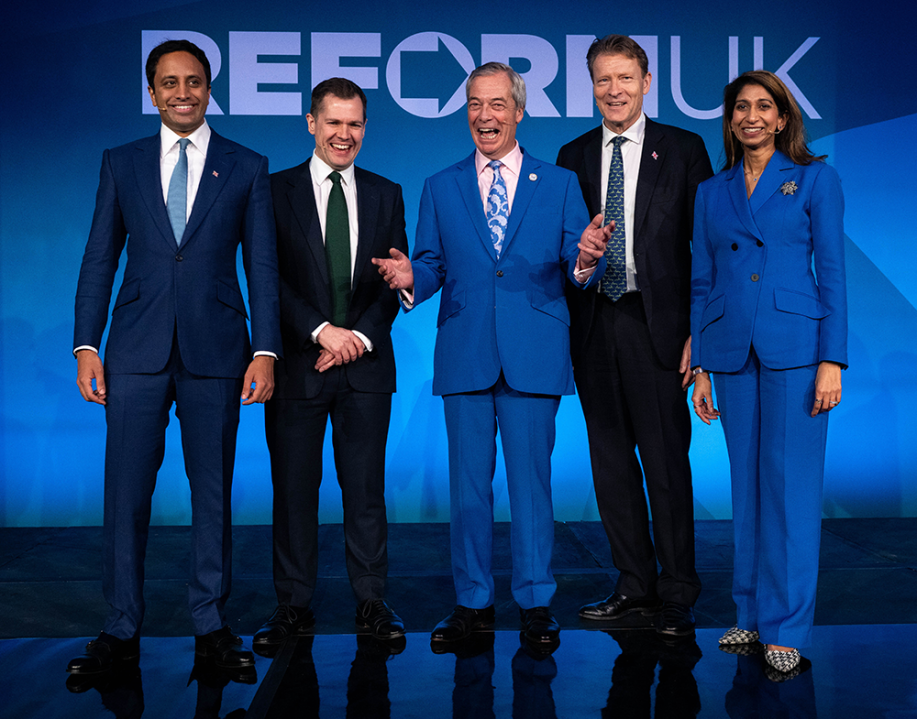


Nigel Farage likes a gamble. Crypto bros and hedge-fund managers bankroll his enterprises; his social circle is filled with traders, bridge players and money men who fancy a flutter. It was Malcolm Muggeridge who claimed that ‘to succeed pre-eminently in English public life it is necessary to conform either to the popular image of a bookie or of a clergyman’. Farage is firmly in the former camp.
But the man who has never been afraid to take a punt is now betting on playing it safe. In his bid to kill off the Conservatives, Farage has sought to woo the party’s voters by poaching their talent and ridding Reform UK of all suspect economic baggage. The manifesto of 2024 has been binned; full-fat nationalisation is out, save for British steel and key strategic industries. He has pledged to keep the Bank of England independent and retain the Office for Budget Responsibility. The triple lock would remain for pensioners. As one Tory observes: ‘We are all Sunakites now.’
A game of mirroring is now playing out, in which the Tories and Reform both assert their dominance
Within Reform, there are mixed feelings about this. There are some who fret about ‘Tory-fication’: older hands with long memories recall betrayals of years gone by. One ex-candidate notes the switch in the party’s slogan from the bright-eyed ‘Change Politics for Good’ to the more conventional ‘Family, Community, Country’. ‘Party of the centre-right’ is a phrase now endlessly trotted out on media rounds by Reform spokesmen.
Farage believes the experience brought by the party’s new arrivals is necessary to make the party fit for government. Britain’s exposure to the bond markets means that Reform must play by the same fiscal rules as everyone else. ‘Everyone knows where Nigel’s instinct and mind is on these things,’ argues one aide. But the risk is that in the quest for power, the party agrees to an agenda that stops it from providing the country with the transformation it so badly needs.
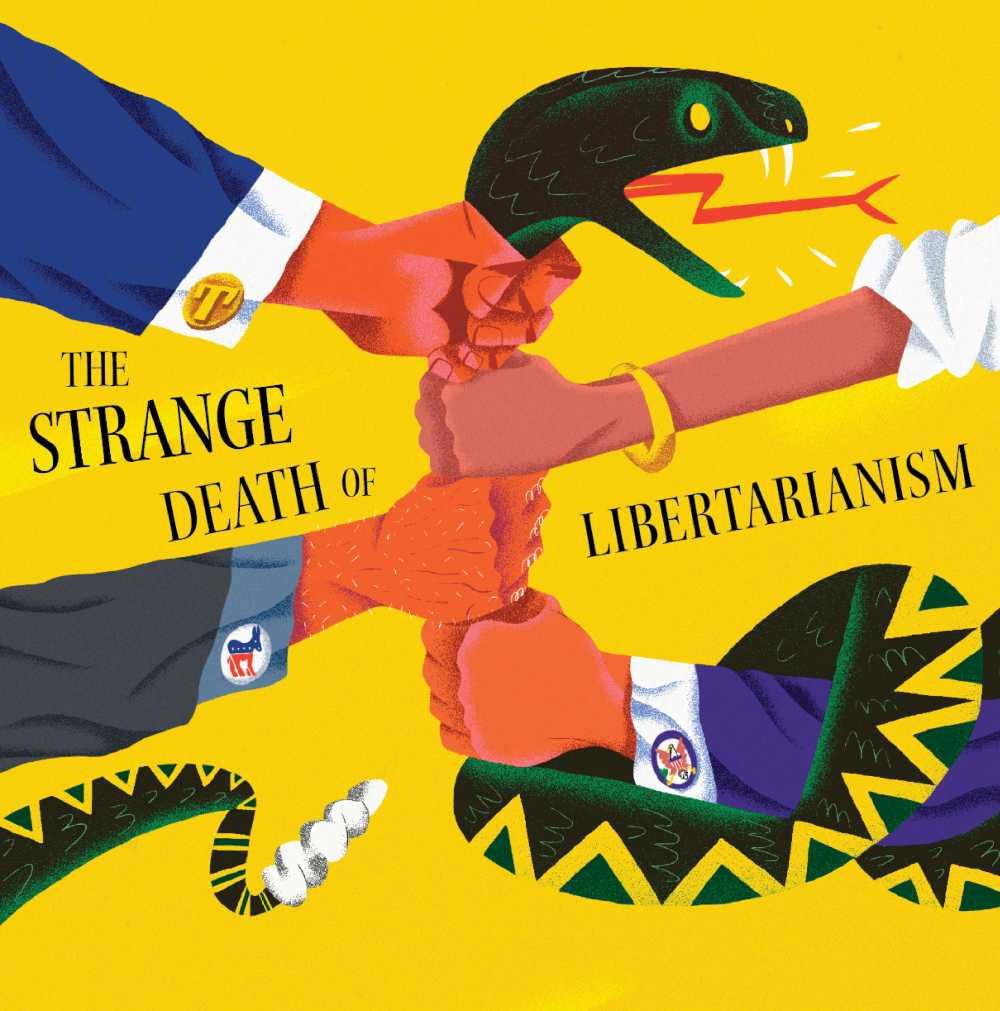
Reform’s distinctiveness has been blunted too by the Conservatives’ change of direction since 2024. Under Kemi Badenoch, the party has committed to rigorously defending British culture, scrapping the Climate Change Act and deporting 750,000 illegal immigrants. Andrew Griffith, shadow secretary of state for business and trade, noted how much of his conference address chimed with Farage’s big City speech last year; Claire Coutinho, his energy counterpart, traded blows last week with Reform chairman Zia Yusuf on who was more committed to drilling for oil. One Tory MP describes this change of direction as a model of market forces: ‘We would not have got into such a robust place on migration, identity, crime and Islam, without the threat from the right.’
A game of mirroring is now playing out, in which the Tories and Reform both assert their dominance and try to take credit for Labour policy U-turns. There was an echo of ‘anything you can do, I can do better’ in the row over the Chagos Islands, in which spinners for both parties sought to claim responsibility for Washington’s hardening opposition to the deal.
The Reform critique of the Tories is that they are mere shape-shifters, willing to mimic Farage’s lines then betray voters – ‘just like Boris [Johnson] did in 2019’, says one. In Millbank Tower, where Reform is based, there is a growing list of ‘policies stolen by the Tories’; Farage has taken to calling Badenoch ‘copycat Kemi’. The Tory retort is that Reform is simply not credible, citing past costings, poor vetting and party tensions. In the words of one peer: ‘One party is hobbled by having been in office – and the other by not having been in office.’
In their bid to establish hegemony, both parties are looking to the next generation. James Orr, Reform’s head of policy, is keen to forge an ecosystem for the ‘New Right’ of political thinking, with several dozen bright young things piled into Reform HQ last month for drinks and discussion. Having experimented with thinktanks, Orr is keen for Reform to do much more party policy in‑house with his expanding team. Sam Ashworth-Hayes, a Telegraph journalist who impressed Farage with his work on migration, is among the latest hires.
A Tory reshuffle is perpetually in the works, too. While nothing is planned before 7 May, Badenoch wants to bring forward the 26 Tory MPs from the 2024 intake. Eighteen months after taking office, her position as leader looks secure. She is no longer forced to offer jobs to one-time rivals; instead, her supporters argue, she can now put her own stamp on the top team.
Badenoch is keen to mould the next generation, too. Her party has just released updated guidelines for the parliamentary assessment board, with a stronger focus on conservatism. ‘It is genuinely harder this time,’ admits one serial applicant ruefully. Daily assessment centres are being held to assemble what one official calls ‘the new Conservative party for 2029’ for ‘proper Tories who want less tax, less interference’.
Both sides, though, are clearly fishing in the same waters when it comes to personnel. Reform and the Tories have struggled, at points, to find the 4,500 candidates necessary for next month’s council elections. Reform even called up one bemused Lib Dem councillor in Bromley, urging him to be a paper candidate. With both sides desperate to project strength, this week’s deadline for nomination papers has taken on added importance. Figures by polling expert Stephen Fisher suggest that the Liberal Democrats could leapfrog the Tories as the second-biggest party of local government, with Badenoch’s party back in fourth.
‘Two stars keep not their motion in one sphere,’ Prince Hal tells Hotspur in Henry IV, Part 1, ‘Nor can one England brook a double reign.’ For centuries, this has held true on the centre-right: in a month’s time, after first-past-the-post does its ruthless work, minds will inevitably turn to whether an accommodation ought to be struck. ‘The intellectual and policy case is overwhelming,’ says one Tory MP. ‘Most Conservative MPs, frontbench and backbench, accept that a deal should be done and pressure will grow on the leadership after May to -accelerate that.’
Neither Farage nor Badenoch are prepared to countenance that at present. So the battle on the right will continue, with few willing to place bets on just how the choreography will play out.






Comments