
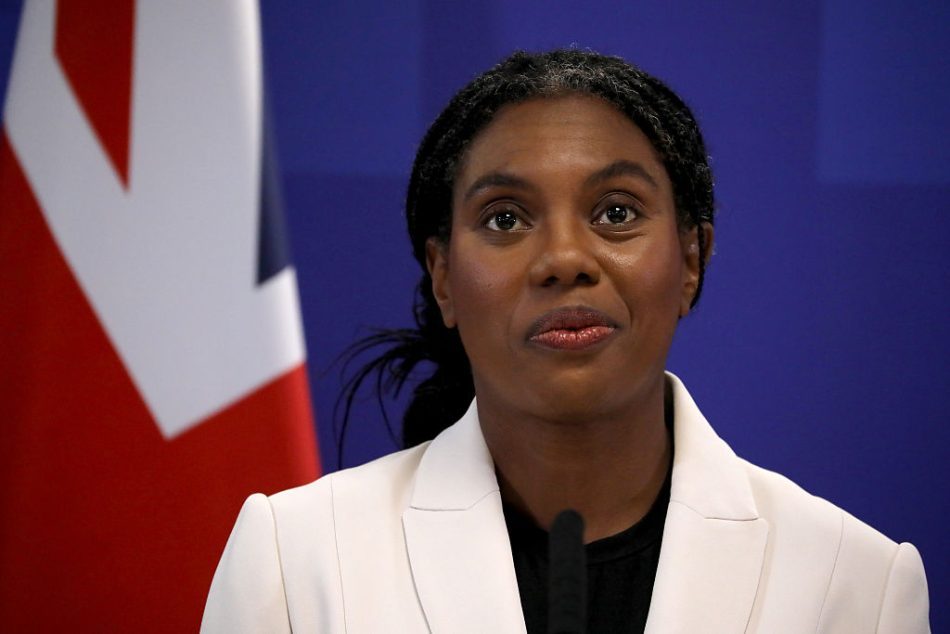
The scale of yesterday’s shadow cabinet reshuffle has taken most Tories by surprise, given a report by the Daily Telegraph last Tuesday which suggested that only minor changes were on the cards. But after that article was published, James Cleverly believed that now was the right time to quit the front bench, in order to stand for London Mayor. Having discussed it with Kemi Badenoch, she decided that Cleverly’s resignation was one of two key factors necessary to bring forward a complete restructuring of the front bench. The other was the signal from Tom Tugendhat that he was now prepared to take up a berth in the shadow cabinet, having previously declined to do so back in 2024.
Badenoch’s team prepared the timetable accordingly. The Sunday Times was handed the scoop on Cleverly’s bid for London mayor. Then the following day’s edition of the Daily Telegraph was given the nod that Tugendhat would come back as Shadow Foreign Secretary, allowing each men their place in the sun. Monday was then a frantic day of calls and announcements as Badenoch’s reorganised shadow cabinet took shape. Some of these were major calls, with Harriet Cross, Katie Lam and Rebecca Paul joining Nick Timothy as the first members of the 2024 intake to reach the shadow cabinet. Others, such as Alex Burghart formally becoming Deputy Leader of the Opposition, were more minor. Going forward, he will be taking Prime Ministers’ Questions in Badenoch’s absence, rather than the rotating system we have had since 2024.
These changes are being billed as necessary to get the Tories ready for government. They are not merely about personnel – but structures too.
These changes are being billed as necessary to get the Tories ready for government. They are not merely about personnel – but structures too. One of Badenoch’s lasting impressions from government was how siloed she found much of Whitehall. As the Business Secretary, she found it frustrating dealing with the Treasury, a department which often regarded itself as a rival power base, rather than an ally in trying to back British enterprise. She has therefore ordered the creation of new ‘units’ across different shadow cabinet briefs.
The most prominent of these yesterday was the ‘economy unit’ featuring Andrew Griffith and Richard Fuller in the Treasury briefs and Claire Coutinho in Business. But others are being created too. Chris Philp (Home Affairs) and Nick Timothy (Justice) comprise one on law and order. Tom Tugendhat (Foreign Affairs), James Cartlidge (Defence) and Alex Burghart (Cabinet Office) make up another on national security. Then there is the public services team too: Laura Trott (Education), Damian Hinds (Health), Richard Holden (Transport). The likes of Andrew Bowie (Energy Security) and Helen Whately (Welfare) will underpin their work as well.
It is Badenoch’s reminder that she, unlike much of Reform, has been in government before. The Tories’ experience in office has proved a mixed blessing thus far, with voters at present unwilling to forgive the party for the record of 2010 to 2024. But as Andy Burnham prepares to take up office today, senior Tories want to paint a contrast between a naive, fiscally incontinent Labour premier and a Leader of the Opposition who has done serious thinking on making the system work. With four weeks to go until the party conference, Badenoch hopes this team will be better equipped at not just identifying Britain’s problems – but solving them too.




Comments