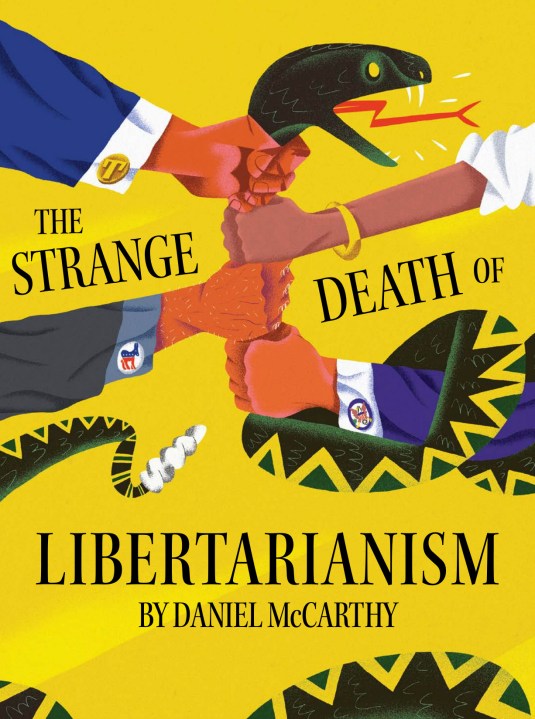


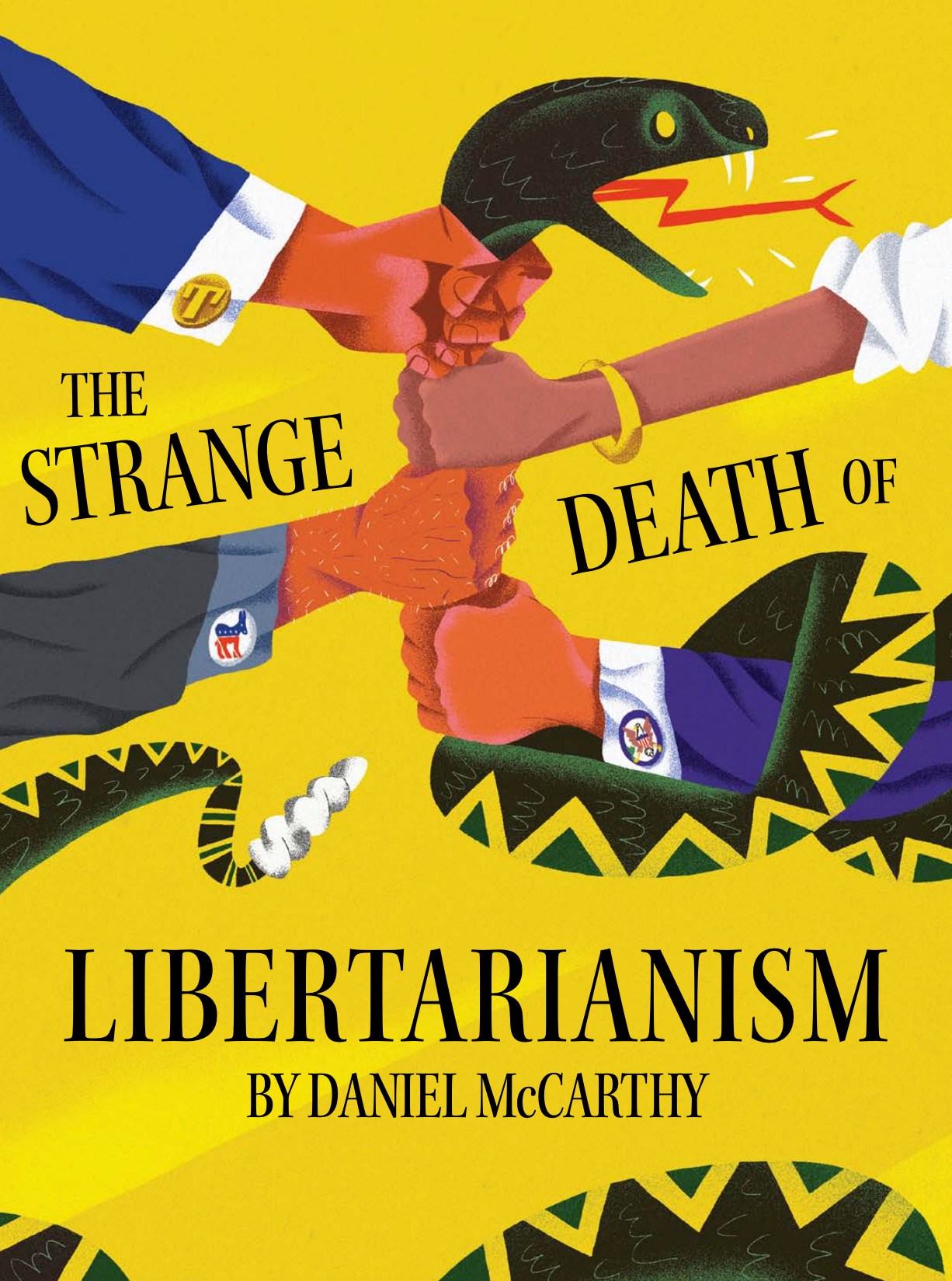
Socialism is more fashionable today than at any time since the Soviet Union collapsed. It’s back, and its major rival isn’t an ideology of unfettered free markets but right-wing populism. Theodore Roosevelt is a greater inspiration than Ronald Reagan to today’s young Republicans. The man most likely to be the next GOP presidential nominee, J.D. Vance, is more enthusiastic about Huey Long than Milton Friedman. Even the alternative “NeverVance” candidate insiders in Washington prefer – Secretary of State Marco Rubio – has made a point of saying capitalism must be “common-good capitalism.”
Libertarians have disappeared, just as the national debt has blown past $40 trillion. Arguably the most libertarian member of the US House of Representatives, Thomas Massie, lost his primary in May after investing all his political capital in anti-Zionism and the Epstein files. The most libertarian senator, Rand Paul, has not succumbed to the same obsessions but finds himself marginalized in Donald Trump’s second term. He and Rubio were first elected to the Senate the same year; their divergent fortunes tell a tale.
Libertarian think tanks and magazines are running on fumes; they’re richly endowed but irrelevant
Bold thinking rather than ballot-box popularity had always been libertarianism’s strength – but today the ideas seem exhausted, and there’s no libertarian who provokes or inspires to anything like the degree Milton Friedman, Friedrich Hayek or Murray Rothbard once did. Libertarian think tanks and magazines are running on fumes; they’re richly endowed but irrelevant.
One need not agree or even sympathize with libertarian philosophy to find all this surprising. Free markets had triumphed by the end of the 20th century, with even Democrats such as Bill Clinton and British Labour party leaders such as Tony Blair adopting pro-market attitudes, if not policies that satisfied libertarians. What had long been radical libertarian views on gay rights, recreational drug use, pornography and vices such as gambling have now become law throughout the western world. Free trade was a bipartisan orthodoxy for decades, and for more than 30 years Americans and Europeans got to reap the benefits – as libertarians believe them to be – of mass migration.

Strangest of all, even as the public’s faith in the institutions of government has plummeted this century, the popularity of anti-government ideology hasn’t risen. Instead, populists and socialists have reaped the harvest of discontent.
Why? The puzzle contains its own solution: libertarianism has lost its raison d’être.
There are two halves to libertarian thought, although libertarians perceive them as logically identical. Anti-statism – the anti-government reflex – is one component. Absolute faith in the market economy, meaning voluntary exchange of goods and services of any and every kind, is the other. In theological terms, the state is satanic, and the market is the closest thing on earth to God.
The market is effectively omniscient; no one can second-guess its wisdom. It is benevolent even when it teaches us hard lessons, which are only for our own good. It is omnipotent and all-provident, supplying everything humanity needs. The coldness that libertarian economists exhibit toward ordinary human concerns about neighborhood or nation, and the fanaticism they display when defending free trade – as if tariffs are morally abominable, not just suboptimal according to their utilitarian math – are the marks of a faith that disdains worldly folly (natural loyalties) and finds salvation in a perfected system, from which the slightest deviation is a grave sin.
What made libertarianism so exciting, if never broadly popular, in its 20th-century heyday was that it was a reformist faith. It went against the grain at a time when most people believed that government was very nearly God. Armed with the best social science, there was nothing the mid-20th-century state could not achieve – the American public didn’t get into a “war on poverty” or “war on drugs” assuming they would be endless and unwinnable, just as they didn’t think the architects of the Great Society at home could fail to win the Vietnam War abroad.
The question was only which kind of big government the country should have: Republican or Democrat? Or, for those who considered more radical alternatives, as academics often did, whether western-style liberal democracy and social democracy could and should prevail, or whether the communist version of all-provident government was better – in principle, whether or not the Soviet Union embodied it perfectly in practice.
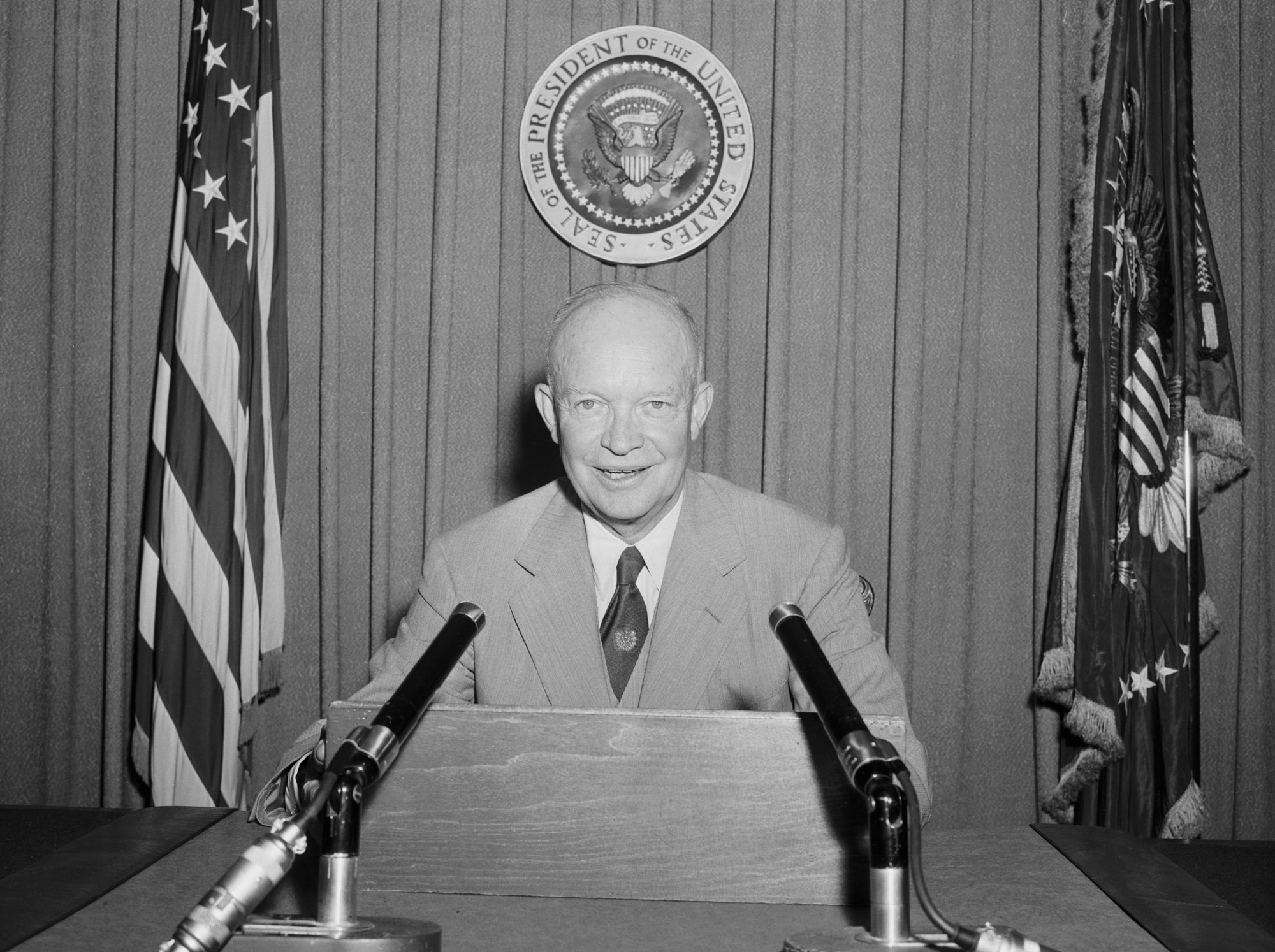
For Cold Warriors, the only way to thwart the Soviet superstate was with an American superstate, harnessing capitalism in the service of a growing government that would itself keep capitalism safe. There was no contradiction: that was a virtuous circle. (Though President Eisenhower, for one, had his doubts – he warned about the “military-industrial complex” in his farewell address because he believed America would bankrupt itself trying to fight a ceaseless series of conflicts like the Korean War.)
Libertarianism was shocking in this context – it was positively electrifying. The likes of Friedman, Hayek and Rothbard dared to argue government didn’t work, it couldn’t work, no matter how sophisticated the social science its bureaucrats wielded. Nor were ever-more military spending, the draft and wars like those in Korea and Vietnam necessary to keep Americans free and safe. On the contrary, freedom was really being lost in the name of fighting for freedom.
These were wild, bracing ideas for millions of Americans
And freedom could mean much more than the average American realized. It didn’t just mean a choice of automobiles or soft drinks, a choice of churches or hairstyles for your wife. You didn’t have to smoke cigarettes or drink beer – you could smoke marijuana or, if you pleased, snort cocaine. You didn’t have to have a wife: you could have sex with anyone who consented, man or woman, and as many at a time as you like. Freedom didn’t demand that you do any of this but it required that it should be possible. This went beyond what even Hugh Hefner was offering midcentury Americans, though the Playboy impresario was thrilled by the implications and made much of the libertarian philosophy his own.
These were wild, bracing ideas for millions of Americans, and for others who had already begun to experiment with “alternative lifestyles” or countercultural rebellion, libertarianism offered a principled, coherent philosophical defense. But the ideology’s strongest selling point wasn’t its then almost unthinkable cultural openness, but its advocacy of something else that was usually called a vice: the profit motive, which, if unleashed, could bring unlimited consumer prosperity to ordinary people and would reward those strivers who dared to start new businesses.
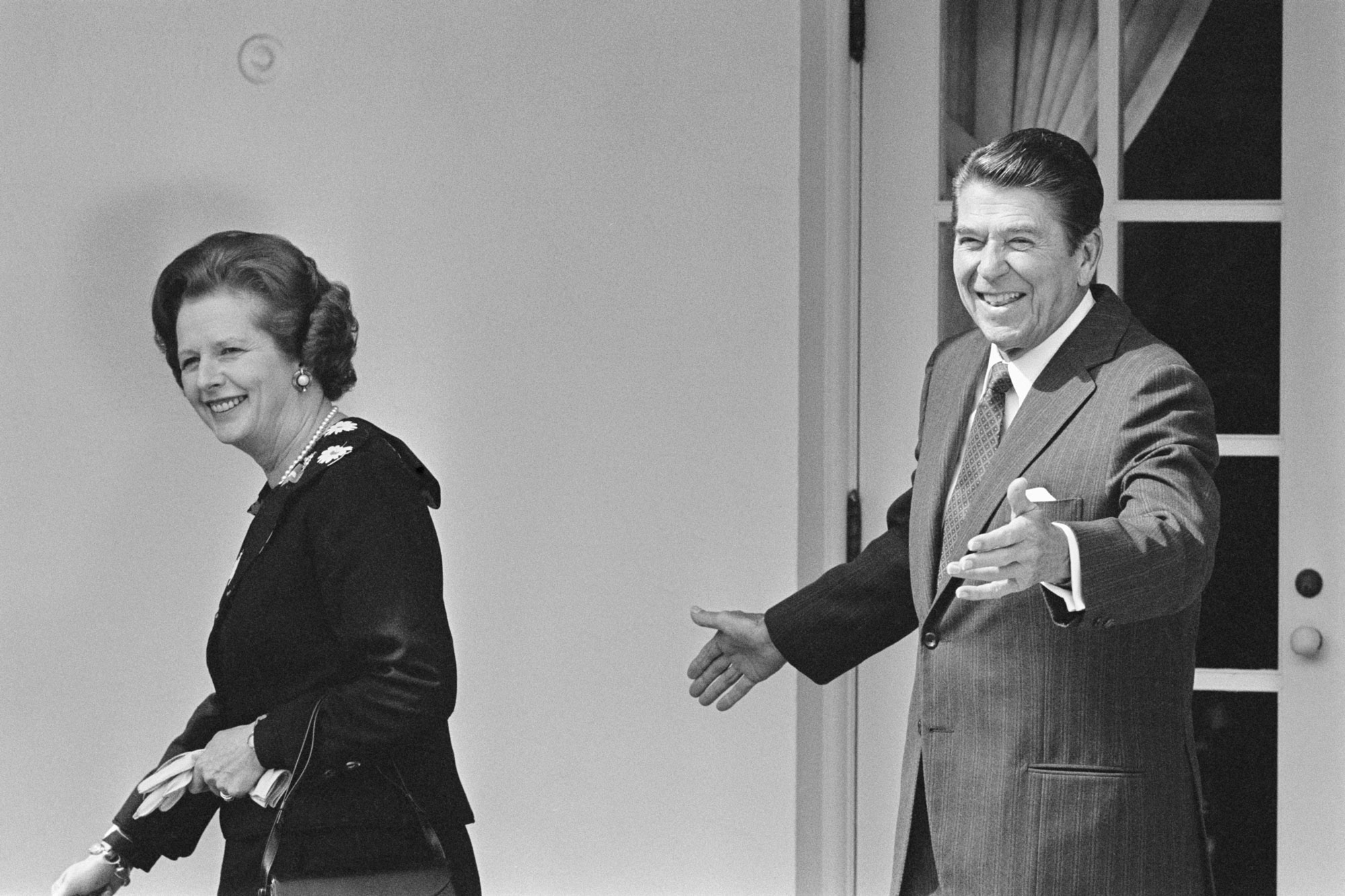
As government proved unable to solve the nation’s problems, from stagflation to urban poverty and crime, the case for giving markets a chance grew more persuasive – enough to get free-market, libertarian-inspired conservatives like Ronald Reagan and Margaret Thatcher elected on both sides of the Atlantic.
Then came the internet, which seemed like the fulfillment of libertarianism’s promise. Yes, there was money to be made, and in the early days it felt like any risk-taker could make it. But the internet was more than just another proof of market principle. It was a demonstration of how freedom itself worked: a decentralized parallel world in which free speech was absolute and individuals could form new communities around any interest, no matter how obscure – or nerdy. The first wave of internet-based media, including the blogs of the early 2000s, had a libertarian flavor: the big-name bloggers might not be strict dogmatic libertarians, but they almost all took the gist of libertarianism for granted. Yet all these successes were libertarianism’s downfall.
We have the wealth, but we don’t have the joy it was supposed to lead to
In a world where government is widely understood to be paralytic or incompetent at best, libertarian skepticism doesn’t stand out. And instead of amusing a public secure in its faith in big government, the way a shocking new film or rock band might entertain a public with basically middle-class morals, libertarian anti-government ideology now only demoralizes Americans who don’t feel like they need any more disillusionment. This is why it’s not such a paradox that socialism and varieties of conservatism with a more positive view of government are enjoying a resurgence. They offer hope where there’s otherwise only despair.
To hear libertarians go on about how government is only going to keep failing is like listening to a hypochondriac constantly telling you your organs are getting nothing but older and will sooner or later give out completely, with the grave lying in wait for us all. That isn’t news to anyone, and however true it might be, dwelling on it hardly makes anything better. Libertarians may have trouble understanding this for the same reason some true believers lose the ability to relate to people who don’t welcome death despite believing in an afterlife. The psychology of hope or despair plays a greater role in human happiness than whether a redistribution program or some other government totem “works” or not.
And where the market has worked – as it resoundingly has, in many contexts – giving consumers what they want has often come at a high cost in a currency other than dollars. What was most attractive about the libertarian vision of freer markets wasn’t the possibility of getting rich or enjoying material abundance, as important as those things certainly were. It was the dream that such wealth would bring out the best in us all, creating a fundamentally more agreeable society. We have the wealth, but we don’t have the joy it was supposed to lead to.
The libertarian response to this disappointment is to prescribe more of the same medicine that didn’t cure the patient, yet whatever good the treatment could achieve has already mostly been realized. A friend notes that cutting taxes, for example, doesn’t have the political punch it used to because federal income tax rates are already much lower than they were before Reagan. Lower still might be better – I certainly believe so – but the public simply doesn’t feel the burden as heavily as it once did, and so doesn’t feel as much relief when it’s lightened further.
Potheads use their intoxicant everywhere, without regard for whether children are around
Something similar is true, to an even greater extent, with libertarian cultural victories. Once Americans got over their initial astonishment at what libertarians were saying about sex, drugs and consensual vice, many of them gradually began to entertain hopes that more liberal attitudes could indeed change everything for the better. Weren’t too many black men being sent to prison because of the drug war? Didn’t homosexuals just want the same rights as everyone else? And was pornography or gambling really such a big deal? Today cannabis has been legalized or “decriminalized” to the point where it’s unavoidable in our cities: there are pot shops, dispensing the drug itself or selling paraphernalia, on almost every block, it seems – they’re some of the last brick-and-mortar establishments remaining, often lit up like Pachinko parlors with blinding LEDs. Potheads use their intoxicant everywhere, without regard for whether children are around.
Gay marriage is the law of the land, but that hasn’t stopped sexual revolutionaries from demanding more: if a man can replace a woman in marriage, or a woman replace a man, then it hardly makes sense to keep insisting on sex differences: men are women, and vice versa. People are just meat with different garnish. Pornography and sports betting, meanwhile, are freedoms that have made millions feel like slaves. Nothing remains of the optimistic marketing for the laissez-faire approach to vice; now there’s just the sordid reality.
And the internet? That decentralized free-for-all has given way to a manor system. Even Elon Musk doesn’t make it easy for anyone to wander off the X reservation by following a link. Social media now penalizes the very thing the World Wide Web was built upon: linking to other sites. “The internet” now means a handful of tech companies that determine the limits of speech. The libertarian promise of the early web is a fading memory – for Generation Z, not even that – yet libertarians are ill-prepared to offer a deep critique of censorship imposed by private companies. You can leave the baron’s estate by going offline. That too is true, yet doesn’t offer anyone the freedom they’re seeking.
Libertarians helped make the world in which we live today – which is why nobody looks to them to lead us to tomorrow.






Comments