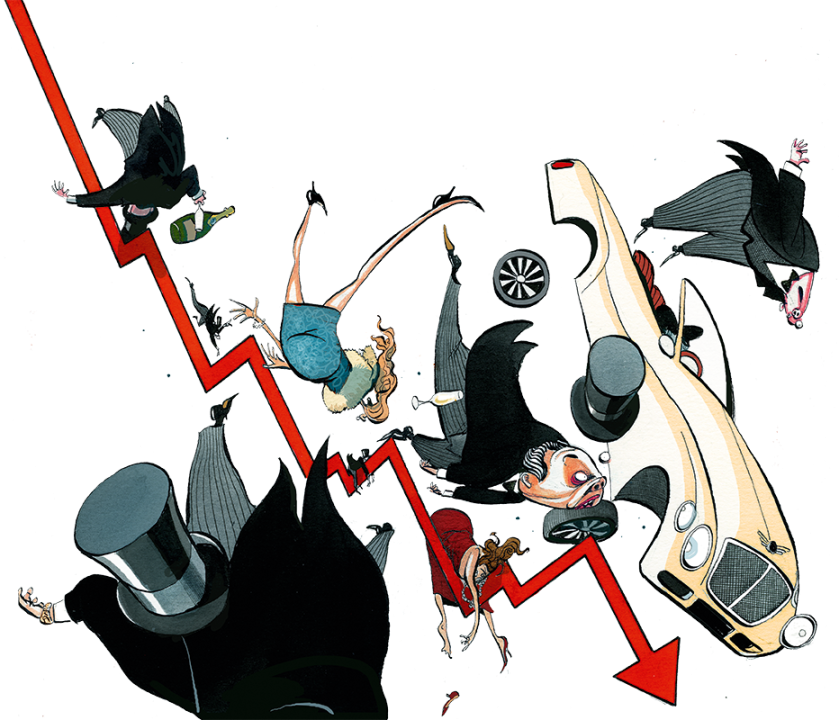


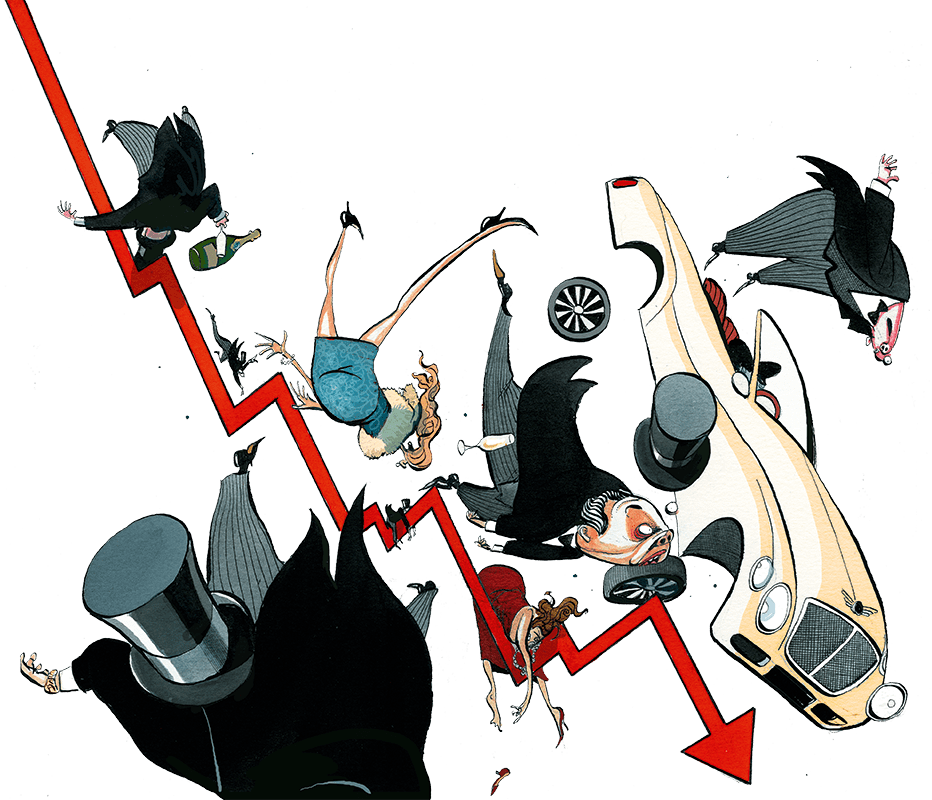
Margaret Thatcher famously told the Commons in 1988 that ‘there is no way in which one can buck the market’. She meant that it would have been pointless to deploy policy tools to try to quell the pound’s then strength against the deutschmark, but she has never been proved wrong in a broader sense. One cannot even tell the market what to think, someone might have added for the benefit of US Treasury Secretary Scott Bessent, before he said that yields on American government bonds ‘don’t reflect the underlying fundamentals’.
What yields reflect is what markets collectively think about fundamentals – and what traders do next impacts every aspect of economic life. Global bond investors currently think the Trump regime is borrowing excessively to spend beyond its means, not least on the conflict with Iran. Washington’s total debt has passed the unimaginable milepost of $40 trillion for the first time, while its fiscal deficit heads towards 6 per cent of GDP against a 50-year average of 3.8 per cent. American companies are also piling on debt to fund huge investment in AI, making them ultra-sensitive to the higher interest rates which reflect rising bond yields.

All a bit technical and all very American, you’re thinking: but let me explain why it’s also a threat to you and me. Those global investors have been selling US Treasury bonds, pushing yields upwards – and selling the dollar downwards – to reflect the increased risk they perceive of the sort of debt crisis-cum-stock market dive that tends to happen in October and ripple across the Atlantic. And if your savings are held in a managed ‘global portfolio’, you’ll find 40 per cent of it or more is made up of US investments, weighted towards tech stocks that are most vulnerable to a fall.
So what Bessent does next is by no means a purely American problem. His Canute-like declaration last week that he will double regular buybacks of long-term Treasury bonds to hold yields down (raising funds to do so by selling more volatile short-term government paper) was dismissed as a signal of desperation rather than strength. It followed his bizarre intervention to prop up the Japanese yen, also interpreted as a roundabout bid to deter investors from selling Treasuries, driving up interest rates and shaking share prices. This week, well outside his conventional brief, he announced an ‘economic onslaught’ against trading partners of Iran.
When Bessent was named for the Treasury in late 2024, he was seen as a relatively sane and market-savvy deficit-reduction hawk. Now he’s starting to look like the hapless stooge of an economically illiterate tyrant who shuns fiscal discipline but demands showy gestures that are largely designed to prop up the stock market, which the presidential coterie regard as the only indicator that matters. Maybe one cannot buck Trump if one owes him one’s job; but Bessent might be wise to resign before he is made to carry the can for an autumn market meltdown.
Be thankful for mavericks
Last week I praised the retail tycoon Mike Ashley for rescuing Harvey Nichols, the ailing department store chain. This week, I’ll stick my neck out to salute another corporate pariah. Sir Jim Ratcliffe’s Ineos chemicals group has stepped in to save an industrial complex at Runcorn which produces 98 per cent of the chlorine used in UK drinking water treatment and is the last producer on these shores of ethylene dichloride, an ingredient in everything from pharmaceuticals to PVC plastics for auto parts and drainpipes. The plant also processes salt for industrial use which despite historic reserves nearby would otherwise have to be imported.
Monaco-resident Ratcliffe is hated by the left for facing down unions at the Grangemouth refinery in Scotland; he’s unloved by fans of Manchester United, of which he’s a co-owner, and was castigated by Downing Street earlier this year for saying the UK is being ‘colonised by immigrants’.
Like Ashley, he’s a PR disaster but he’s not bothered. Unlike Ashley, whose high-street interventions indicate optimism as much as opportunism, Ratcliffe is consistently downbeat about the future of British industry under the ‘utter madness’ of punitive energy costs and green constraints. And yet his hard-edged realism and appetite for risk have made Ineos by a distance the most expansive and successful UK-based multi-national built up in this century.
If it weren’t for maverick entrepreneurs like Ratcliffe and Ashley – and let’s also give a wave to Sir Richard Branson, still a rebel at 76, who has just won track access for a cross-Channel rail service to compete against Eurostar – what sort of derelict economic landscape would we have left?
Surrey for the Sussexes?
The return of the Sussexes is an opportunity both to explore the top end of the residential rental market and to check the odds on which county they’ll choose to settle in, albeit perhaps not for very long. William Hill has been offering 3-1 on Oxfordshire or Gloucestershire, where large Cotswold farmhouses with tennis courts and old English plumbing can be had for a relatively modest £12,000 a month. But is that really Meghan’s scene? I’d be more tempted by a 12-1 flutter on Surrey – because I think she’d be happier in the nearest England can offer to the exclusivity of Montecito, which is the gated 964-acre estate of St George’s Hill, Weybridge.
Home to multinational bankers, golfers, celebs and exiles, this pap-free wooded enclave is 15 minutes from an American international school at Cobham and less than half an hour from a swift escape through Heathrow’s VIP lounge. The best house currently available is an elegant new-build called Treetops with every luxury, advertised by Sotheby’s International Realty (with an eye to would-be tenants from the US) at $40,894 per month. That’s £360,000 a year to you and me, but this dream home has been on the market since last November so take my advice, Harry: when times are hard, a low-ball offer can win the prize.





Comments