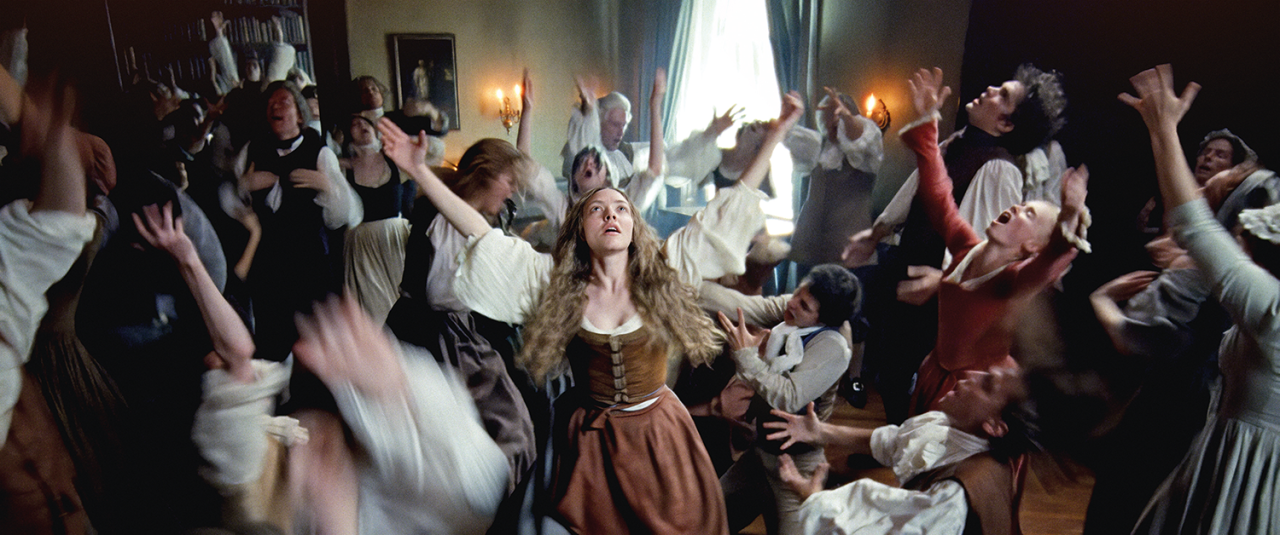


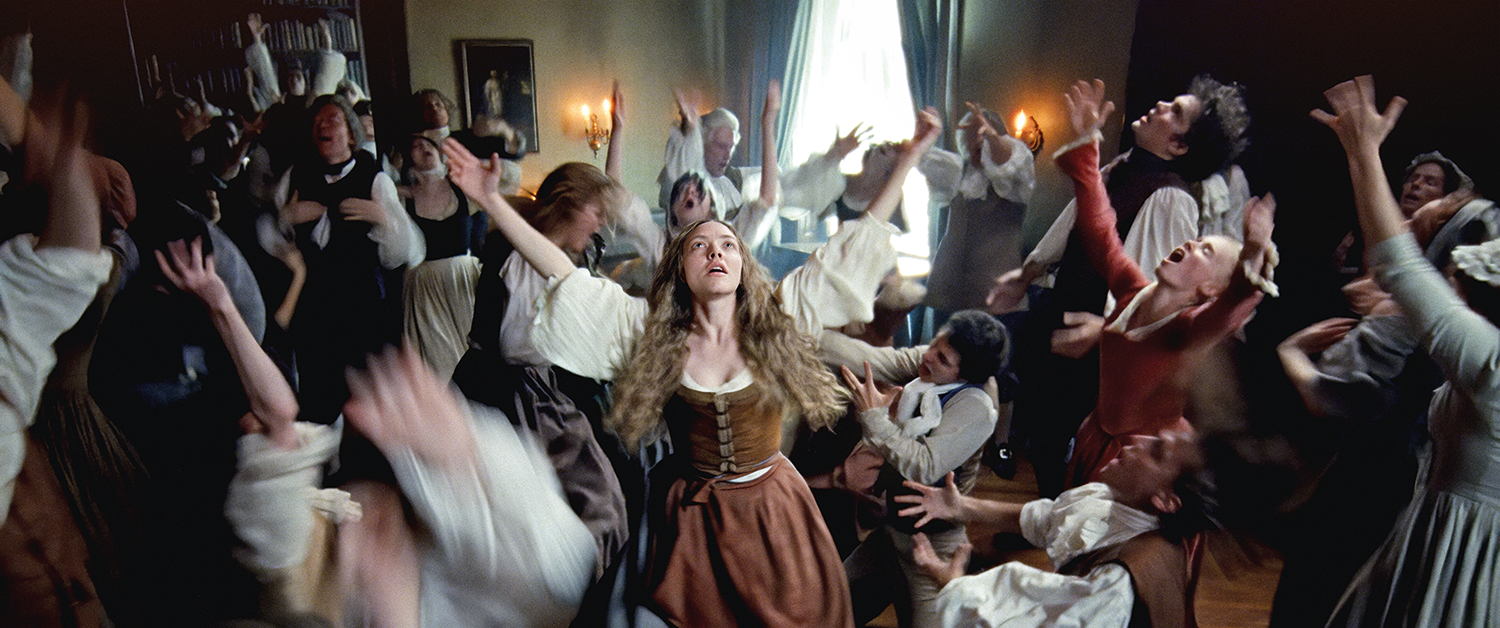
Ann Lee was a sharp-tongued woman from the back streets of 18th-century Manchester who joined a maverick Protestant sect that became known as the Shakers, or “Shaking Quakers.” In fact their shaking was the least of it: they howled, gurned and gibbered while flirting with the notion that God would return to Earth in the form of a woman. All sexual activity, even between man and wife, was forbidden. Ann then had a series of visions that, according to subsequent Shaker accounts, identified her as the “woman clothed with the sun” whose appearance in the Book of Revelation heralds the end of the world.
In 1774, “Mother Ann” and a small band of faithful emigrated to America. They settled near Albany, New York, where they were persecuted for their pacifism, their rowdiness, their surprising success in winning converts and the suggestion that, to quote a later source, “Christ did verily make his second appearance in Ann Lee.” Ann herself did not quite claim to be a female Messiah, reportedly preferring to think of herself as incarnating the “Christ-spirit,” but the distinction was lost on many of her followers.
Ann died in 1784, after which the Shakers developed along lines that should be familiar to any student of new religious movements. The original Shaker settlements, intended as temporary accommodation while the faithful awaited the Second Coming, morphed into well-tended villages. The dubiously sourced sayings of Mother Ann were tidied up, along with reports of her miracles. Shaker dancing became ritualistic.
As for the film’s grasp of religious ideas, my doubts set in within the first five minutes
Ex-members circulated horror stories of children ripped from their parents’ embrace by the cult. But public outrage died down as the Shakers became progressively more quaint – and, since they continued to preach celibacy, there was never any danger of them multiplying like Mormons. Also, they started making lovely furniture, combining elegance with coziness. Inevitably they died out – there was no getting round the ban on procreation – but that only enhanced the collectability of those gorgeous chairs.
Back in 2015, the conservative essayist and pastor C.R. Wiley wrote an article, “Stirred by Shakers: On the Elegant Errors of a Failed Sect.” It began: “When it comes to the opinion of the people who matter, the Shakers are hip. They had all the correct views: they practiced sustainable agriculture and gender equality, and they even reduced their carbon footprint to almost zero… Today, Shaker villages appear to be populated mostly by supporters of National Public Radio. Amish communities do not seem to have the same appeal to the NPR crowd.”
The problem with the Amish is that they have lots of children who preserve the sect’s strict theology. Also, they vote Republican. In contrast, since there are usually fewer than five surviving disciples of Mother Ann, it doesn’t matter what they do or think. NPR listeners are free to gush over the preserved Shaker village in Pittsfield, Massachusetts, whose functional simplicity Wiley describes as evidence of “the Shakers’ thoughtfulness, and, to give them credit, their loving concern for the comfort and happiness of their fellow Shakers.” Yet they also exuded a spiritual smugness that intensified as memories of the feisty and unhinged Ann Lee were first cleaned up and then faded.
Which brings us to The Testament of Ann Lee, a biopic-cum-musical directed by Mona Fastvold whose dizzying camerawork fails to disguise its utter conventionality. Here is the old NPR sentimentality about the Shakers amplified by AI special effects, and not subtle ones at that: the glimpses of Manchester and New York bear about as much resemblance to the historical originals as Brigadoon did to a real Scottish village. On the other hand, the choreography is ingenious, artfully synchronizing the Shakers’ contortions. The problem is that, spread over nearly two-and-a-half hours, the stylized jerking of limbs gets on your nerves. Daniel Blumberg’s score plays tastefully with Shaker tunes that were repetitious to begin with. Eventually it becomes tedious; there is nothing here to compare with Aaron Copland’s translucent scoring of “Simple Gifts” in Appalachian Spring.
As for the film’s grasp of religious ideas, my doubts set in within the first five minutes. As the child Ann passes Christ Church, the Manchester collegiate church that later became the city’s Anglican cathedral, she makes the sign of the cross. Now, it’s true that Lancashire was a center of recusancy, but Ann’s family were not Roman Catholics, none of whom would in any case have made this pious gesture outside a Protestant church that banned it from worship.
The impression of sloppiness is reinforced when, years later, Ann is dragged in front of the authorities for disrupting divine service in Christ Church. Asked to explain the sect’s preaching against sex, she tells the court that: “I live in celibacy and am wed to the Lord much like a nun of your own Church.” The hearing is a matter of historical record but the quote is preposterous. There were no nuns in the Church of England in 1773; the concept would have been as repugnant to Ann’s judges as it was to the Shakers. Such is the ignorance of the entertainment industry when confronted by Christian faith or practice; my favorite example is the spectacle of Father Brown, from the BBC show of the same name, wearing a maniple, a cloth worn over the priest’s forearm, dangling around his neck. In The Testament of Ann Lee, however, the carelessness extends beyond religious details. On the voyage to America, a Shaker tells Mother Ann about a “13-kilometer trek on foot from Brother Hocknell’s farm” – almost 20 years before kilometers were invented by the French Academy of Sciences.

The dialogue on board ship is pure Monty Python. Irate passenger fed up with Ann’s preaching: “Shut your bone box, besom!” Ann: “Adventitious sinners! These men know not what they give tongue to.” Passenger: “I know just what I say, missus. Shut it!” Many of the film’s absurdities reflect the baked-in political assumptions of the arts world. Early on we see the child Ann inspired by the preaching of the Methodist George Whitefield, who declares that God wants him “to arouse the workers to awareness of their rights.” But Whitefield – later a slave owner in America – never employed such socialist rhetoric. He preached spiritual, not social, equality. The same is true of the early Shakers, so far as we know. The sect may have been egalitarian, but its notion of radical equality was formed by the imminent apocalypse foretold in Scripture. During Ann Lee’s lifetime it did not pioneer social reforms.
The film shows Mother Ann and her disciples disembarking in New York and immediately shouting “Shame!” when they pass an auction of black slaves. This is fantasy. The Shakers did not oppose slavery until 1817, by which time many mainstream evangelical sects were also abolitionists. There is no record of Ann Lee mentioning the subject. Likewise we see a black woman living in a Shaker community during Ann’s lifetime. This is more alternative history. The Shakers were among the first American sects to welcome African-American converts, but not until after Mother Ann’s death.
The fundamental problem with The Testament of Ann Lee has been pointed out by the historian Richard Francis, whose splendid biography Ann The Word is one of the film’s main sources. He says it does a decent job of covering the main events of Ann’s ministry, though he doesn’t think the impassively beautiful Amanda Seyfried is a good fit for “a tough, indomitable, salty woman, liable to threaten to wring people’s noses or tell them off for warming their bums by the fire. She was magnetic and threatening both at once – people would hide in their houses when she and her followers came to town for fear of being converted against their will.”
What Francis really objects to is the way the film “compacts together two quite separate, in fact incompatible, periods of Shaker history, the raucous, miraculous (apparently) period of Ann Lee’s ministry, with its message that the appearance of a female Redeemer meant the end of times had come, and then, long after her death, when it was clear it hadn’t, a commitment to institution-building, restrained dancing, beautiful furniture making.”
It can’t be stressed enough that Ann Lee was illiterate and that her original followers distrusted the written word. All the sayings of Mother Ann, including her claim to be the woman clothed with the sun, were set down later. We know that her followers expected the end of the world in their lifetimes – and this, rather than Ann’s traumatic experiences of childbirth, was the main reason for the doctrine of celibacy, just as it was for many early Christians: children should not be born into a world on the verge of disappearance.
But the precise teachings of Ann, especially those relating to the coming apocalypse, are lost to us – and in this respect there is a close analogy with Jesus, who also wrote nothing down and whose disciples reassembled and sanitized his sayings decades after his death. (Unlike Ann, however, he may actually have made nice chairs during his apprenticeship as a carpenter.)
Seen in this light (and it’s an amusing irony), the doggedly progressive Testament of Ann Lee is reminiscent of nothing so much as an old Hollywood adaptation of the New Testament, milking a Christian audience by depicting the miracles of a handsome Aryan Jesus whose armpits have been shaved for the crucifixion scene. Not that there’s much money to be made milking Shakers: according to a recent report there are just three of them left. But fanciers of fine furniture will love it.
The Testament of Ann Lee is in cinemas from 27 February.


Comments