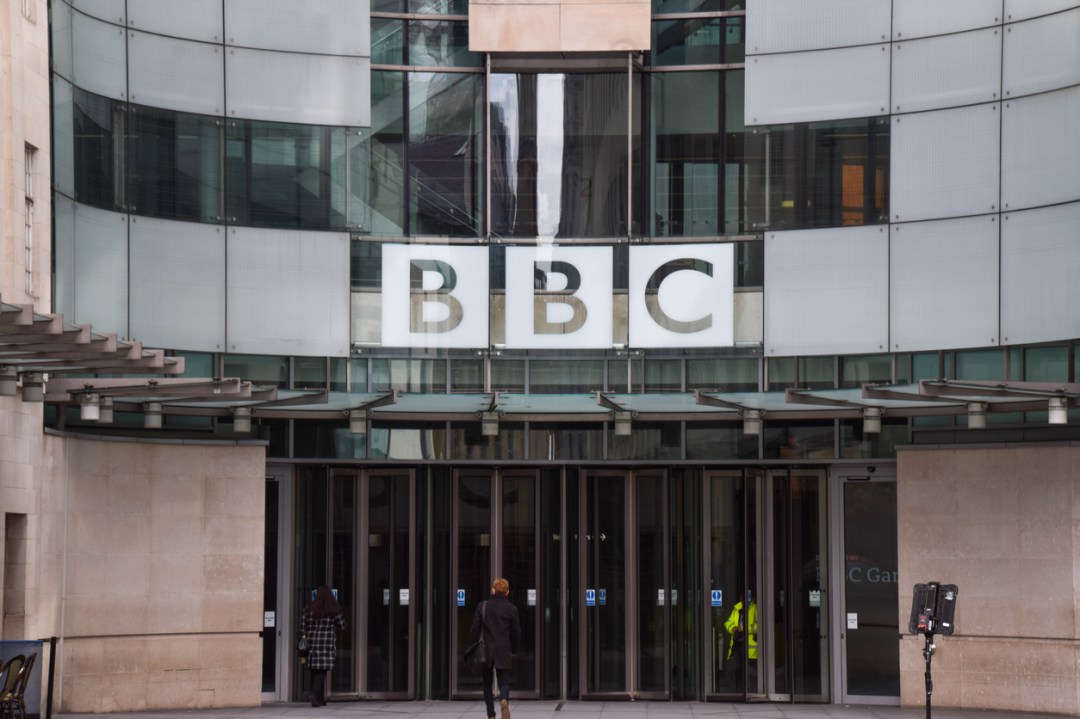
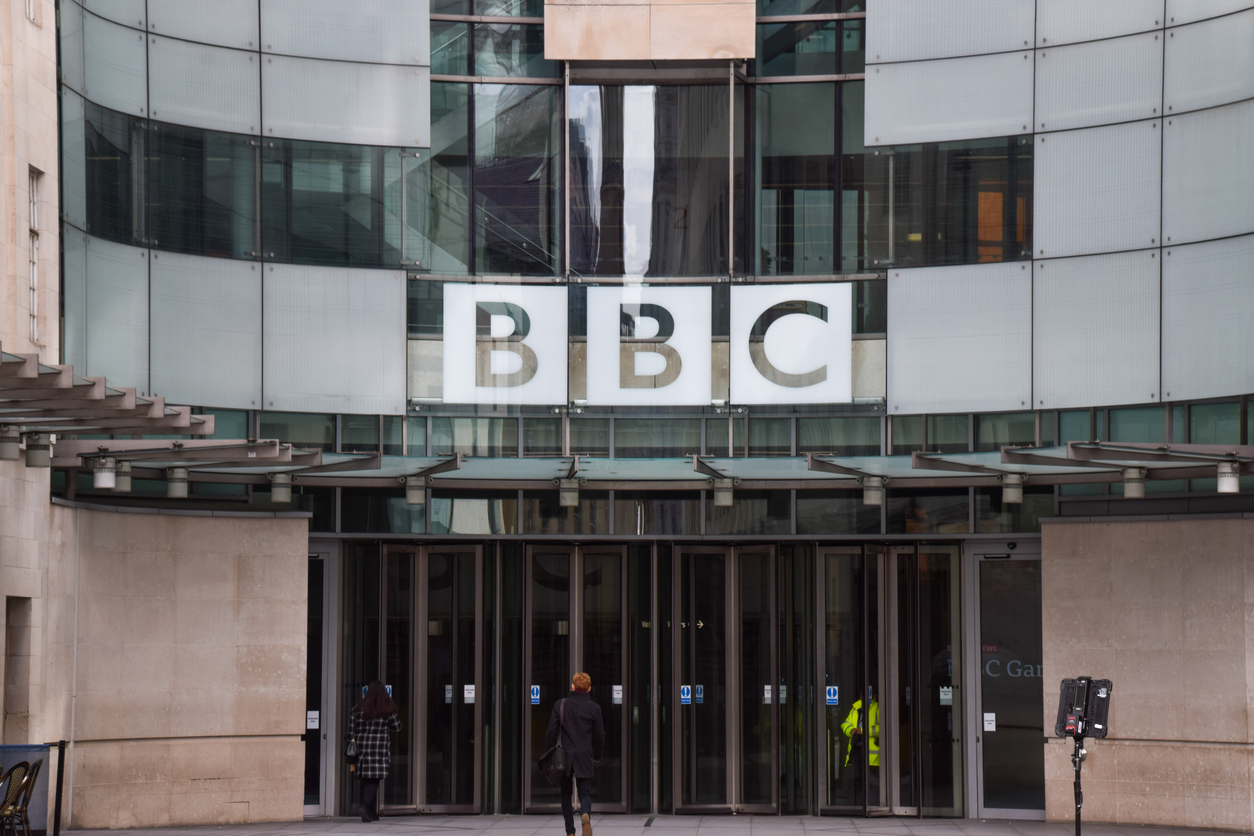
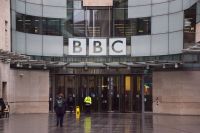
In a week when BBC bosses unveiled yet another round of swingeing cuts – this time of around 550 jobs in news, nations and TV and radio – you might be forgiven for assuming the Corporation would have more pressing issues on the mind than tackling Islamophobia.
Perhaps naively, I still believe that Britain should be a free country where people are entitled to dislike all and any religion if they so choose
But last Monday, the new Deputy Director-General, Rhodri Talfan Davies, informed staff, via the BBC internal website, that as part of the Corporation’s anti-discrimination training, they will have to do a compulsory ‘Islamophobia and anti-Muslim hostility’ online module.
Davies gave a generous six-month timeframe for this task to be completed – a period that many of my colleagues will be spending fretting about their futures, with further job losses coming down the pike as part of a savings plan designed to save £500 million.
One might consider such training to be advisable were the BBC blighted by anti-Muslim sentiment. Yet in more than two decades at the corporation, I can’t recall witnessing or hearing of a single instance of so-called Islamophobia, not once. I have, however, seen a Muslim colleague reading texts from the Quran at work. No one batted an eyelid.
Indeed, one of the BBC’s strengths is that the workplace is, on the whole, a friendly and tolerant environment, just so long as you are not daft enough to voice any wrong-think sentiments. (You know, saying something outrageously bigoted like men shouldn’t be allowed into women’s changing rooms just because they pop on a wig, lippy and fishnet tights.)
So why, at a time when hundreds of journalists are facing unemployment, is money being wasted on such initiatives?
The content of the training is telling. I have written before about how progressive groupthink and identity politics have skewed the BBC’s coverage, undermining impartiality and corroding public trust. In my view, the Islamophobia online course reflects this mindset.
After a preamble about how many Muslims there are in the world (around 1.9 billion) and the UK (about 3.9 million), the module states a definition of Islamophobia as: ‘an intense dislike or fear of Islam, and encompasses hostility or prejudice towards Muslims.’
It goes on to outline a ludicrous scenario for staff to test whether their Islamophobia radars are working. A fictitious character called ‘Sophie’ takes a Muslim colleague called ‘Ahmed’ to task over some violent incident overseas, berating him by saying, ‘What’s going on with your people? Why do they always do things like this?’
An exchange like this would never have happened at the BBC back when I first joined. The corporation was already painfully politically correct then; it’s woke as a joke now. So the likelihood of a ‘Sophie’ sounding off like a latter-day Bernard Manning in the newsroom in 2026 is practically zero.
Next come various rebuttals to prejudicial views on Islam. If you think Muslim women are oppressed, Muslims are linked to extremism and violence, or that Muslims don’t integrate, think again. They’re all just tropes or stereotypes.
Obviously, making crass and offensively negative generalisations about a whole group of people is wrong, but isn’t the BBC supposed to care about the more nuanced reality?
Millions of Muslim women are oppressed across the world as a direct result of the interpretation by their male counterparts of the religion they share. Just ask any woman in Afghanistan. Do it quietly though, because the Taliban has banned women from raising their voices.
And the oppression is not just apparent overseas. Here in the UK, Muslim women are regularly seen entirely shrouded in black from head to toe, with only their eyes visible. Are we seriously supposed to believe all of these women are choosing this stifling clothing freely, with no pressure whatsoever from their menfolk? And what about the low rate of employment among Muslim women compared to Muslim men? Again, is it entirely their choice to stay at home doing the dishes? The BBC training course doesn’t shed any light on this.
As for extremism and violence, it’s true that only a minority of Muslims have such links. But it’s not an insignificant number. Speaking in 2024, MI5’s Director General, Ken McCallum, said roughly 75 per cent of the agency’s counter-terrorism work was centred around Islamist extremism. And of the more than 40,000 people reportedly on terror watchlists, the majority are Islamist extremists. That’s about one in every 100 British Muslims. Even allowing for the possibility that this figure is well wide of the mark, half that number would still be alarming.
When it comes to integration, there are some areas of the UK that are almost unrecognisable compared with what they looked like half a century ago, and where you’re just as likely to hear Arabic or Urdu on the streets than English. Mosques are visible in every major town and city. Scores of Sharia councils operate across England and Wales. Can this really be described as integration?
The training module goes on to suggest a list of ways to boost ‘inclusion’ by, for instance, providing halal catering options. It never ceases to amaze me that in a country of professed animal lovers, halal slaughter is so rarely discussed. According to an answer to a parliamentary question in March 2025, of the more than one billion animals processed in English and Welsh slaughterhouses in 2024, nearly 21 per cent were slaughtered to produce halal meat, of which 2.6 per cent were slaughtered for halal meat without being stunned. That’s an estimated 27 million animals bleeding to death without stunning. And yet the purported cruelty of fox hunting is somehow the obsession of the ‘compassionate’ left, and has drawn far more coverage by the BBC.
BBC managers are also urged to consider offering private spaces for Muslim staff to pray, and to demonstrate flexibility around Ramadan for colleagues who are fasting. There is even a suggestion to check whether Muslim staff are comfortable giving handshakes.
The module concludes with an exhortation to help build ‘a BBC where Muslim identity is not only respected but celebrated.’ I find this actually infuriating. Why should I ‘celebrate’ Muslim identity? Or Jewish identity, for that matter? Or Christian identity?
Perhaps naively, I still believe that Britain should be a free country where people are entitled to dislike all and any religion if they so choose. Atheists like myself should be at liberty to state openly our scorn of the magical thinking shared by God botherers the world over. Sure, we shouldn’t be deliberately unpleasant but neither should we be told by anyone, let alone our employer, that we must celebrate beliefs we see as archaic and regressive.
You might disagree with me and wish to tell me so. I can promise that if you did, even if you lambasted my opinions in the strongest terms, I wouldn’t issue a fatwa against you. Neither would I band together with an aggressively intolerant mob and drive you into hiding. This was the fate of a teacher from Batley who gave an RE lesson in 2021 that some Muslim troublemakers took exception to and who is now living anonymously in the shadows with his poor family – a scandal that shames a democratic country that is supposed to be underpinned by free speech.
A BBC spokesperson said: ‘Any form of discrimination is unacceptable at the BBC, and this training is designed to help staff understand how Islamophobia and anti-Muslim hostility can show up in the workplace, and how to address it. The examples in the training are not exhaustive, but are used as a framework for understanding.’
If I had any say in the matter, the BBC would tell its staff – all of them, whatever their creed or colour – that the newsroom is a place for work, not worship. Instead, a cadre of philistine executives who have overseen outrageous lapses in BBC impartiality are axing venerable programmes like Radio 4’s The World Tonight whilst continuing to squander licence fee payers’ money on progressive propaganda. I may not be religious, but I know a sin when I see one.
Comments