

I was born into a sternly Presbyterian culture. Politically, I’m more Orange than Donald Trump’s skin tone. But today I am on my knees giving thanks to the Pope.
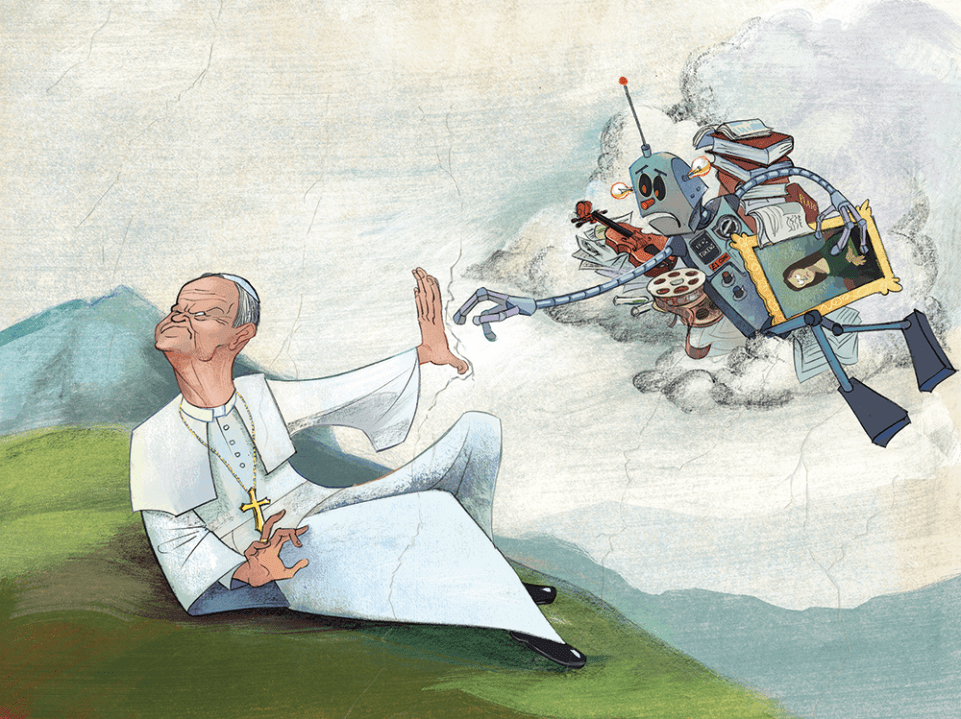
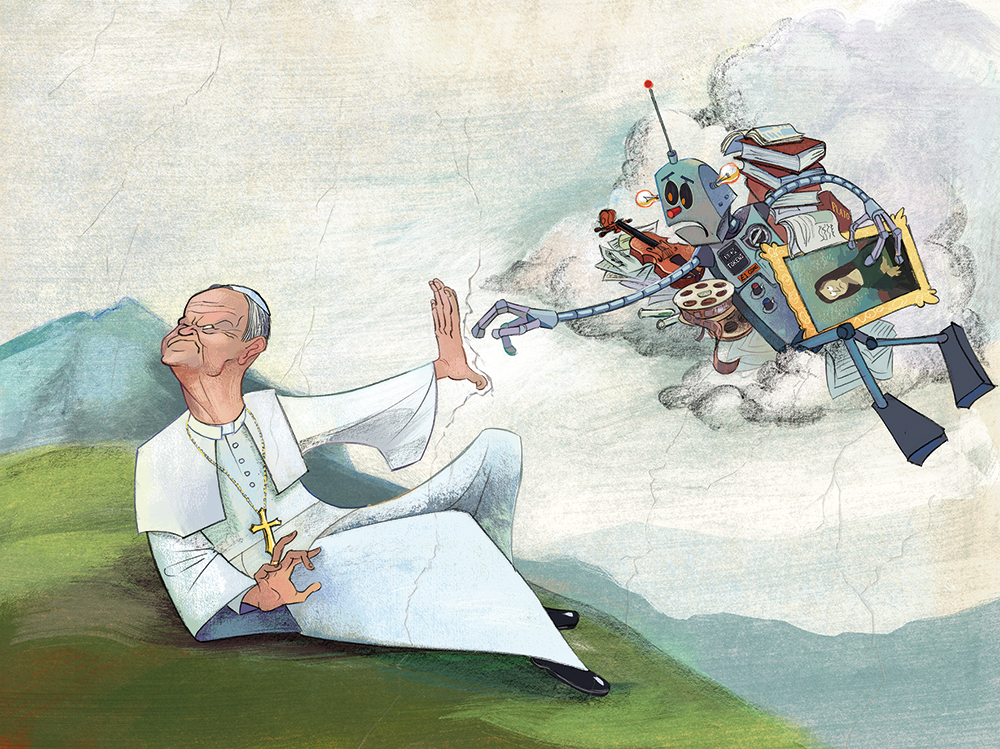
He has produced the most powerful political document of the year, taking on the greatest challenge of our times. His first encyclical, Magnifica Humanitas, deals with the changes which will be wrought to all our lives by artificial intelligence in the months and years ahead. AI will transform our economies and societies massively and irrevocably; it will change what it means to be human; it may even mark the end of humanity itself. If it takes the Pope to alert us to this revolution then perhaps the Reformation wasn’t such a good idea after all.
The document is deliberately cast as a successor to Leo XIII’s landmark encyclical, Rerum Novarum, published 135 years ago, which outlined a distinctive approach – Catholic Social Thought – to the challenges of industrialisation and the contending ideologies of socialism and free market capitalism.
Decisions about where this technology is going and how it might be used are concentrated in perilously few hands
AI will bring changes to all our lives every bit as transformative as the Industrial Revolution two centuries ago. It is not like any other technological breakthrough – because it is a technology that has the capacity to improve itself, to grow, learn, master and control. The speed at which AI is out-pacing human ingenuity is giddy. Many of us are familiar with Moore’s Law – the observed ability of computer chips to double their processing capacity every two years. Until recently, AI was able to double its ability to complete any human task in a set number of man hours every seven months. Now the time taken for that same – exponential – leap in power is just three months.
The tasks which AI can accomplish are not just rapid mathematical reasoning, or super-powered Google searches or instantaneous animations. AI can write computer code faster and more fluently than even the most brilliant engineers. The recently developed Mythos model pioneered by Anthropic can hack any online platform – from national defence infrastructure to our entire banking system – with a speed, ferocity and completeness that only a handful of humans can comprehend, never mind match.
But AI is not simply about speed of light advances on flickering screens. It can have a devastating impact on the physical world. AI-enabled breakthroughs – like protein folding and other life science discoveries – have the potential not just to banish disease but also, in the hands of a halfway competent biology graduate, to create lethal pathogens. AI has already transformed warfare. Ukraine’s drone defences are enabled by the processing of data which can overcome Russia’s massive superiority in manpower. America and Israel’s AI-driven precision targeting can vaporise named individuals at a commander’s whim. Indeed, one of the Pope’s arguments is that the race to establish military superiority over any potential enemy will mean kill-chains having to operate at such speed that the time and space for human judgment will be eliminated. It will be annihilation by algorithm. The debate over what counts as a just war will have been rendered obsolete by the kill or be killed imperatives of the just-in-time war.
Of course, the potential for AI to transform mankind’s earthbound condition for good exists alongside its potential for devastation. In his essay ‘Machines of Loving Grace’, the Anthropic CEO Dario Amodei outlines how the technology could curb disease, prolong lives, transform productivity, empower the poor, make public services unprecedentedly efficient and responsive, and even strengthen our democratic systems. Some of the hopes he invests in the technology may be naive, but its transformative power is not in doubt. Which is why it is so depressing that while ideas of huge consequence are being considered thoughtfully by engineers and priests, our political leaders – the current custodians of our democratic systems – have so little to say about a technology which affects us all.
Those who have to worry about deploying their own money, rather than the public’s, have certainly noticed. The valuation attached to frontier AI companies, and the chipmakers like Nvidia on whose computing power they depend, is only growing. Investors recognise that these technologies are remaking the world of work. Both Anthropic and its rival OpenAI, alongside Elon Musk’s SpaceX, have initial public offerings of their shares coming in the next few months. Each on its own would be the biggest magnet of new investment in history; together they mark a hinge point in capitalism.

Investors know that companies which are fastest to adopt and deploy AI tools effectively will secure huge competitive advantages: the ability to respond to consumers, upgrade products and improve goods and services at celestial speed. It is a forward revolution with, as yet, no means of restraint. The consequences have not so far been properly grasped or articulated by most of our serving politicians, and certainly not in the UK.
That is why Tony Blair has been right to upbraid the Labour party for the stunning triviality of its response to our times.
Only last week Rachel Reeves made an emergency fiscal statement to the house, responding to the consequences of war in the Middle East. The most significant headline measure was a VAT cut on fairs, zoos and theme parks. A titanic battle has been raging between a theocratic state sponsoring terror networks bent on acquiring nuclear capability and the world’s pre-eminent military and economic power. That war has choked off the world’s oil supplies, undermined the principle of global freedom of navigation and undermined food security. And our finance minister’s response is to shave a few quid off a day out at Alton Towers.
At least when Ed Davey careered down multiple waterslides during the election he acknowledged it was a gimmick. Reeves appears to think it’s up there with the Marshall Plan as a wartime reconstruction programme. We may be picnicking on the edge of a volcano, but the meal deal itself has never been better value.
If the Chancellor’s response to a war raging now is so pettily inconsequential, how on earth do we think she will prepare us for the shocks about to hit us which are even more profound and long-lasting?
AI’s ability to perform almost all basic clerical research and analytical tasks at a speed which no human can match and with a level of sophistication few could outdo is likely to render most entry-level professional jobs redundant. The basic work of accountants, lawyers, management consultants and bankers could be done better, faster and much, much cheaper by machines – all with the barest of human supervision. That change is not a generation away. It is coming within months and years and will hit a generation already alienated from capitalism and democracy by the weight of student loans, the cost of housing and the comfort in which elderly elites now live.
AI feasts on past human achievements – the knowledge and creativity set down in all our texts, compositions and philosophy – and extracts the value it wants from the labour of ages. Those who value human creativity understandably seek to protect their intellectual property from this modern-day technological version of the enclosure system. But, just as in the past, the productivity gains from surrendering old forms of ownership to new will prove seductive to those nations looking for growth. New battles loom between the advocates of an artisan economy – from Elton John down to humble magazine writers – who wish to safeguard their work, and those with capital and connections who are invested in large language models that promise to metabolise past creations into endless new wonders.
These questions – about the very nature of economic activity in the future – sit alongside the challenges and opportunities of re-making not just plant and animal DNA but also redesigning humankind in the embryo and beyond, as well as the wisdom or other-wise of making health and other services more efficient at the cost of privacy, dignity and other human limits.
Decisions at the moment about where this technology is going and how it might be deployed are concentrated, alongside awesome financial power, in perilously few hands. Those who steer the major AI labs have a power approaching that of the Oppenheimers and Fermis of the past, but they are operating not as agents of democracies but ambitious entrepreneurs locked in a race for personal mastery. It is fortunate that the best of them – Anthropic’s Dario Amodei and DeepMind’s Demis Hassabis – are deeply thoughtful, morally serious people. But we cannot depend on the loving grace of a few gifted engineers to shape all our futures.
In the UK, precious few politicians have even begun to enter this debate beyond uttering banalities
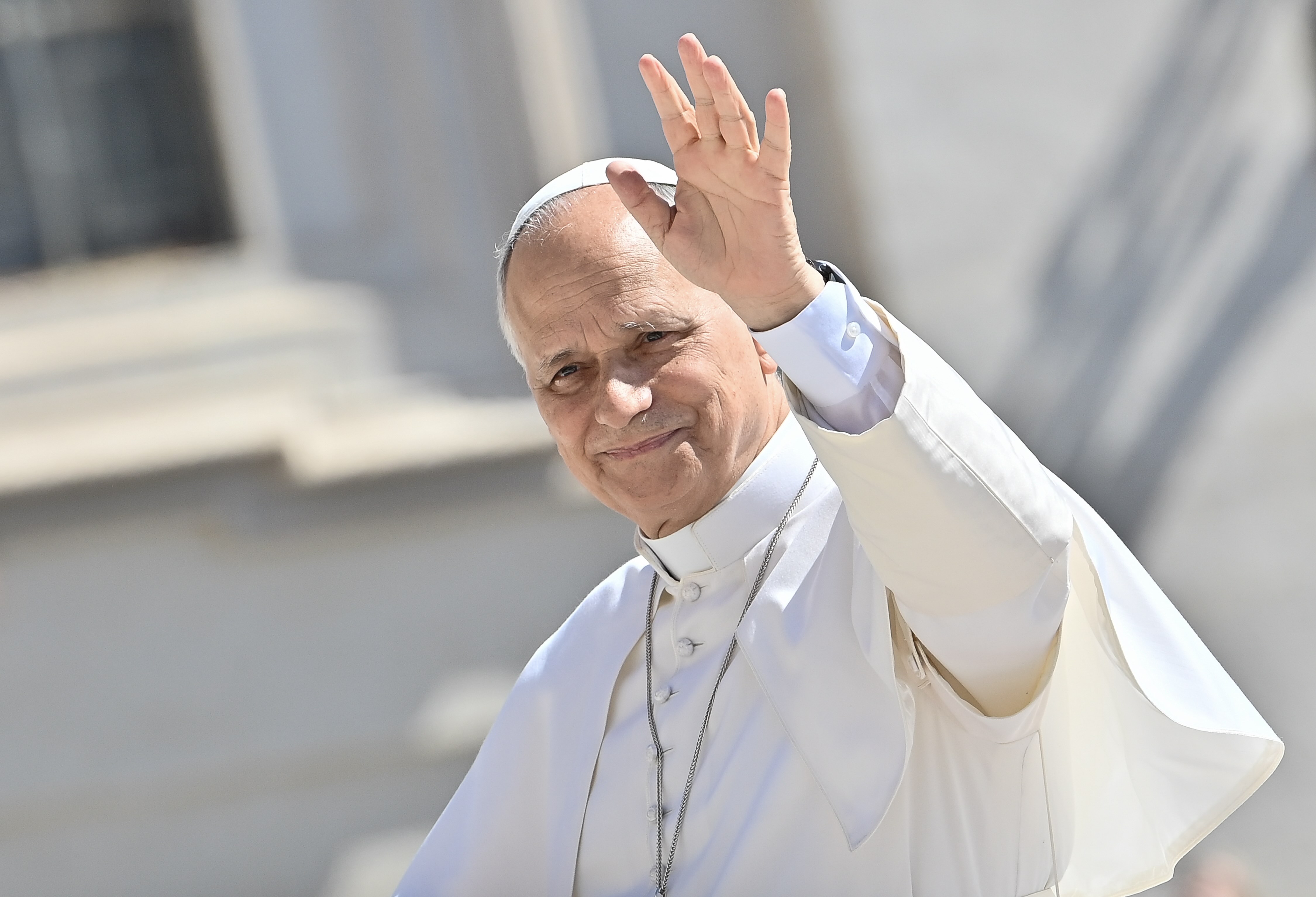
As Pope Leo himself put it: ‘AI tends to amplify the power of those who already possess economic resources, expertise and access to data. In light of the common good and the universal destination of goods, this raises serious concerns, since small but highly influential groups can shape information and consumption patterns, influence democratic processes and steer economic dynamics to their own advantage, undermining social justice and solidarity among peoples.’
In this debate we need politicians who are capable, in Gramsci’s terms, of pessimism of the intellect and optimism of the will. Who can grasp the scale of what may be upon us, and are also capable of building the alliances, structures and public support necessary to harness this technology for good. In the UK, precious few politicians have even begun to enter this debate beyond uttering banalities and bromides. Rishi Sunak is one, and his establishment of the AI Safety (now Security) Institute during his time in office was genuinely farsighted. He grasped the need to align this technology with human values if its benefits were to be realised. In the current government, Liz Kendall and Kanishka Narayan are alert to the issues. But the figure in Labour who had thought most deeply about the consequences of AI for democracy (Morgan McSweeney) was cast out of government for the sin of being too ‘factional’ – by men and women who know no other world than that of factions and in-fighting.
This moment in our national life is, above all, a time for seriousness. Yet our government fiddles with bus fares and funfair prices. And Reform, the opposition party which currently leads in the polls, offers ludicrously unworkable tax cuts – and social media spats between its leaders – for our entertainment. This is candy-floss economics and coconut-shy politics while the world is transformed at a pace and in a manner unseen for centuries.
On behalf of our political class, as a repentant member of that congregation, let me recall the words not of Pope Leo but another great churchman: we have left undone those things which we ought to have done, and we have done those things which we ought not have done, and there is no health in us.
Michael Gove joins Damian Thompson, on the latest Holy Smoke podcast, to discuss the Pope’s AI intervention:


Comments