On 1 October, Michael Bogle was released from prison, one of 700 prisoners set free that day under Andy Burnham’s early release scheme. Bogle, a serial shoplifter in prison for breaching a suspended sentence for that very crime, proceeded straight to north-west London to engage in some shoplifting.
Bogle’s latest crime spree – a weekend of thefts from two supermarkets – is the subject of a leaked letter from a Metropolitan Police borough commander to his local MPs, councillors and other dignitaries. The contents are remarkable.
In the letter, Detective Chief Superintendent Luke Williams announces that a team of officers were forced to spend the entire day looking for Bogle to bring him back into custody. At the same time, the police had to gather CCTV and witness statements to build a case against the thief. DCS Williams points out that 27 ‘officer hours’ were needed to do all this, costing the hardly insignificant sum of £1,887. This doesn’t include the hidden cost of these officers being unable to fight crime elsewhere across the borough.
It is left to the police to pick up the pieces of a broken system
But what is most striking about the letter is its tone. While DCS Williams acknowledges the prison capacity crisis, he states that the police will bear the brunt of the responsibility for overseeing thousands of released convicts. The letter notes that:
It is also disheartening for officers to repeatedly arrest the same offenders, only to see them released back into the community and reoffending again.
It’s a politely phrased letter, but the police are clearly telling politicians that Andy Burnham’s early release scheme is a disaster.
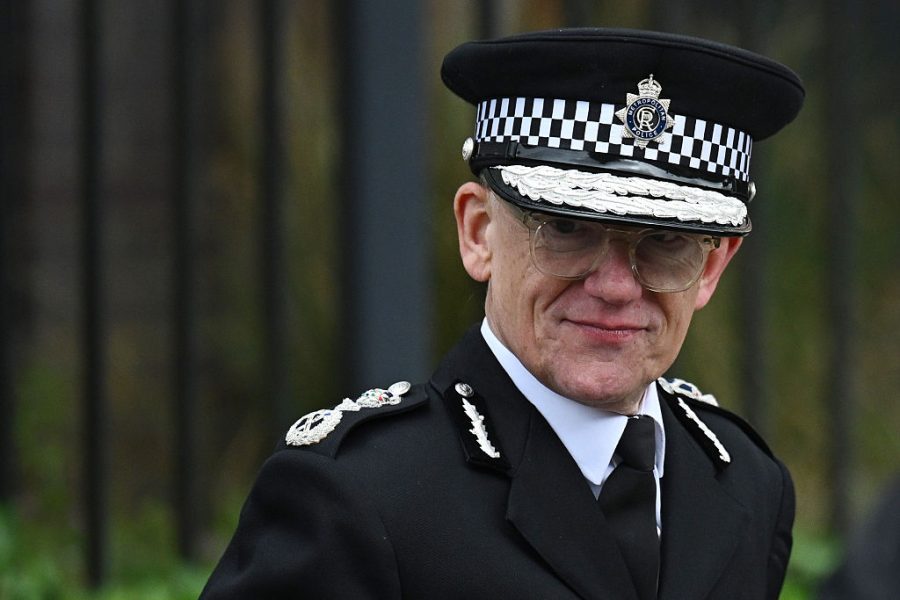
Signs of dissent have also been fomenting further up the policing ladder. Last week, Sir Mark Rowley, the Met Police Commissioner, took to the airwaves to admit that the justice system has become a ‘revolving door’ for offenders and that he was ‘deeply worried’ about early release.

Even more explosively, the Met Commissioner confessed that over 95 per cent of those arrested for breaching conditions around their electronic tags are being bailed back into the community under the same licence conditions, effectively resulting in ‘zero sanction’ for such criminals. Remember this the next time a politician suggests that suspended sentences have any kind of stopping power.
Sir Mark was clearly sailing too close to the wind and has attempted to make good with political superiors with some progressive culture-warring yesterday about recruiting police officers of colour. But this desperate gambit aside, the police are clearly deeply unhappy about the early release scheme and want to make their feelings known.
It isn’t hard to see why. Over the weekend, at least five more people were rearrested by Greater Manchester Police after leaving prison. On 1 October – release day itself – a man was arrested outside HMP Wandsworth, not long after being let out.
All of this points to two things. The first is that the government must build more prisons to prevent the need for further releases. The second is that the supposed infrastructure meant to accommodate the early release scheme doesn’t really exist.
Police and prisons make the headlines regularly, but the equally important probation system is frequently overlooked. The idea that Britain has a functioning probation service is something of a myth. Tagging, outsourced to third-party contractors, is sporadic at best and doesn’t occur when a convict is released at the prison gate, but some time afterwards, allowing them to escape into the ether. If you can believe it, breaches are reported by email and only picked up during standard office hours, which must assume that reoffenders simply don’t commit crimes at night or at the weekend. The remaining parts of the system that do function are rapidly heading towards strike action, with service workers being balloted from mid-October.
It is therefore left to the police to pick up the pieces of a broken system, and they unfairly end up at the receiving end of the public’s ire as the most visible part of the justice system. Little surprise, then, that they are desperately trying to signal their frustrations to our political class.
The Prime Minister must act. Early release is not a one-time thing, as is sometimes believed to be the case because the press usually only report on the first day of a new tranche of convicts leaving prisons. Under Starmer, over 50,000 prisoners were let out early. One of these men, Robert Sabat, tracked down and murdered his ex-partner, a mother of two, less than a fortnight later.
The police are, of course, crown servants and therefore very limited in their ability to voice public criticism of government policy. But if Burnham is set on releasing more dangerous criminals onto Britain’s streets, police concerns will only grow louder. He should listen before it comes to that.






Comments