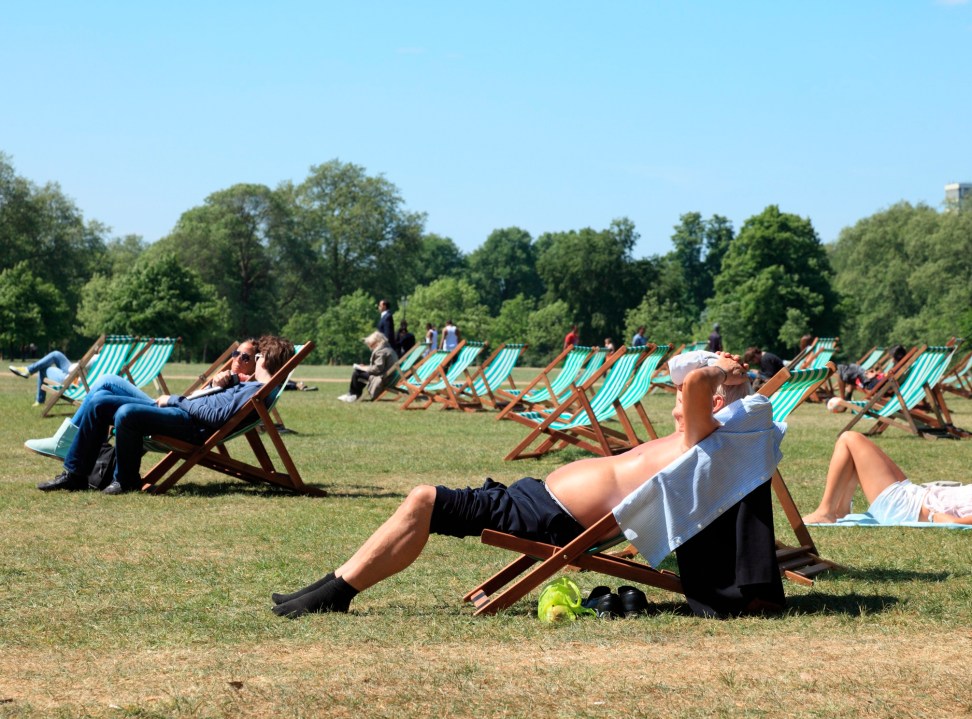
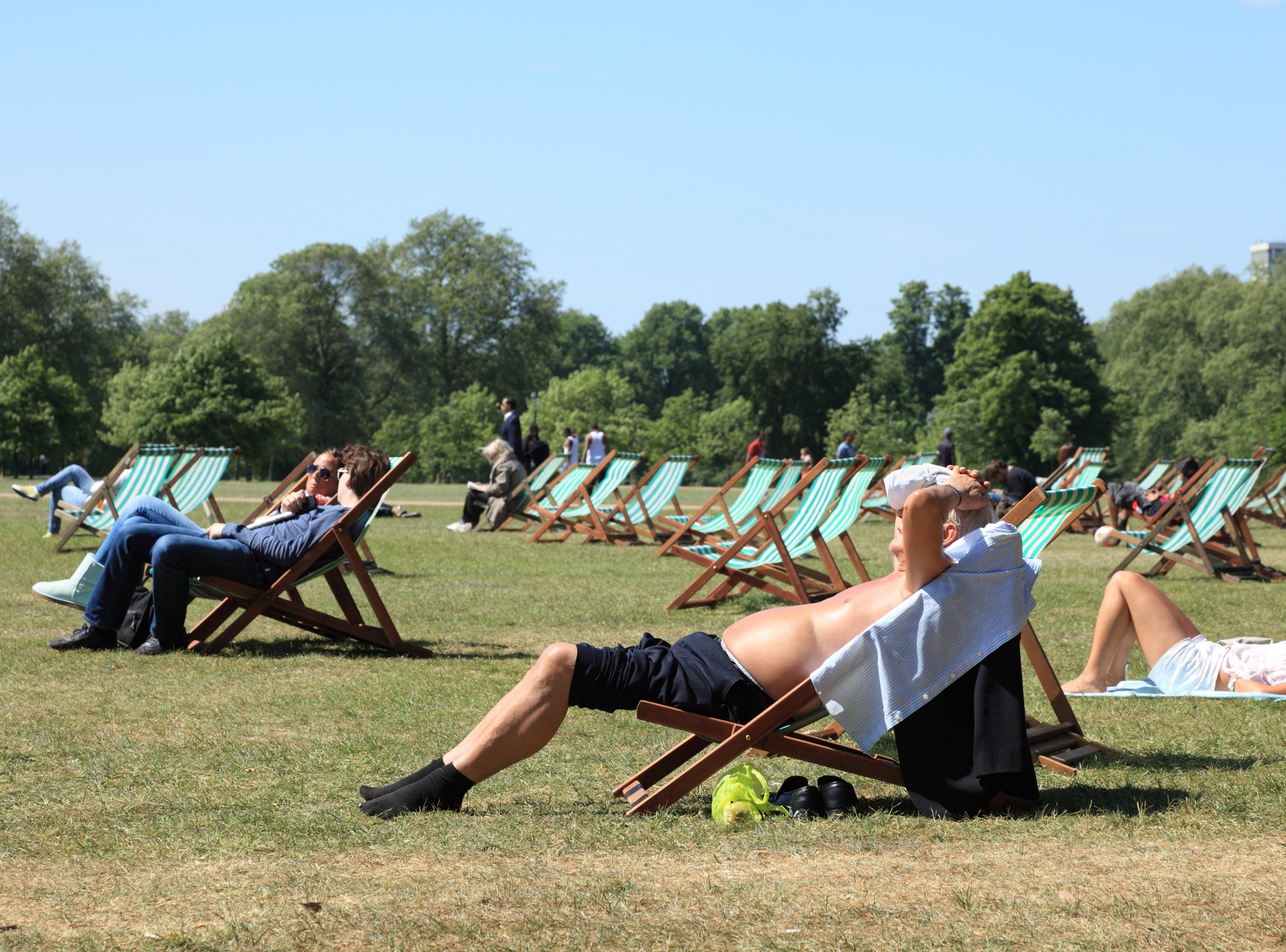
‘Mad dogs and Englishmen go out in the midday sun.’ The phrase’s origin is somewhat disputed, but it was made famous by Noël Coward’s song of the same name, supposedly written on the drive between Hanoi and Saigon in the early 1930s. Coward was English himself, and the song is a humorous act of national self-flagellation; an explicit dig at a peculiarity deeply embedded in the British culture: our collective inability to behave sensibly in the sun.

Spring, by almost anybody’s measure, is upon us. May provides two Bank Holidays and the first reliable warmth of the year. Like clockwork, the country takes leave of its senses. Sun Awareness Week will run from 11 to 17 May, an annual campaign by the British Association of Dermatologists, to remind us that ultraviolet radiation does not, in fact, care whether you are on a beach in Lanzarote or a garden in Crawley. It will get you.
The British relationship with the sun is certainly an interesting paradox. We are, as a culture, comprehensively obsessed with not ageing. The skincare industry in this country is worth billions. Entire magazine supplements are devoted to the apparently inexhaustible subject of how to evade the visible ravages of the passing of time. And yet, at the first suggestion of a UV index above three, a significant proportion of the population will arrange themselves horizontally on whatever patch of grass is available and proceed to cook themselves.
Interestingly, it is often the same people who happily part with £40 for a serum that promises to soften fine lines, who then spend the better part of an afternoon, prone, in direct sunlight. Dermatologists are quite clear that this is a sure-fire way to accelerate the very ageing the serum is meant to delay, with sun damage responsible for up to 90 per cent of visible changes to the skin. This is the dermatological equivalent of knocking back a multivitamin with a bottle of Claret.
Ageing is, of course, only the warm-up act for the far more serious by-product of excess sun exposure: cancer. A YouGov survey carried out on behalf of the British Association of Dermatologists revealed that 40 per cent of people in Great Britain reported at least one case of sunburn in 2022. On the surface, this statistic may seem slightly trivial, but it is made harrowing by the following fact. The risk of melanoma — widely considered to be the nastiest form of skin cancer, due to its propensity to spread — doubles after just five instances of sunburn over the lifespan. These numbers should, in any sane country, prompt a national rethink. Instead, they are drowned out, annually, by the scraping of garden furniture being hauled across patios.
Sunbathing is the dermatological equivalent of knocking back a multivitamin with a bottle of Claret
When Monday morning arrives, the visual evidence is scattered across the country. The man on the 7:42 am to Paddington, whose shoulders glow in a furious magenta through his linen shirt. The carcasses of disposable barbecues littered across Burgess Park. A single flip-flop wedged between the bars of a storm drain on Camberwell Road, eternally separated from its counterpart. An all too British scene.
The logic behind our excessive time in the sun collapses under the briefest examination. The same YouGov data from 2022 revealed further details that a third of British adults deliberately set out to acquire a tan, with 60 per cent under the impression that it made them look healthy, and 51 per cent doing so because they thought it made them more attractive. I do find it upsetting that we are inflicting demonstrable harm on ourselves in the pursuit of the appearance of good health.
Entirely separate from the dangers I have mentioned, there are other problems with sunbathing. Most pressingly, sunbathing is my idea of a living hell. In my opinion, it is the most aggressively boring activity on offer to sentient beings. It consists of nothing more than lying still and waiting for the development of a slightly altered skin tone that will be gone inside a fortnight. I have sat through some fairly testing experiences in my time — lengthy delays at regional airports, Test cricket matches, and every musical theatre production I have ever witnessed — but none match the painful tedium of lying in the sweltering heat.
This is not an appeal to spend the summer indoors. There is far too much pleasure to be gained from sitting outside in warm weather with a cold drink and good company. It is an appeal to spend time outdoors sensibly. The problem is not the sun. The problem is the peculiarly British compulsion, as if the privilege might be rescinded at any moment, to resort to total-body immersion in the sun whenever the opportunity arises. Noël Coward recognised the absurdity of sunbathing in 1931, and dermatologists have been pleading with us to stop, with increasing despair, for decades. We remain, in this as in so many things, unteachable.



Comments