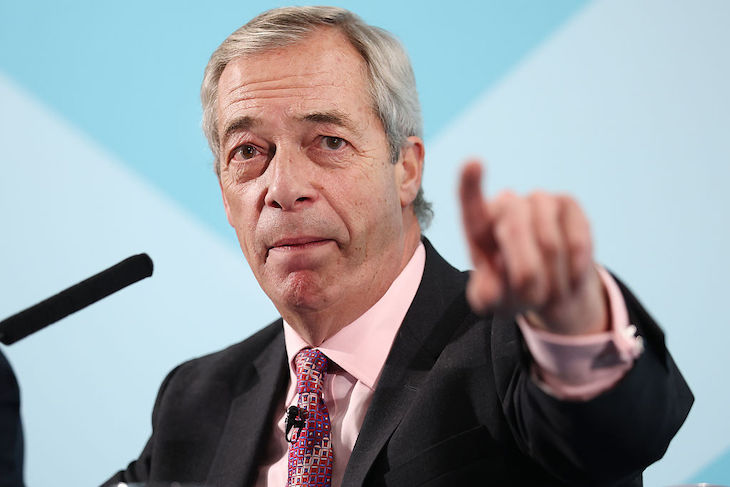
Nigel Farage didn’t need the help of corporate Britain to build Ukip, the Brexit Party and Reform UK into national forces. He didn’t need open letters from big business to help win the EU referendum. And he didn’t need big brands to take GB News off their advertising blacklists for his show to succeed. This time, though – as Reform’s leader strives to become Britain’s next prime minister – things are different: Farage needs businesses, and businesses know that they soon might need Farage.
As ties grow stronger with the corporate world, Reform must tread carefully to avoid losing the attribute that draws many of its supporters
Some have already needed Reform. The party’s MPs can table amendments, force ministers to respond and, at times, act as the opposition. Take April last year, when Farage put on a hard hat, called for steel nationalisation and posed for photos in Scunthorpe. Four days later, Parliament acted.
The polls and betting markets make Reform the favourites to win the next election. As a result, every public affairs officer at every trade association and FTSE 250 company is now awake to what once seemed impossible: that Nigel Farage could be PM. Businesses have already begun to consider, and quietly prepare for, what that could mean for their bottom line.
The effect on the PR and public affairs industry has been dramatic. Just two years ago, everyone was scrambling to strengthen relations with Labour. Companies rushed to bolster their environmental credentials, or emphasise workers’ rights and ‘inclusivity’, with varying degrees of sincerity. Starmer’s election win shows why they were right to plan ahead. And his tanking poll ratings – and Reform’s ten-point lead – shows why these same companies are preparing for change.

But Reform, a new party that many corporate types will be used to hearing described as toxic, remains an enigma to many. Reform’s business engagement operation has been working overtime to change that, keeping an open door to almost any company, including those that were previously hostile. Behind closed doors, Reform are not the attack dogs they often sound like on the airwaves.
The work began in earnest after last May’s local elections, when Reform gained real power for the first time. The day after the results, then chairman Zia Yusuf and his head of office, Matt MacKinnon, decided the party needed a dedicated business engagement operation, separate from press, fundraising and policy (something the Brexit Party never had when I worked there). MacKinnon set it up and by the autumn it had been bolstered by John Gill from UK Finance.
Meetings quickly but quietly multiplied, extending well beyond the crypto firms and right-leaning moguls that detractors tend to fixate on. At the party’s conference in September, household names like Heathrow, JCB and TikTok were in attendance. The most floor space, however, was held by FirstGroup plc, which owns First Bus and Great Western Railway. Corey Edwards, its head of political engagement and a former Tory special adviser, told me they ‘got in there early to help shape their transport policy,’ adding that ‘it would be negligent if we didn’t really,’ given Reform’s footprint in local government and the role councils play in transport infrastructure.
While FirstGroup brought five double-decker buses to Birmingham, other major brands were there more covertly, pacing the conference centre, discreetly introducing themselves and weighing up whether to set up a stall next year.
By November, Reform was holding a series of press conferences on economic policy in the City, attended by every major public affairs agency, as well as CEOs and in-house teams. These weren’t accidental audiences. Reform deliberately invited strategists, communications and policy specialists keen to demonstrate that they understood the rising force in British politics.
The names of some of those preparing for the possibility of Farage winning power are surprising
To round off the year, Reform’s deputy leader Richard Tice toured research, policy and lobbying firms for a series of breakfast events with business leaders. The ones I attended were unusually open exchanges. Very few questions went unanswered. I also presented on Reform to trade associations and membership bodies in the higher education, technology and property sectors. Almost no one was dismissive or overtly political. People were there to understand what a Reform government might mean for Britain – and for their bottom line.
The names of some of those preparing for the possibility of Farage winning power are surprising. The chair of Nationwide attended one such breakfast with Tice last year. Cambridge’s Vice-Chancellor, Professor Deborah Prentice, told colleagues last year that Russell Group universities were ‘meeting with key people from Reform’.
Both examples are striking. Reform has been ferociously critical of elements of the banking sector and its regulators. Only months earlier, Farage had been locked in open warfare with NatWest Group after it ‘debanked’ him, with internal emails describing him as a ‘sketchy crackpot’ and a dossier warning of the ‘significant reputational risks of being associated with him’. Six months is a long time in politics.
Closer ties between the business world and Reform pose a risk to the party though. Farage has always revelled in his outsider status, but when you’re the one of the favourites to become PM this is hard to sustain. But as ties grow stronger with the corporate world, Reform must tread carefully to avoid losing the attribute that draws many of its supporters: the fact that it isn’t like the other parties.
In the past, Farage’s freedom to speak without the approval of the corporate world was one of his greatest strengths. But if Reform is to govern Britain successfully, it can’t afford to shun big businesses. Farage’s party is planning sweeping regulatory and constitutional change, while slashing the size of the civil service. Miss just one critical law, supply chain, or piece of infrastructure, and the stability and prosperity they promise could unravel fast.
Liz Truss admits she didn’t understand the pressure gilt markets were placing on pension funds. Rachel Reeves has just acknowledged she hadn’t grasped the impact business rates reform would have on pubs. Reform’s plans are more radical than either. Whether Reform’s business charm offensive succeeds matters to more than Nigel Farage. It matters to Britain.


Comments