The Red Queen warned Alice, ‘Now, here, you see, it takes all the running you can do, to keep in the same place.’ Her quip captures a cruel reality: things decay all by themselves when left unattended; keeping up – let alone making progress – requires sustained effort. And so it goes with Britain’s decaying nuclear power programme.
Britain’s early lead in nuclear power slipped away as the 20th century pushed on
Commercial nuclear power is a British invention. When Calder Hall began sending electrons into Cumberland’s grid in 1956, it became the world’s first commercial nuclear power station. In the dozen years that followed, Britain generated more nuclear power than the rest of the planet combined.
But that early lead slipped away as the 20th century pushed on. We haven’t connected a reactor to the grid since Sizewell B went online in 1995. The late-90s marked the apex of Britain’s nuclear power capacity: 12.3 gigawatts in total, supplying 27 per cent of the country’s electricity. Since then, nuclear dwindled steadily as ageing reactors reached the end of their lives. Meanwhile, we made ourselves more dependent on geopolitics and the weather by burning more imported gas and building more intermittent (read ‘unreliable’) renewables.
But despair not. Labour – like the Tories before them – decrees we’re in a ‘nuclear renaissance’. Energy Secretary Ed Miliband reassures us we have entered Britain’s new ‘golden age of nuclear’, no less. His proclamations seek to renew our faith that, at last, a nuclear-powered future is nigh.
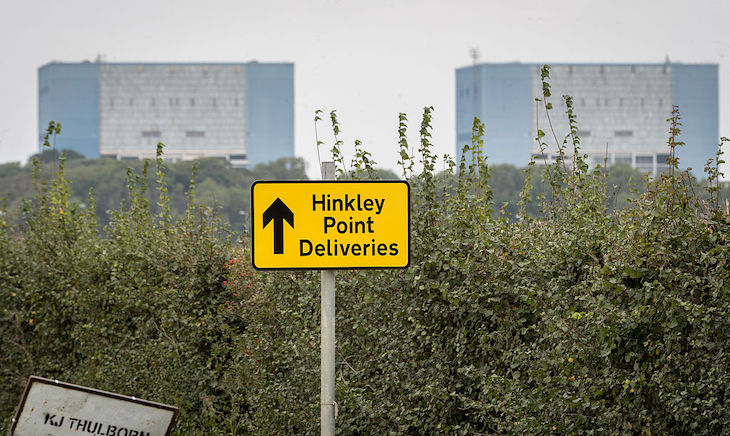
It sounds plausible on paper. Hinkley Point C (an impressive 3.3 gigawatts) is scheduled to come online in the early 2030s. Sizewell C (another 3.3 gigawatts) will be switched on in the mid-2030s, followed shortly by a triplet of Rolls-Royce’s small modular reactors on Anglesey (1.4 gigawatts between them). In all, Britain is set to add 8.0 gigawatts of nuclear power to the grid over the next decade.
Yet behind the state-sanctioned cheering lies an inconvenient truth: we’re retiring reactors faster than we’re building them. Britain had 9.4 gigawatts of nuclear power in the middle of the last decade; under current plans, it will have 9.1 gigawatts by the middle of the next. You don’t need to be a nuclear scientist, or indeed a frontbencher, to work out that 9.1 is less than 9.4. If this is indeed a nuclear renaissance, I’d hate to see what managed stagnation looks like.
It gets worse. Britain’s annual electricity demand is forecast to rise by 150 per cent by 2050. To help meet that demand, the Conservatives set a target of ‘up to 24 gigawatts’ of nuclear by 2050 in their Civil Nuclear Roadmap. Labour haven’t recommitted to the target and, for now, are adrift. Even if we maxed out the Tory ambition of ‘up to 24 gigawatts’ of nuclear by 2050 – a big if, because ‘up to’ is just politispeak for ‘less than’ – those reactors, once downtime is accounted for, would supply something like 24 per cent of our electricity. We’d be less nuclear than we were in the mid-90s.
But all is not lost. Three of the major parties – Labour, Tory, and Reform – support nuclear. (The Greens, predictably, do not. And who knows what the Liberal Democrats think?) Public support is growing, too, with half expressing either ‘support’ or ‘strong support’. This rare point of consensus in British politics means we should be aiming far higher than 24 gigawatts.
You need only look across the Channel and back a few decades to see what a ‘golden age of nuclear’ might actually look like. Spurred by the oil shocks of the 1970s, France built 56 reactors – totalling 61 gigawatts – in under 30 years. At their peak in the mid-noughties, those reactors supplied 80 per cent of France’s power. France almost decarbonised its grid by accident, long before climate change became a hot pomme de terre. All but one of those reactors are still working, and France enjoys below-EU-average electricity prices whilst remaining Europe’s biggest power exporter.
It would be difficult to implement a nuclear programme on this scale in Britain today. We’re the most expensive place in the world to build new nuclear power stations. But the systemic problems affecting nuclear newbuilds – the chronic inability to build infrastructure of all kinds, from high-speed rail networks to new roads – are solvable.
Which is why Keir Starmer’s acceptance of the Nuclear Regulatory Taskforce’s recommendations in December was a promising start. The Review called for a ‘radical reset’ of Britain’s nuclear regulatory system to make it easier and cheaper to build. It was the biggest thing to happen in British nuclear last year, which is saying something. Sizewell C and Wylfa gets us 4.7 gigawatts; if implemented, Fingleton could get us ten-times that should we want it. Today’s recommitment from the very top of British politics – with support from Miliband, Rachel Reeves, and John Healey – in the face of recent backlash from environmental campaign groups, suggests Starmer’s government really means it. It’s great news. Now they must implement the recommendations in full, both in letter and in spirit.
Every gigawatt we fail to build beyond mere replacement is energy security surrendered, decarbonisation deferred, and economic growth curtailed. ‘If you want to get somewhere else, you must run at least twice as fast as that!’, said the Red Queen. It’s time we raised our ambitions and got building, rather than applauding ourselves for standing still.



Comments