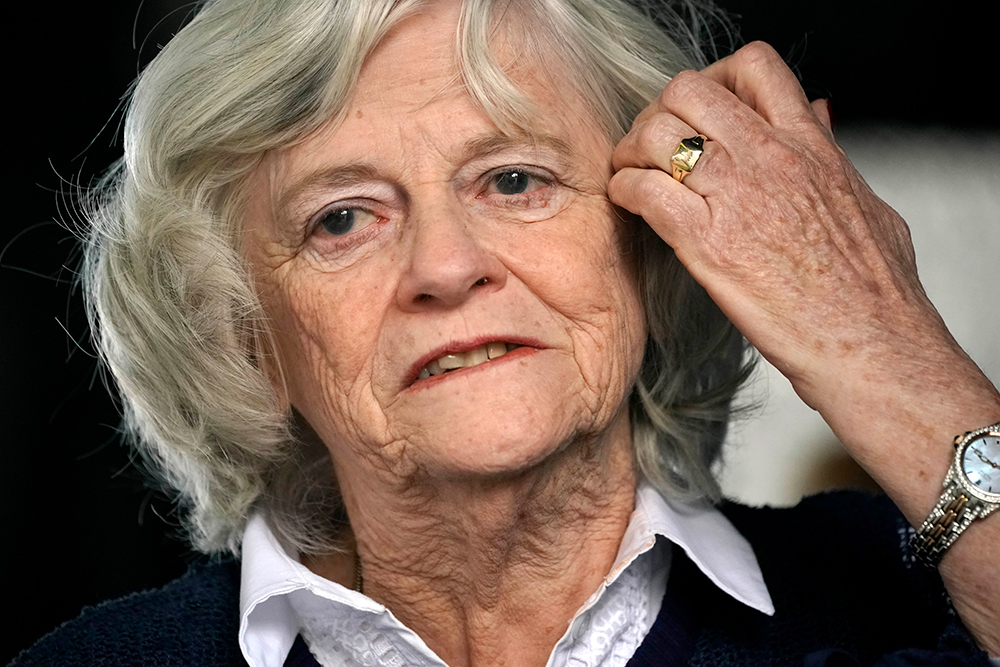


I don’t know if you remember that old saw: ‘Always speak ill of the dead.’ I don’t recall being brought up with it myself, but a number of our fellow countrymen apparently were. After the brutal killing of Ann Widdecombe last week we saw some fine examples of people following this rule.
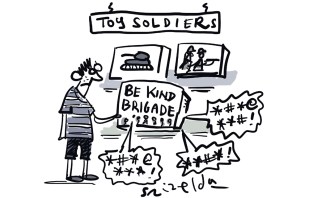
Peter Tatchell – a prominent member of the ‘be kind’ brigade – took to social media to describe the death of Widdecombe in celebratory tones. He listed her crimes, such as her belief that marriage is a union between a man and a woman, and then ended his tweet by saying: ‘BIGOT!’ As though final judgment had been passed down from on high.
It seems possible to say anything you like about somebody, living or dead, if they happen to be right-wing
Adam Boulton of Sky News made a similarly crass intervention, summing up the former MP and MEP’s career mainly by reference to her private life. It was an odd performance from Boulton, who seemed interested not in any of Widdecombe’s very significant political accomplishments, but by the fact that she was an ‘old maid’, a ‘spinster’ and a ‘virgin’. Since Boulton doesn’t mind speaking so disrespectfully of the dead, perhaps I might respond in kind about the living, by pointing out that he would probably have made a number of women happier if he had remained a virgin himself.
To be fair, both Tatchell and Boulton soon apologised for and retracted their comments after the full horror of Widdecombe’s final moments became clear. But their responses, and those from other figures, point to a number of considerable imbalances in our public life.
The first is the reminder that once again it seems possible to say anything you like about somebody, whether they are living or dead, if they happen to be right-wing. Widdecombe was a serious, principled, life-long conservative. Her deeply held religious and political views should have been to her credit. She was, according to everyone who knew her or met her, unfailingly courteous and kind in person. But such considerations can be dismissed if you haven’t spent your life advancing ‘progressive’ views.

Then there is the rule that a death must not be ‘politicised’ if it occurs on the political right. In a little more than a decade there have been two murders of MPs: Jo Cox and Sir David Amess. In the case of Jo Cox, I do not recall the Labour party, the Remain campaign or her closest friends in parliament avoiding the politicisation of her appalling murder. Indeed, there was a moment when everybody intending to vote Brexit was made to feel almost personally responsible for her death at the hands of a lone madman.
With Sir David it was a different story. As I have noted here before, the fact that the Conservative MP was hacked to death by an Islamist while holding a constituency surgery was completely avoided in the parliamentary debate which resulted. Everyone was warned that we might prejudice the trial if we mentioned the identity of his attacker. We were told that the day to discuss the killer’s motivations would come after the trial. But that day never did come. Sir David’s murder never was ‘politicised’. Indeed it seems to have been memory-holed.
Now the same people who intently politicised Cox’s murder are warning Nigel Farage and members of Reform, to which Widdecombe latterly belonged, against making any political point about her killing. Perhaps, as with Sir David, we will be expected simply to regard it as one of those freak occurrences from which no broader message must ever be taken.
Which brings me to the sudden and late eruption of graciousness since the barbaric nature of Widdecombe’s end became known. Television and radio presenters from across the political spectrum have come out to say what a kind and principled woman she was. Even some political opponents have paid tribute to her.
It has been strange to watch the transformation of the discourse as the week has progressed. There are perhaps several reasons behind it. Some initial guilt. An understandable horror as the facts have emerged. Most of all the reminder that people whose politics we disagree with need not be cast as enemies but rather simply as people with whom we disagree.
Something similar has played out across the pond. The sudden death of Senator Lindsey Graham at the age of 71 has brought tributes not just from Republicans but also from the Democrats with whom he worked. Why should they have taken so long to be nice about him? The same thing also occurred when Graham’s friend John McCain died. Only once he was safely dead was McCain lauded by his political opponents as the epitome of the bipartisan spirit in the Senate. People from across the aisle told stories of the decency of the man, and the way he reached out to them and befriended them, despite their differing political persuasions.
It used to be said that the difference between American and British politics was that in Britain, MPs were rude to each other’s faces in the chamber and strangely friendly to each other in private. Whereas in America, senators and congressmen were always polite to each other’s faces and utterly vicious behind their backs. Of the two, the British tradition was vaguely preferable.
In recent decades we seem to have reached a point in both countries where our representatives are both rude to each other’s faces and unfriendly in private. The manner in which Ed Davey and others are able to speak about the Reform party’s MPs does not suggest some joshing disagreement on policies. They seem to hate them and everything they stand for. Not for the first time, the thought occurs that to be truly vicious and evil you have to believe that you are on the side of the angels. Or ‘progress’, as it is also now called.



Comments