

At the turn of the 20th century, no woman was in government anywhere in the world. Change began with Finland in 1907, which elected 19 women to its parliament. Hilda Kakikoski was one of those women. She was a conservative candidate – a nationalist who was also a lesbian and a vegetarian.
Paula Bartley’s Trailblazers spans the century, following the story of female politicians as they emerged. From Finland we move to Russia, where the revolution provided opportunities for the likes of the socialist feminist Alexandra Kolontai, the first woman to join a government cabinet and become a global diplomat.
Constance Markievicz was the first woman to be elected to the British parliament, during her imprisonment for her role in the Easter Rising, but did not take her seat. Agnes McPhail entered the Canadian parliament in 1921. Her priorities were prison reform, human rights and social welfare. Clara Zetkin, in Germany, was the founder of International Women’s Day; and in China, He Xiangning campaigned to abolish cultural practices that were harmful to women, such as foot-binding.
These groundbreakers were often targeted by misogynistic men who tried to remove them from their positions or punish them through social isolation. There was no smooth path to liberation for women within the political sphere; but with space opening up to them as a result of chaotic world events, they made the most of what power they had. Whether they were driven by individual feminist spirit or a more collective recognition that the patriarchy was doing them no good, it did begin a kind of revolution.

Bartley takes us to 40 countries, introducing us to 44 trailblazers and vividly bringing them back to life. Perhaps it’s no great surprise that Finland would be the pioneer, but what about Iran? Zambia, Mozambique, Iraq and Afghanistan are also explored in detail, while other references include Africa, Australasia, the Caribbean, the Pacific and the Americas. Sometimes the ability to break through governmental glass ceilings in these countries had more to do with the tenacity of individuals than it did with feminism.
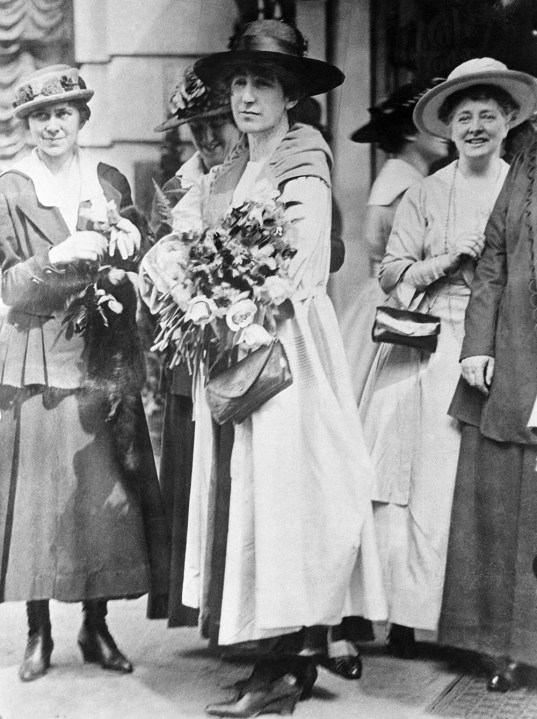
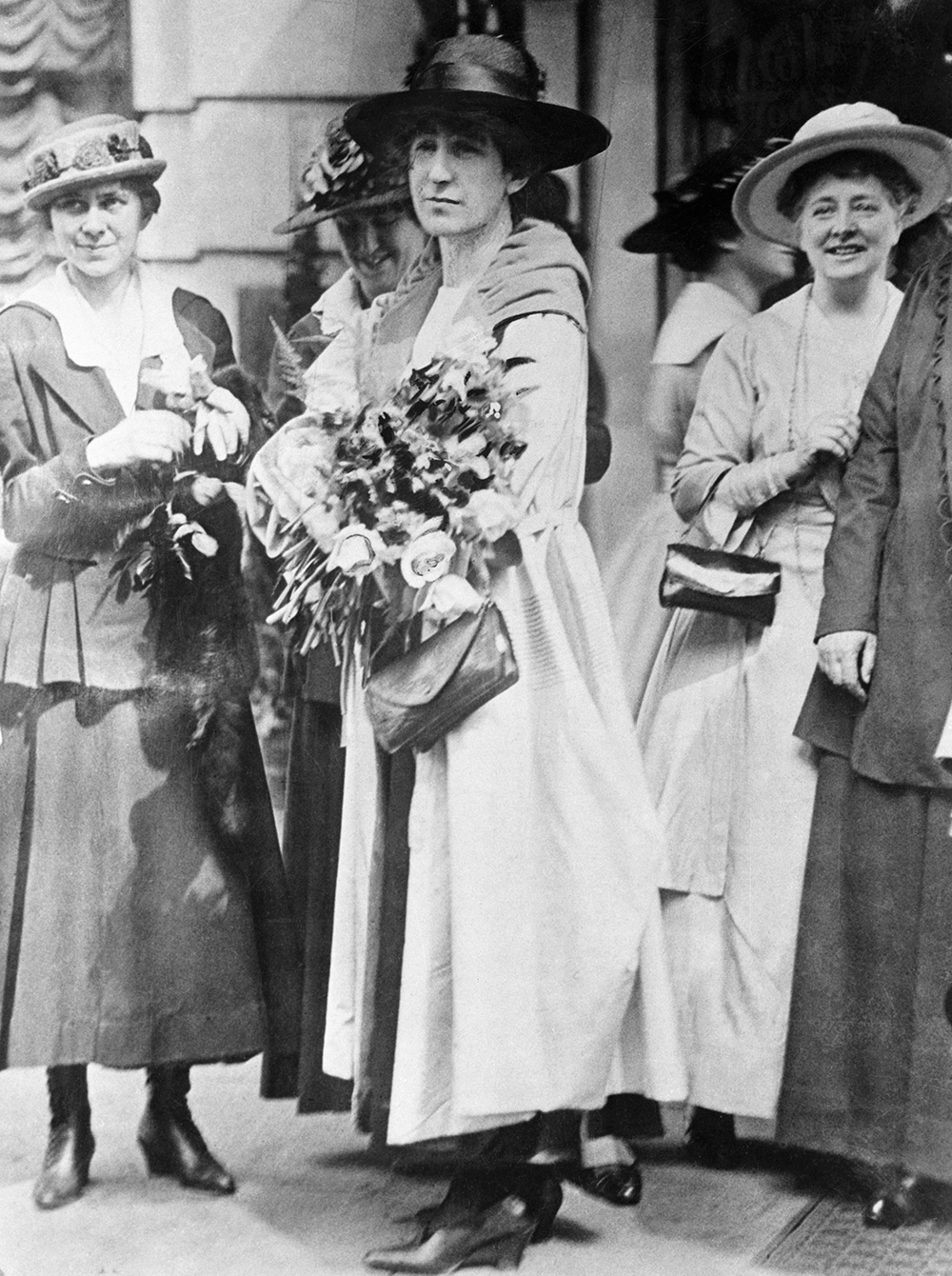
I particularly enjoyed reading about Jeannette Rankin, a peace activist who planned to fight for women’s suffrage from Congress. Elected in 1916 as the first female legislator in the US, she promised to represent all American women and campaign for equal pay and suffrage amendment. Her popularity was short-lived, however, because within days of her arrival President Wilson sought permission to go to war with Germany. An intense debate ensued, and only 50 (of 434) legislators voted against, including Rankin. She was widely condemned, with one newspaper calling her a German propagandist and dupe of the Kaiser. For the time being, her congressional career was over – although she was elected again in 1940.
Another exceptional character was Angelina (Lina) Merlin, who joined the Italian Resistance and helped fight against Mussolini’s regime. I knew of her from present-day Italian feminists who hero-worship her for the role she played in abolishing state-regulated prostitution in Italy, known as the Merlin Law.
Bartley has researched widely, contacting consulates and embassies, trawling through conference papers and archives and drawing on newspaper accounts, parliamentary records, oral interviews and biographies. The details leap off the page; you could be forgiven for imagining she had visited every country and got to know the women themselves. Crucially, she is unsentimental: she makes no attempt to present her characters as perfect, but celebrates, and seems to enjoy, their many flaws as well as their achievements. Often she is simply bringing them out of the shadows. They were not united by feminism or a collective belief in the liberation of women but rather by defiance against male supremacy.
In the UK, four in every ten MPs are now women. Perhaps Bartley’s cast might have assumed that we’d have full political equality a century and a quarter after Kakikoski was elected. Not so. As for Finland, a law was introduced in 2023 that allows any man claiming to be a woman, based on nothing but his ‘feelings’, to be classed as legally female. As Trailblazers shows, progress is rarely linear.






Comments