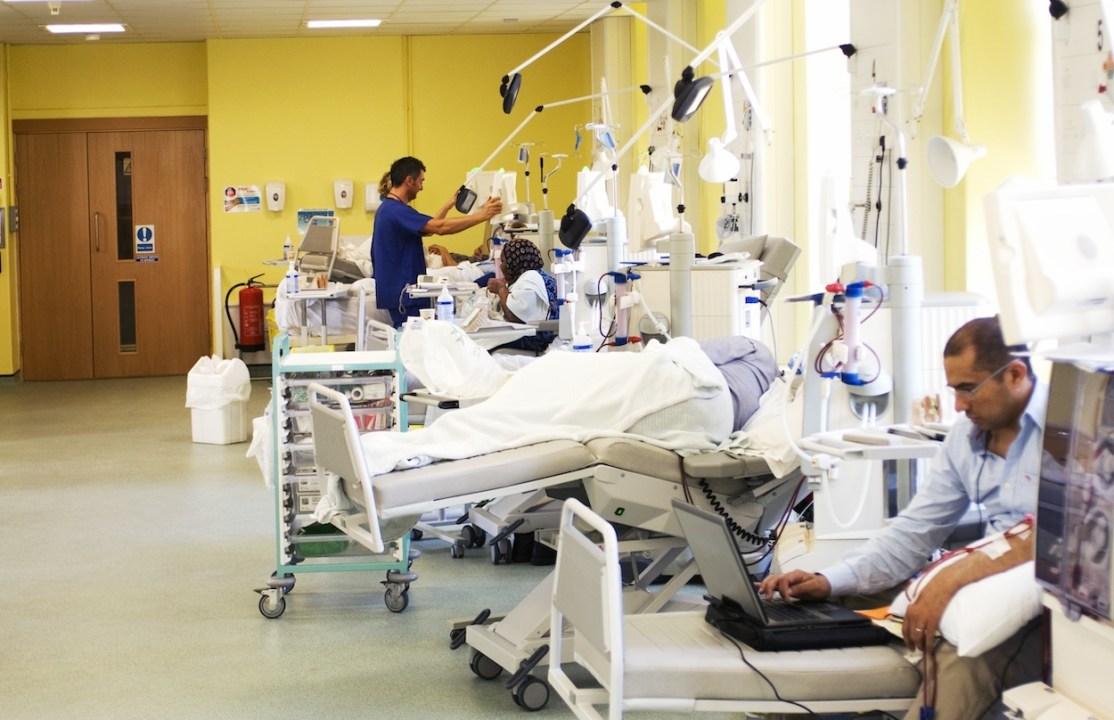
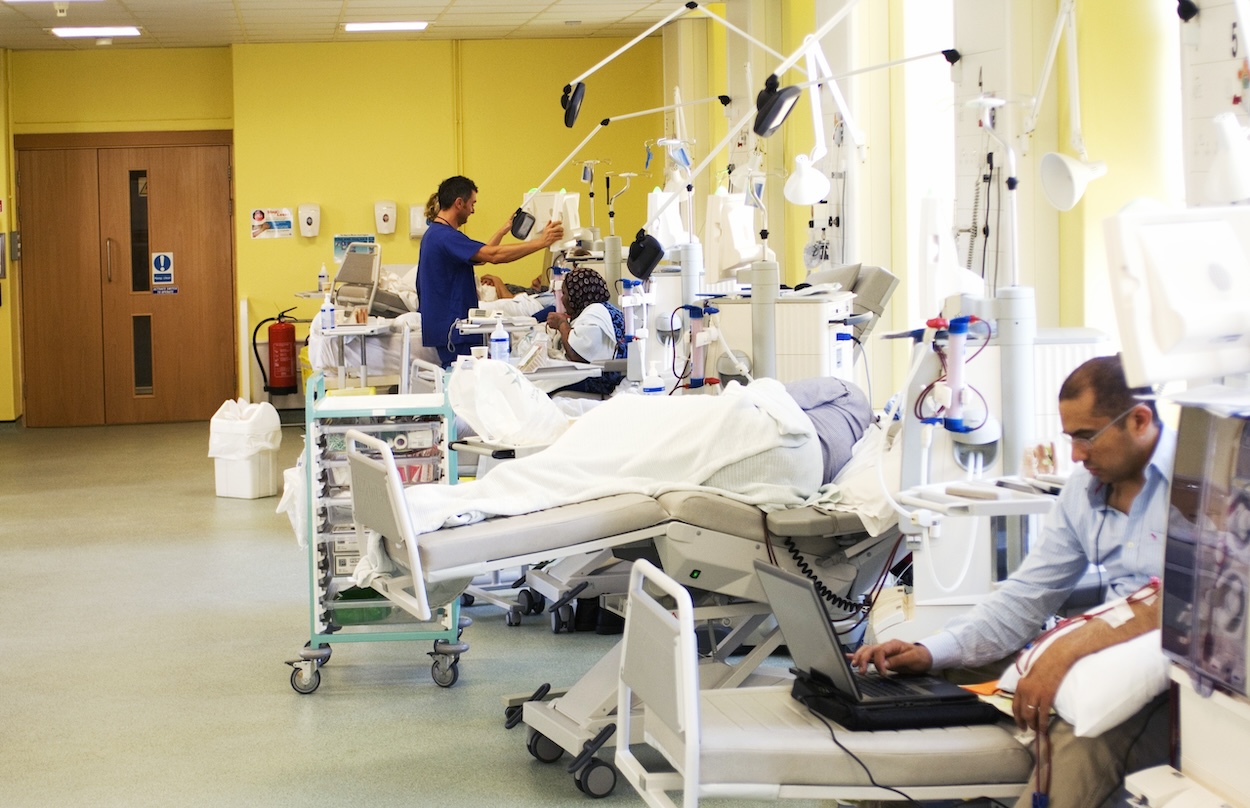
On New Year’s Eve, at about 3 p.m., I phoned for an ambulance. The pressure sore on the weight-bearing surface of my right amputation stump – one of three on that stump – had torn open, exposing bone: specifically, the cut end of the fibula.
Although it was a pain to have to go into A&E, it wasn’t unusual. I had last been discharged from hospital a week before in Glasgow for infection of said pressure sore. The first two of my armoury of autoimmune illnesses – scleroderma, antiphospholipid syndrome, hypothyroidism, autoimmune uveitis and Sjögren’s syndrome – have caused me to have hundreds of hospital admissions over the past 26 years, and around 45 to 50 operations in theatre.

The first assessor on 111 briskly ran through the questionnaire – this would subsequently be repeated three times by other assessors. I told her the pressure sore was on the weight-bearing surface of my right stump, and explained that I was a double below-knee amputee. ‘Any change in colour of your lower leg, ankle, foot, or toes?’ she rattled off from the script. I stopped myself from saying, ‘It’s incredible – since both amputations, my lower legs have been completely transparent.’
This was the usual bizarre dance with 111. As I wasn’t having difficulty breathing or hosing out blood, I was phoned back by a ‘medical supervisor’. She didn’t sound hugely experienced, but that isn’t necessarily a problem – I’ve seen young doctors who have been exemplary. After several phone calls from 111, paramedics were despatched. They were, as ever, cheerful, competent and kind. Because it was New Year’s Eve, I couldn’t be taken to St Mary’s, where my excellent surgeon Mr Wordsworth (yes, a relative) works. All the central hospitals were reserved for revellers, and I would be taken elsewhere.
Everyone I saw on that night was lovely, including a female consultant. But the next morning I was visited by a different female consultant. She told me that as well as the osteomyelitis – bone infection – I also had aspiration pneumonia, a form of infection where stomach contents enter your lungs. I had known that: I told the overnight consultant I had coughed strangely two nights previously, so I had asked for the chest XR.
I have had aspiration pneumonia many times, so I recognise the symptoms. Usually it affects the right lung, specifically the right lower lobe, because the right main bronchus is, in most humans, more vertical and wider than the left. When I was in the high-dependency unit in Glasgow (superlative staff), both lungs became infected because I was heavily sedated and didn’t sit up promptly to stop the surge from the stomach.
This consultant was immensely patronising. I asked her which lung had been affected, in case both had been, like last time. ‘Aspiration affects the right lung,’ she said primly, pedagogically. ‘I know!’ I laughed. ‘I was a consultant anaesthetist.’ I kicked myself metaphorically (no feet) for asking a question I knew the answer to just to make conversation.
In a lowered voice, she said, ‘There is an important question we ask every patient on admission’
She ignored my comment and crouched by my bedside. In a lowered voice, she said, ‘There is an important question we ask every patient on admission.’ She went on for a bit without revealing the question, so I smiled and said, ‘Yes, I’ve already been asked. I’m for resuscitation.’
But the consultant remained where she was, and continued as if I hadn’t spoken. ‘In my opinion, you should not be for CPR,’ she said, as my jaw muscles slackened. ‘CPR only has a 20 per cent chance of success. Even in those cases where it is successful, quality of life afterwards is very poor. I think that if you had a cardiac arrest, it would not be in your interests to resuscitate you. The quality of your life now is very bad, and if they succeeded in resuscitating you, it would be even worse.’
‘But I really enjoy my life,’ I said, finding myself pleading for it. ‘I’m still productive. I write for The Spectator, and…’ Unhearing, unrelenting, she continued in a steely voice. ‘It’s something to think about. I have given you my opinion. You are weak, you have heart problems. Your quality of life is poor and would be worse if you were resuscitated from a cardiac arrest.’
‘It would be worse if I wasn’t resuscitated,’ I muttered. What a contrast with my regular consultants, who are positive and actively trying to better the lives of their patients. The Angel of Death wanted to curtail it. I’m still on that ward, being looked after by excellent, kind, compassionate nurses and, thankfully, different doctors. Apart from the noise, night and day, it has been fine. I don’t just rage, rage against the dying of the light, but also against clinicians who think they’re God and that a disabled person at 61 has lived long enough.


Comments